Science and Management: Dual Expertise at the Heart of Future-Oriented Programs
The University of Montpellier is launching a “science and management” program that is firmly focused on the future. Developed in collaboration with theIAE Montpellier and the Faculty of Sciences, these innovative programs offer students a dual set of skills sought after by employers and serve as a true career accelerator and a key factor in the university’s national appeal.
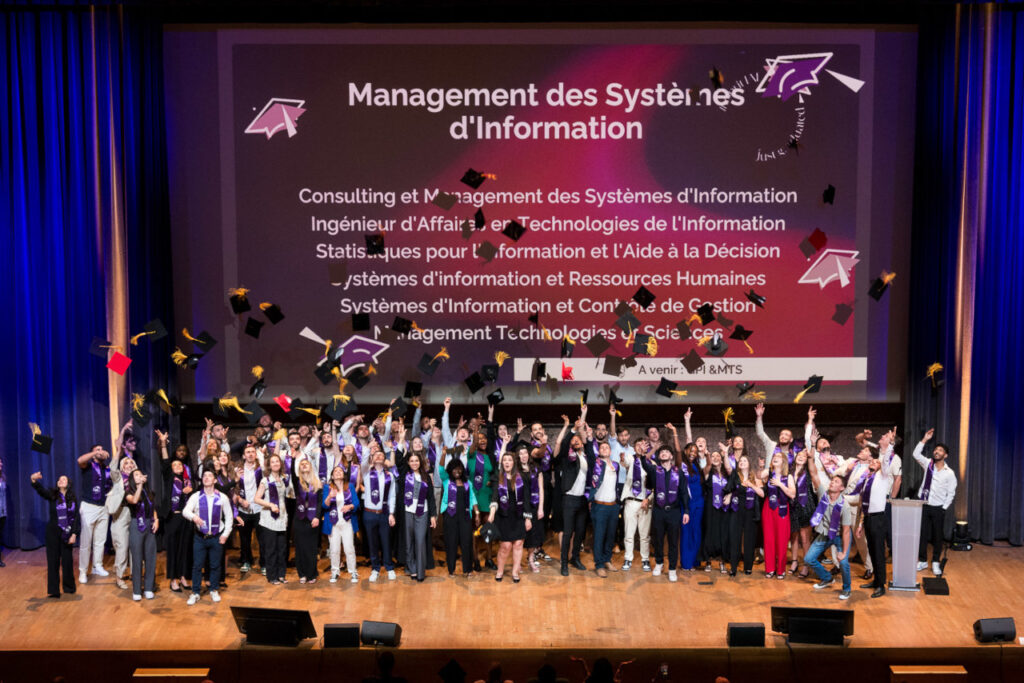
In response to the profound changes in the professional world, the University of Montpellier has chosen to innovate by offering a program designed to closely align with the needs of both students and businesses. This initiative stems from a simple observation: today, students with scientific backgrounds are increasingly moving into positions of responsibility that require strong managerial skills.
This observation reflects a reality that is already present in our programs. As Emilien Azema, a professor in the Department of Mechanical Engineering at the Faculty of Sciences, points out : “We were already incorporating management into our science programs, but without really saying so. It has become essential to make this dual expertise more visible, particularly through dual degree programs.”
“ Students with backgrounds in the sciences are increasingly called upon to lead teams, manage projects, or run organizations ,” adds Emmanuel Houzé, director ofthe IAE in Montpellier. This initiative also responds to a strong demand in the job market, where a combination of scientific and managerial skills is a key differentiator.
A program designed to accelerate your career
Beyond the acquisition of skills, these programs aim to anticipate career developments. While some executives choose to pursue management training several years after entering the workforce, this track now allows students to incorporate this aspect into their initial coursework. “It accelerates graduation, career advancement, and entry into the workforce, ” explains Yamina Guitt Hochet, administrative director of the IAE.
This approach is fully aligned with an innovation-driven economy, in which a multidisciplinary approach plays a key role. Understanding both the technical challenges and market dynamics enables graduates to better grasp innovation processes and contribute more effectively to their development.
An Innovative and Interdisciplinary Approach to Education
One of the defining features of this program is its educational approach. The “science and management” programs are based on a deliberately interdisciplinary approach, bringing together students from a variety of disciplines such as chemistry, biology, mathematics, computer science, as well as mechanical engineering, physics, and electronics.
Structured in a progressive manner, this educational program is based in particular on the “Industrial Project Management” (GPI) track—which focuses on real-world projects related to industrial challenges—and on the “Management, Technology, and Science” (MTS) dual degree program, developed in collaboration with the IAE.
The curriculum is based on case studies, role-playing exercises, and hands-on experiences, supplemented by internships and applied research projects. This active learning approach helps students develop technical skills as well as essential cross-functional competencies, such as project management, teamwork, and decision-making.
Training Programs to Support Career Transitions
The programs offered are also designed to keep pace with changes in professional practices. As Emilien Azema points out: “We don’t just train highly specialized experts; we train professionals capable of understanding what’s happening around them.” This approach enables graduates to better navigate complex environments, engage with a diverse range of stakeholders, and connect technical issues to broader objectives.
These skills are particularly strategic in a context marked by organizational transformation. Graduates are thus better prepared to lead complex projects and quickly become part of team dynamics.
The “Science and Management” track is based on several master’s programs in information systems management, including the“Statistics for Information and Decision Support (SIAD),”“Management, Technology, and Science (MTS),” and“Industrial Project Management (GPI) ” programs.
It is also part of a broader initiative to forge partnerships with university technology institutes (IUTs) and engineering schools, enabling dual-degree programs and supplementary training in management. A bachelor’s degree in “science and technology,” which is planned to launch by 2027, will round out this program by providing a progressive progression of skills across science and management.
Tangible results and national appeal
The numbers speak to the success of this program: nearly 100 graduates in “technology and science management” by 2025, in addition to students from other tracks and partner programs. Beyond the numbers, it is above all the program’s appeal that stands out. The uniqueness of the dual-degree program and the quality of the instruction attract high-achieving students from all over France. By offering a bridge between science and management, the University of Montpellier reaffirms its position at the forefront of educational innovation and its ability to train professionals equipped to meet contemporary challenges.