A network dedicated to greening theUM
On October 14, the kickoff meeting for the network of ecological transition liaisons was held. Designed to drive change, the network brings together passionate and committed individuals around a common goal: to strengthen theUM ’s commitment to and practices in sustainability and innovation for the ecological transition. The University hopes to improve its internal practices and encourage other institutions of higher education to follow suit.
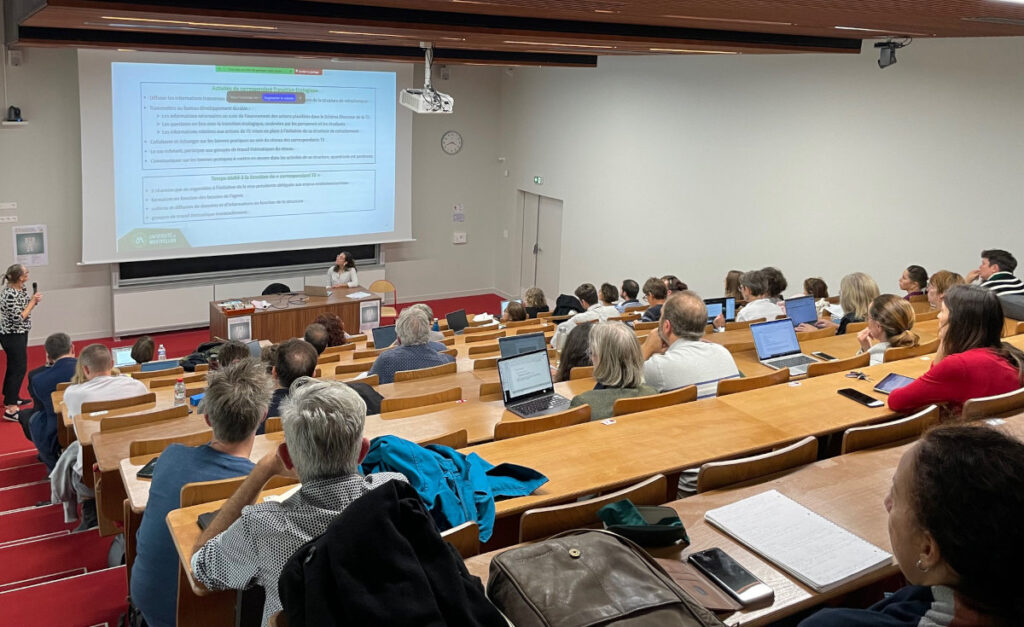
This marks a key milestone for the University of Montpellier in the implementation of its Ecological Transition Master Plan (SDTE): the network of ecological transition liaisons met for the first time on October 14 in the presence of Philippe Augé, president of theUM , and Frédérique Carcaillet, vice president for environmental issues. The liaisons attended a presentation on the University’s SDTE, as well as on the network’s objectives and timeline.
A Desire to Take Action
They are teachers, Professors, researchers, library staff, engineers, and administrative, technical, social, and healthcare personnel (BIATSS), and they share a passion for issues related to the ecological transition and a desire to take action. As true ambassadors of the ecological transition, these liaisons are responsible for raising awareness within the community about environmental issues.
With this in mind, the presentation of the network’s missions helped clarify the roles and responsibilities of the liaisons, highlighting the importance of their commitment. A detailed schedule of the next steps was also unveiled, including the various committees and meetings in which the network will participate. A Q&A session allowed the liaisons to ask questions and make suggestions—such as the creation of a platform for exchange among liaisons from research institutions to facilitate cooperation among laboratories.
Network Objectives
The establishment of this network of liaisons addresses various needs and challenges the University faces due to its size. With more than 5,000 staff members and 50 With 000 students spread across more than 17 campuses and 73 research facilities, it can sometimes be challenging to comprehensively monitor the various projects underway related to the ecological transition and the implementation of the SDTE. This task force will therefore be able to foster a culture of ecological transition at the grassroots level and unite the community around goals and initiatives aimed at making the University more environmentally friendly.
In addition, this network will create synergies among the various organizations, thereby facilitating the implementation of the ecological transition policy of theUM. This network also serves as an important channel for the flow of information between the various organizations and the Sustainable Development Office within the Steering Committee. The more information flows, the better theUM will be able to respond, improve, adapt, roll out, and strengthen the implementation of the SDTE. Through their commitment, the liaisons help foster a culture of sustainability within the University, thereby encouraging collective awareness and coordinated action for a successful ecological transition.