A French “Windrush”? What France Has Done to Its Overseas Populations
The “Windrush” scandal continues to make headlines in the United Kingdom. The British public is outraged to learn of the disgraceful way in which Caribbean workers from the Commonwealth were treated.
Antonia Wimbush, University of Montpellier
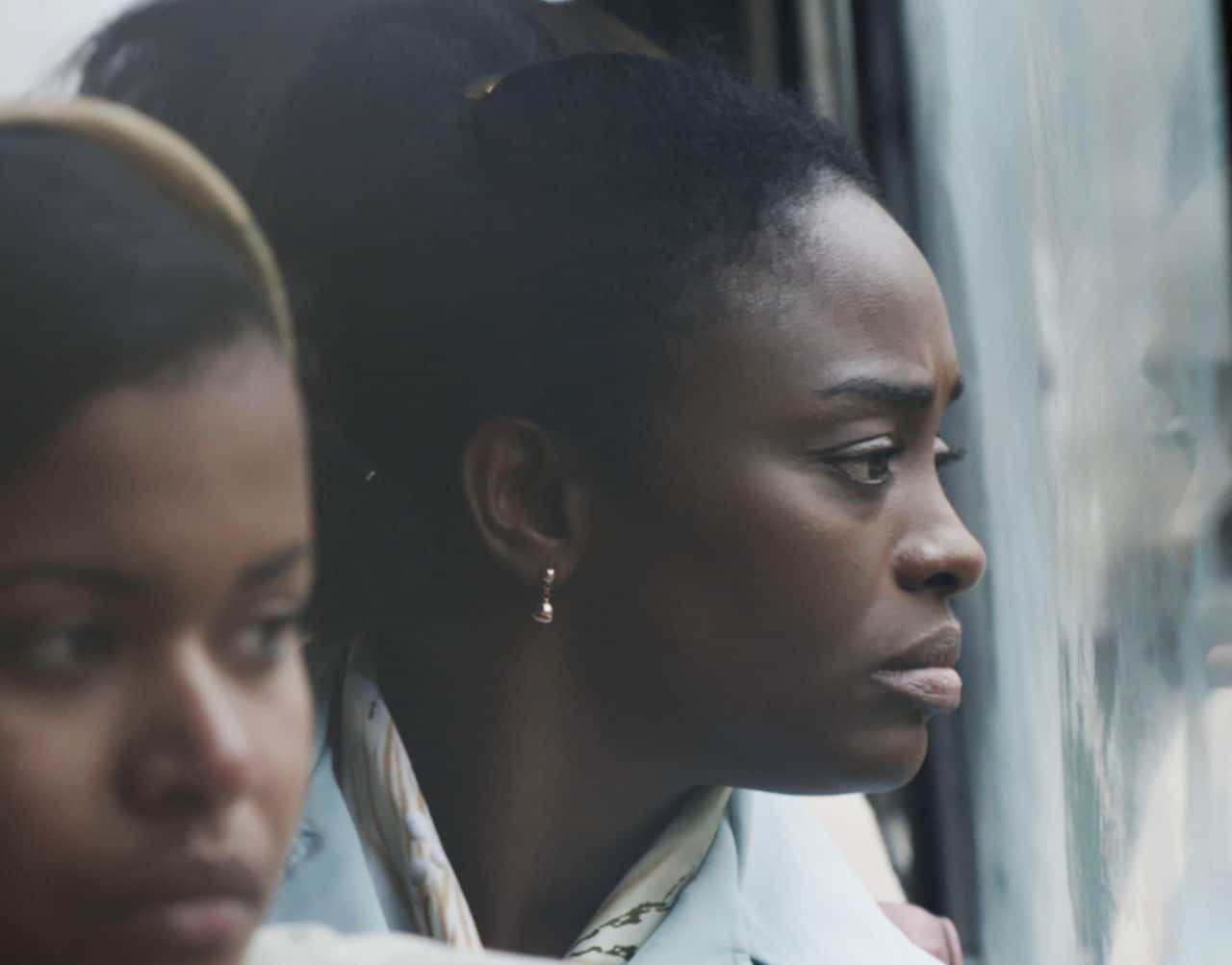
Eloa Prod 2018
Encouraged to come to Great Britain after World War II to address the labor shortage, they now face the threat of deportation if they cannot prove they have the right to reside there. What is less well known is that France, too, experienced these waves of postwar immigration.
From 1963 to 1982, 160,000 men and women from the French West Indies, French Guiana, and Réunion were actively recruited, trained, and sent to metropolitan France to work in construction, health care, and government. Although legally French citizens, they were treated as second-class citizens.
A report that went unnoticed
On April 10, 2018, under the auspices of the Ministry of Overseas Territories, sociologist Philippe Vitale published a report highlighting the history of children from Réunion who were sent to mainland France from 1963 to 1982, and the treatment they endured.
Although this report does not exonerate the French government of the role it played in removing these young children from their families and sending them to the mainland, it downplays the government’s involvement and portrays Réunion as a region with no future, one that is economically underdeveloped.
Curiously, this report went virtually unnoticed in the French media, both in mainland France and in the overseas territories.
Why? And, at a time when the Windrush scandal is rocking the United Kingdom, what does this document mean for France? To fully understand what it means for the 2,015 French citizens and their families affected by this scandal, we must look back at the turbulent history of French colonial policy.
Former Colonies in Turmoil
The postwar years were difficult for the former French colonies. Combined with a rise in the birth rate, the unemployment rate continued to climb, and more and more young people found themselves out of work.
As unemployment rose, the population lost faith in the existing political system. Guadeloupe, Martinique, Réunion, and French Guiana transitioned from French colonies to overseas departments following the Departmentalization Act of March 19, 1946, which granted them the status of French citizens, enjoying the same rights as those in metropolitan France.
However, for many, this change in status made virtually no difference. Rebellion was brewing, and the French government feared that the overseas departments would demand independence.
At the same time, the city, in the midst of the economic boom of the Trente Glorieuses, was in desperate need of workers.
An office for overseas French citizens seeking to immigrate
To resolve this delicate situation, Michel Debré, the French prime minister at the time, established the Office for the Development of Migration in the Overseas Departments (Bumidom) in April 1963, in line with an existing political commitment in France.
The goal was to recruit young people (especially women) and bring them to work in mainland France. Over the course of nearly 20 years, 160,000 workers emigrated to the mainland in this way. Women were encouraged to embrace more “modern” family values (meaning those of “white” French people) and to spread them upon their return.
Every immigration applicant was required to undergo a physical examination and personality tests to demonstrate their ability to adapt to life in France. Although legally French, these migrants were not treated as such because of the color of their skin.
Their proficiency in French, as well as their family and professional backgrounds, were assessed, and then they were given a one-way ticket to mainland France, paid for by the government.
Men on construction sites, women as domestic workers
Some were hired immediately upon arrival, in construction or administration; others were sent to training centers. Women were sent to Crouy-sur-Ourcq, in the Île-de-France region, where they learned to cook French dishes and run a household before being employed in the healthcare sector or as domestic workers.
Men went to Simandres (Rhône) or Marseille. However, starting in 1982, the French economy began to show signs of stagnation. The Bumidom scaled back its activities, and family reunification took precedence over the recruitment of new workers.
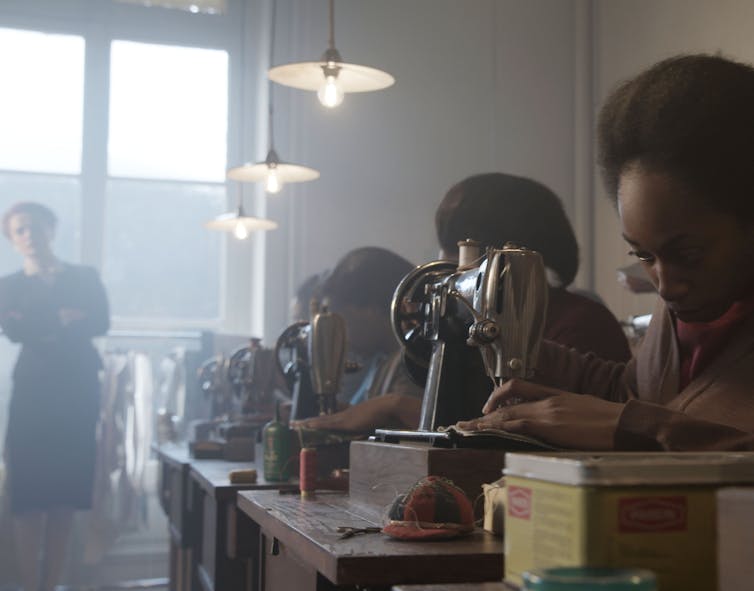
Eloa Prod, 2018
Although for some, Bumidom represented an opportunity for social advancement and financial independence, others experienced this migration as a “deportation,” in the words of writer and politician Aimé Césaire.
The most extreme case of deportation occurred in Réunion, with the tragedy of the “Children of the Creuse.” From 1962 to 1984, more than 2,000 children (some orphans, others not) were forcibly removed from their homes and taken to metropolitan France to repopulate declining rural areas. The Creuse, in particular, had an aging population: each year, some 3,000 young people left to settle in large cities in search of work. It was therefore to this region that the majority of the children were sent.
"Generation Bumidom": Jacob Desvarieux, lead singer of the band Kassav, shares his story on France Ô.
“It’s not enough just to build museums”
The tragic plight of these children—who were often victims of mistreatment, abuse, and violence—went largely unnoticed until the early 2000s, when some of them filed a lawsuit against the French government, seeking financial compensation and official recognition of the trauma they had suffered.
According to [Michel Calteau](https://www.temoignages.re/social/droits-humains/le-combat-continue-pour-la-reparation-du-crime-des-enfants-de-la-creuse,92849](https://www.temoignages.re/social/droits-humains/le-combat-continue-pour-la-reparation-du-crime-des-enfants-de-la-creuse,92849),spokesperson for the association Collectif Enfants 3D (which provides support to victims of this trauma), it is not enough to create museums and memorials or to establish a national day of remembrance, as suggested in Philippe Vitale’s report.
The French government has announced that it will provide financial assistance to the victims in the form of free plane tickets to Réunion, but it is unclear whether the victims will find this measure satisfactory.
The immigration office in question
The role of Bumidom, which provided support for children and adults sent to mainland France, is now at the center of the debate.
In 2018, in French-speaking countries, several cultural productions exploring this agency and its impact on the affected populations were released. Recently, the TV movie *Le Rêve français*, directed by Christian Faure, aired on France 2 in March.
Maryse Condé, one of the most prolific writers from the French West Indies, offers the following critique:
“This film, commissioned by France 2 and the public broadcaster, features two significant bold moves. The first is that it does not separate the history of the overseas departments. It does not separate Guadeloupe from Martinique, as if the two cantankerous twins had finally accepted that their fates were intertwined. The second is that it does not separate these territories from that of France either. The characters come and go, arrive, and linger as if they were part of a single, contiguous territory. This is undoubtedly a way of suggesting the close—albeit often conflict-ridden—ties that bind the ‘departments’ to ‘their metropolis,’ for to the film’s creators, the Antilles are not entirely separate lands; that much is clear.”
A graphic novel was also published in 2017. Written by Jessica Oublié and illustrated by Marie-Ange Rousseau, [Péyi an nou](https://peyiannou.wordpress.com/](https://peyiannou.wordpress.com/) (“Our Country” in Creole) tells the story of Jessica Oublié’s family.
In April 2018, the work won the Political Book Award presented by France Culture for the best political comic book.
While popular culture and literature are finally shedding light on the dark role played by Bumidom, the French government is still far from doing so. It must urgently acknowledge the extent of the state’s responsibility (particularly in the case of Réunion) if it wants to avoid a scandal on the scale of the Windrush affair.
In fact, outside the French-speaking world, this government-organized migration remains largely unknown.
Like the Windrush generation, the immigrants recruited through the Bumidom program helped rebuild France after the war. They also faced discrimination because of their ethnic and cultural backgrounds. It is time to thank them and pay them a fitting tribute.
 Translated from English by Iris Le Guinio for Fast for Word.
Antonia Wimbush, Early-career researcher (French-speaking studies) & English tutor, University of Montpellier
The original version of this article was published on The Conversation.