A new school year marked by interdisciplinary learning
To train experts capable of meeting the new challenges facing our societies, the University of Montpellier is embracing a transdisciplinary approach. Here’s a look at three innovative new programs launched this year.
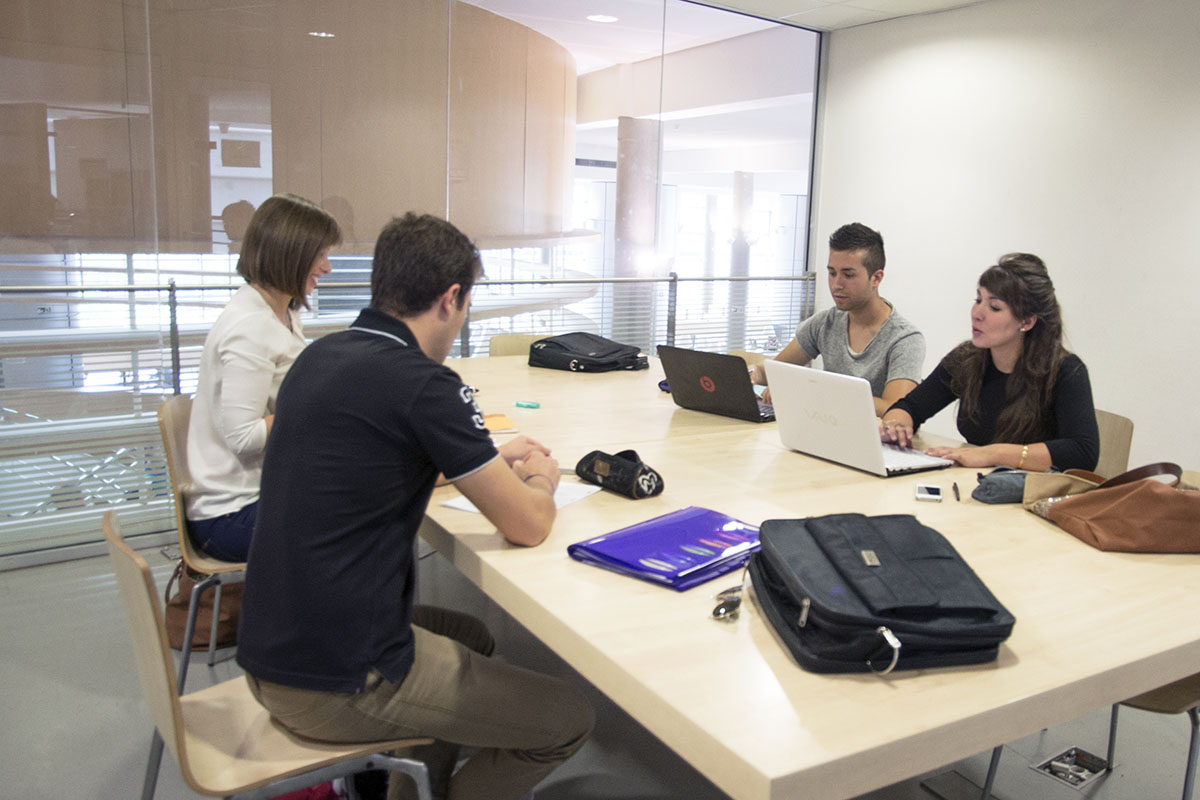
Breaking down disciplinary barriers to equip students with all the skills required in an ever-changing job market is the key challenge of interdisciplinary programs. This is an approach that the University fully embraces, as evidenced by the three new programs it has launched this academic year.
Open the windows
"We're 'opening the windows' at the School of Law and Political Science," says Catherine Ribot. The co-director of the master’s program in food law and agroecology law is convinced:“We need to examine the relationships between disciplines and avoid getting stuck in the box.” Because food and agroecology are European and global issues that go far beyond the essential questions of compliance or food safety.“Traditionally, the question was whether food was healthy in the sense of being good for one’s health. Now we also ask whether it is healthy for the environment, whether it allows for a fair distribution of wealth among different professionals, and a harmonious development of local communities,” explains Malo Depincé, co-director of the master’s program.
And to train experts capable of understanding all these dimensions, we need to break down barriers.“This transdisciplinary approach operates on two levels, ”explains Catherine Ribot. “On the one hand, by incorporating non-legal practical elements such as food and agriculture, and on the other hand, within the legal disciplines themselves, since students will need knowledge of both private and public law,” emphasizes the environmental law specialist. The goal: to train experts who are competent in the fields of food and agroecology from A to Z.“A single point of contact capable of engaging with all stakeholders in the sector, from producers to distributors,” explains Malo Depincé, himself a specialist in market law.
Armed with a bachelor’s degree in law, these future experts are starting their first year of master’s studies this year. After two years of training with a team of law professors as well as external instructors such as lawyers, corporate legal counsel, and representatives from various organizations, these future specialists in food law and agroecology can look forward to a wide range of career opportunities:“specialized lawyers, judges specializing in food law cases, legal advisors in companies, local governments, and ministries—the needs are varied,” lists Catherine Ribot, who emphasizes that this is the first program of its kind in France.
Meeting the demands of new professions
This educational innovation is also evident in the School of Economics and the School of Law and Political Science. And there is another “national first” developed at UM: the dual-degree program in “Economics and Political Science”—the only one of its kind in France—led by Thomas Cortade in the School of Economics and Eric Savarese in the School of Law and Political Science.
With a distinctly interdisciplinary focus, this dual-degree program is designed to meet the demands of emerging high-growth fields, particularly in the areas of the environment, energy, decision support, development projects, and transnational governance and the regulation of complex societies.
The goal? To train professionals who can take on leadership roles in the public and private sectors, both in France and internationally. These career opportunities require expertise in economics, political science, and, more broadly, the social sciences, as well as knowledge of national and international institutions.
To this end, students in this dual-degree program take the core courses of both the economics and political science degree programs, which they will complete by taking a comprehensive oral exam covering both disciplines. This exam will allow them to demonstrate how both disciplines contribute to the analysis of the contemporary world… and will prepare them for careers of the future.
Meeting the challenges of today and tomorrow
At UM, transdisciplinarity also takes on an international dimension with the CHARM-EU master’s program, which launched this fall. Innovative, transdisciplinary, and firmly focused on major environmental and societal challenges, this master’s program—the only one of its kind in Europe and the result of a collaboration between UM and its four partners in theCHARM-EU alliance—represents a true educational revolution.
Bringing together students from around the world and from fields as diverse as law, biology, the humanities and social sciences, sports, and management, the CHARM-EU master’s program enables participants to pool their expertise to better understand the environmental and social challenges facing our societies, such as water management, global health—both human and environmental—and food security. “We don’t want to compete with existing master’s programs,”explains Gilles Subra.“We won’t be training economists or hydrologists, but rather new transdisciplinary professionals geared toward European careers—managers of cross-cutting projects.”
To meet the challenges of today—and tomorrow—students will benefit from innovative instruction based on active learning. “It can be summed up in two words: challenge-based . Our goal is for students to acquire skills that will help them tackle challenges related to the major themes covered,”explains Patricia Cucchi, a lecturer and researcher in organismal biology at the University of Montpellier and a member of theCHARM-EU working group on teaching and learning strategies. These challengesstem from civil society, the business world, or research, with scientific rigor and methodology always at the core. The assessment methods are equally innovative, featuring a student-centered, progressive evaluation tailored to each student’s pace, utilizing a wide range of methods—from simple quizzes to portfolios—in place of traditional midterms.