
Skip to content Go to the menu
University of Montpellier

Main Menu

  • University
  • Training
  • Research
  • Innovation
  • Campus
  • International
  • French

Quick Access

Quick Access

  • ENT
  • Websites
  • Digital Site
  • Colleges, Schools, and Institutes
  • Research Centers
  • Libraries
  • Gender-Based and Sexual Violence
  • Emergencies

HideNews Flash!

  • Disruptions at Triolet Campus Learn More
Research

Search Results

University Hospital Federations

Content Type: Page
FHU T.I.E. “Triangular Analysis of Interactions Between Host, Infectious Agent, and Environment” Dr. A. MAKINSON (UM/Montpellier University Hospital) and Prof. E. TUAILLON (UM/Montpellier University Hospital) The University Hospital Federation (FHU) TIE [taɪ]—whose acronym refers to its overarching goal of modeling human–microorganism interactions, from emergence to long-term complications, through a triangulation between the host, infectious agents, and the environment—brings together stakeholders in the Montpellier-Nîmes region involved in research and care related to infectious diseases and related fields (microbiology, immunology, public health). Although the resources allocated to the FHUs are modest, these federations—which have existed in France since 2012—aim to stimulate translational research, improve the quality of care, and foster collaborations between university hospitals, research laboratories, and the private sector. FHU Regenhab 2.0 “Regenerative Medicine, Motion Modeling, and Rehabilitation” Prof. C. JORGENSEN (IRMB, U1183) and Dr. A. LACAMPAGNE (Phymedex, U1046)FHU Regenhab 2.0 website FHU Evocan-2 “Cancer Immunotherapies” Prof. G. CARTRON (UM/Montpellier University Hospital) and Dr. N. BONNEFOY (ICM, U1194) FHU Evocan website

IHU Immun4Cure & Centers of Excellence
Content Type: Page
IHU Immun4Cure The Immun4Cure project, led by the Montpellier University Hospital, Inserm, and the University of Montpellier, was awarded IHU status in May 2023 as part of the France 2030 plan.As an Initiative of Excellence, the IHU brings together expertise in the field of autoimmune diseases and is fully integrated into the MedVallée initiative, building on its strengths and reinforcing communities already recognized by the I-SITE designation. IHU Immun4Cure website CeAND The Center of Excellence on Autism and Neurodevelopmental Disorders (CeAND) is an interdisciplinary research network aimed at fostering interactions among researchers, practitioners in the field, as well as families and those directly affected, in order to promote and disseminate best practices in care and education. CeAND website CoEN The overall objective of the Center of Excellence in Neurodegenerative Diseases (CoEN) in Montpellier is to build a collaborative research program in the field of neurodegeneration that transcends national borders, focusing on critical mass and excellence. CoEN website

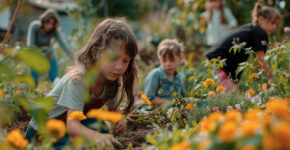
Whether it's a vegetable garden, a flower garden, or a herb garden, school gardens are gaining popularity

Content Type: The Conversation

Published on: June 10 , 2024

Gardens are becoming increasingly common on school grounds. While the growing interest…

Science at theUM [S03-ep28]: A New Recyclable Material Made in UM

Content type: Podcast

Published on: June 6 , 2024

This week on *A l’UM : Science*, Sylvain Caillol, a researcher at the Charles Gerhardt Institute…

Major Programs

Content Type: Page
Investments for the Future The Investments for the Future program involves 35 billion euros, of which 22 billion euros are earmarked for higher education and research to strengthen France’s competitiveness on the global stage. Of these 22 billion euros, nearly 18 billion take the form of competitive calls for proposals. The University of Montpellier is heavily involved in this program through numerous projects in which it serves as the lead institution or a partner. Learn more ERC Grants The European Research Council coordinates and funds scientific projects “at the frontiers of knowledge” within the European Union through grants that reward scientific excellence. This program is open to all disciplines. Current European Research Council projects: ERC Starting Grant Erika Burioli (Host-Pathogen-Environment Interactions Laboratory) with the HYPERCAN project, which focuses on transmissible cancers in mussels.Profile of Erika Burioli Paul Antonio (Géosciences Montpellier) with the UBEICH project, which proposes a new experimental method to refine the dating of the Earth’s inner core.Profile of Paul Antonio ERC Advanced Grant David Mouillot (MARBEC), whose BLUE-AFRICA project will conduct transdisciplinary research to assess the potential of coastal marine resources to reduce poverty and emigration in rural regions of East Africa affected by land desertification. Read the press release: ERC Synergy Grant recipient Daniele Di Pietro (Alexander Grothendieck Institute in Montpellier) with the NEMESIS project, which aims to understand how to overcome current technological barriers in numerical simulations of complex physical problems. Profile of Daniele Di Pietro Past ERC Grants Sara Cavaliere (Charles Gerhardt Institute of Montpellier) with the SPINAM project, which focuses on electrochemical devices for hydrogen energy conversion and storage. Video feature with Sara Cavaliere HORIZON EUROPE - Marie Skłodowska-Curie COFUND Actions TERRA-MED is a European doctoral program aimed at addressing challenges related to water, land, and energy in the Mediterranean. Coordinated by the Pyrenees-Mediterranean Euroregion and funded by Horizon Europe, this program—with a budget of €8.1 million—will enable the recruitment of 33 doctoral researchers in Occitanie, Catalonia, and the Balearic Islands, including eight at the University of Montpellier. At theUM, this project is led by Mathieu Sicard (Montpellier Institute of Evolutionary Sciences). Read the press release Key Initiatives To continue its strategy of supporting the scientific communities that define the site’s unique identity, the I-SITE Program of Excellence (PEI) designated five new key initiatives in April 2024. Three of them are internationally focused and funded by the UM2030 project under the France 2030 program —IDéES “Integration and Development of Idex and I-SITE”—while the other two, funded directly by the PEI, aim to bring together communities from various Montpellier-based research institutions around interdisciplinary themes to give them greater visibility. Key international initiatives underUM 2030: Foods: Nutrition and Food Systems Vect-OH: Infectious Risks and Vectors in a One Health Approach Water: Water Key PEI initiatives: KIPPT: Public Policies for Transition CLAPAS: Local Collaborative Research Initiatives on Plant and Agrosystem Health

Key Public Policy Initiatives for Transition (KIPPT) 2024–2026

Content Type: Page
Contemporary societies face numerous, complex, and cross-cutting challenges that call into question the longevity of our development model, its sustainability, and our ability to function as a society. Whether these changes are environmental, climate-related, demographic, political, or technological (particularly in the digital sphere), they challenge our ways of life, as well as our models of development, production, consumption, work organization, education, healthcare, urban planning, and mobility. These changes present opportunities but also generate risks, particularly for the most vulnerable populations. They thus pose risks of social, political, and economic disruption that directly challenge the governance of our societies. Facilitating the transition to new, more sustainable and equitable development models has become a challenge for public actors. To address this challenge, the Montpellier campus offers a dynamic, high-level social science research environment across various disciplinary fields: economics, law, political science, geography, education and training sciences, management, and sociology. The goal of the Key Initiative on Transition Public Policies (KIPPT) is to enhance visibility and foster local, national, and international interactions among researchers at the Montpellier campus whose work in the social sciences relates to transition public policies. On the one hand, this involves bringing researchers together and establishing a sustainable network among them. The KIPPT will thus help to drive and stimulate exchanges and synergies and to highlight the collective expertise of the Montpellier campus on transitional public policies. On this basis, the KIPPT also aims to foster a “science/society” relationship by serving as a bridge between researchers working on transitional policies and public and civil society actors. To this end, various partners—such as local governments (notably the Occitanie Region and Montpellier Méditerranée Métropole), businesses, and nonprofit organizations—are involved in the project. A Broad and Multidisciplinary Definition of Public Transition Policies KIPPT advocates for a broad definition of public transition policies, centered on the three pillars of the I-Site—feeding, protecting, and caring—and beyond. It approaches public policies, public action, and governance from a multidisciplinary perspective. It brings together numerous laboratories within the I-Site’s Social Sciences cluster around three main areas of focus: Area 1: fostering exchanges between laboratories and disciplines on key sector-specific themes at the site, such as climate and energy transition, ecological transition, digital transition, agricultural and food transition, mobility and transportation, and health… Axis 2: To foster reflection on the coherence and articulation between public transition policies and integration issues. Particular attention is paid, on the one hand, to the cross-cutting issue of inequalities and, on the other hand, to territorial projects as vectors of integration—specifically to address tensions between sectoral and territorial logics. Axis 3: Address cross-cutting challenges related to the governance of transitions. Challenges related to the design of public transition policies (PTPs), their public debate, and their evaluation. Challenges related to the implementation of PTPs: cooperation among stakeholders, sectors, and levels of government; financing; and citizen/civil society participation, etc. Issues of conflict and acceptability of transition policies Issues related to the methods and instruments employed: cost-benefit analyses, multi-criteria approaches, incentives, regulations, pricing, planning, trajectories, etc. Issues related to changing perceptions, opinions, and behaviors of stakeholders regarding transitions Initiatives to foster the creation of a scientific community A call for multidisciplinary and multi-laboratory research projects “Structuring” projects “Impulse” projects A platform dedicated to KIPPT [link] Project monitoring and promotion Resource center for the community Three scientific conferences

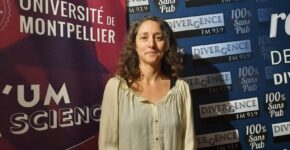
Katerina Ioannidou: From Soft Physics to Concrete Applications
Content Type: Profile
A researcher at the Laboratory of Mechanics and Civil Engineering (LMGC) in Montpellier, Katerina Ioannidou was awarded the CNRS Bronze Medal in 2024 for her work in statistical physics on porous concrete. Her research contributes to the development of materials capable of storing energy and sequestering carbon.

"UM : Science" [S03-ep27]: Yellow Vests: What Remains of the Revolt?

Content type: Podcast

Published on: May 30 , 2024

This week on *A l’UM *: Science with Emmanuelle Reungoat, a researcher at Cepel and an expert in…

[LUM#21] Fred, age 7: “Why do people cut down trees in the forest?”

Content type: LUM Magazine , Podcast

Published on: May 22 , 2024

Fred, age 7. Future X-wing pilot. You’ve probably already seen, while walking through the woods, some…
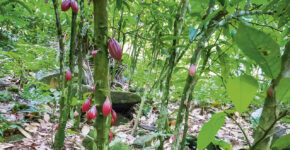
[LUM#21] Let It Grow

Content type: LUM Magazine , Podcast

Published on: May 21 , 2024

What if we stopped replanting trees in cleared forests and just let them…
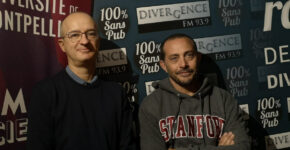
At theUM of Science [S03-ep26]: 60 billion combinations of genetic variants

Content type: Podcast

Published on: May 16 , 2024

This week on *A l’UM : Science*, Gabriel Krouk, a biologist at Ipsim, and Andre Mas,…
[Takeoff #8] Toward a Marie Sklodowska-Curie Postdoctoral Fellowship

Content type: Article , Video

Published on: May 14 , 2024

Katalin Gosztonyi is an associate professor at Eötvös Loránd University in Budapest.…
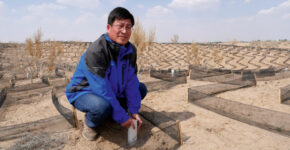
[LUM#21] Anatomy of a Fall

Content type: LUM Magazine , Podcast

Published on: May 14 , 2024

Has the Great Green Wall of Africa project, launched in 2008, already failed? Many…
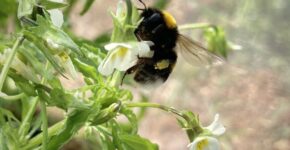
Flowers are letting pollinating insects down

Content Type: The Conversation

Published on: May 12 , 2024

As the decline in insect populations continues unabated, new questions are arising about…

Entrepreneurial support: Still Need to Be Made More Widely Available

Content Type: The Conversation

Published on: May 6 , 2024

How many entrepreneurs in France actually receive support? Some…
Science at theUM [S03-ep25]: Gardening at School

Content type: Podcast

Published on: May 2 , 2024

This week on *A l’UM * Science, Sylvain Wagnon, a researcher at Lirdef, the laboratory…

Page Navigation

Previous Page1 … Page29 Page30 Page31 Page32 Page33 … Page94 Next

Follow the latest newson
from theUM

Subscribe to the newsletter
University
  • Organization, Governance, and Governing Bodies
  • Colleges, Schools, and Institutes
  • Research Organizations
  • Flagship Projects
  • Heritage
  • Environmental Issues and Social Responsibility
  • Working at the University
Training
  • Admissions & Registration
  • Information, Career Guidance, and Job Placement
  • Succeeding in School
  • Enhance Your Education
  • Graduated School
  • Educational Innovation
Research
  • Research Centers
  • Doctoral and HDR Training
  • Science and Society
  • Scientific Appeal
  • Major Programs
Innovation
  • University Innovation Hub (PUI)
  • University-Industry Partnerships
  • Valuation
  • Entrepreneurship
Campus
  • Art & Culture
  • Student Life
  • Health, Social Services, and Disabilities
  • Sports
  • Community Life
International
  • International Partnerships
  • Mobility
  • Erasmus+ Training Projects
  • Classes Taught in English
  • CHARM-EU European University
  • Scientific Appeal


UNIVERSITYOF MONTPELLIER
163 Auguste Broussonnet Street
34090 Montpellier

04.67.41.74.00

  • News
  • Calendar
  • Press Room
  • Facebook
  • Twitter
  • Pinterest
  • Instagram
  • YouTube
  • LinkedIn
  • Legal Notice
  • Accessibility: Partially compliant
  • Privacy Policy
  • Site Map
  • Public Procurement