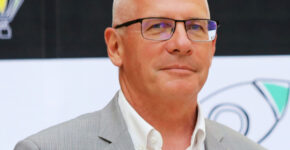
François Pierrot, Elected Vice President of International Relations
Content Type: News Brief
Published on: March 14 , 2023
Upon the recommendation of President Philippe Augé, François Pierrot was elected Vice President in…
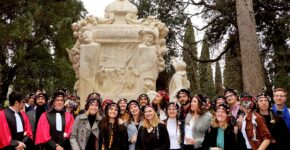
Live joyfully, live like Rabelais!
Content Type: Article
Published on: March 10 , 2023
On Wednesday, March 8, students, doctors, university staff, and friends of the university…

"UM : Science" [S02-ep17]: The Impact of Menstrual Products on Women's Health on BioWooEB
Content type: Podcast
Published on: March 9 , 2023
This week on *A l’UM *: science. Ignacio Bravo, a virologist at Mivegec, reveals a study…
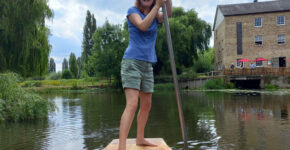
Alison Duncan: Competition and Cooperation Among Parasites
Content Type: Profile
Alison Duncan is a researcher in evolutionary ecology at the Montpellier Institute of Evolutionary Sciences (ISEM). To better understand the dynamics of epidemics, she studies interactions between parasites, as well as between hosts and parasites. In 2022, she received the Mariano Gago Springboard Award for bilateral cooperation between France and Portugal.
Official Launch of the ExposUM Institute
Content Type: Calendar
Low Tech Mural
Content Type: Calendar
A Festive Tour of Macondo, a Low Tech site on the outskirts of Montpellier
Content Type: Calendar
Call for Proposals: 2023 ExposUM Doctoral Nexus Institute Training Program
Content Type: Call for Proposals
Published on: March 1 , 2023
ExposUM is an initiative of the University of Montpellier and its partners aimed at…

Low Tech: What Are the Societal Implications?
Content Type: Calendar
Rouages: “Managing Information Related to the University’s Real Estate Assets”
Content type: Article , Video
Published on: February 24 , 2023
Philippe Simonin is the head of the Strategy and Asset Management Department within the … division.
Water and Sustainable Cities: The Solutions of the Future Are Taking Shape in Montpellier!
Content Type: Article
Published on: February 23 , 2023
Under the theme “Water and Sustainable Cities,” more than 400 students,…

IDIL: INTERDISCIPLINARY IN LAB
Content Type: Page
Le programme gradué de l'Université de Montpellier Le programme gradué IDIL "Inter Disciplinary In Lab" est une initiative de l’Université de Montpellier. Financé par le plan France 2030, au titre de l’appel à projet "Structuration de la Formation par la Recherche dans les Initiatives d’excellence" (SFRI), le programme gradué IDIL est rattaché à la Direction des Programmes Structurants de l’Université de Montpellier. L’ambition du programme gradué IDIL est de repenser la formation des étudiantes et étudiants qui se destinent à la recherche, par l’apprentissage en immersion dans les laboratoires de Recherche rattachés à l’Université de Montpellier et ses partenaires. Douze parcours de Master et un parcours Ingénieur (Institut agro /ENSCM / Polytech) ont d'ores et déjà été adaptés au format IDIL, impliquant 5 composantes différentes de l’Université de Montpellier : Faculté des sciences, Faculté des Sciences et Techniques des Activités Physiques et Sportives (STAPS), Faculté de pharmacie, Faculté de médecine, Faculté de droit et Montpellier Management. Les cours sont dispensés en anglais et les différentes unités d’enseignement permettent une approche multidisciplinaire des thématiques, afin de répondre aux enjeux actuels de la recherche. https://www.youtube.com/watch?v=1ild6sOZdq4 Les objectifs du programme Développer l’attractivité internationale des formations
L’enseignement en anglais a pour objectif d’améliorer l’attractivité des formations de l’Université de Montpellier auprès des étudiantes et étudiants internationaux. Un programme de soutien financier spécifique est mis en place pour favoriser l’arrivée des nouvelles étudiantes et nouveaux étudiants internationaux : bourse de vie sur 4 mois ; bourse de mobilité pour la prise en charge financière des titres de transport ; cours de Français Langue Étrangère. Proposer un apprentissage par la recherche
Les étudiantes et étudiants IDIL réalisent une immersion chaque année en laboratoire sur des périodes allant de 3 à 6 mois, en fonction des disciplines. Ce format leur permet de découvrir leur futur milieu professionnel, au plus tôt dans leur formation. Pour favoriser l’apprentissage, le nombre d’heures d’enseignement classique a été réduit et les notions disciplinaires sont, dorénavant, développées par une ou un "mentor", avant et pendant le stage. Des travaux pratiques, dits "In Lab", sont également dispensés par les équipes de recherche en laboratoire, sur un ou deux jours, dans le but d’apprendre une technique, une méthode ou une notion spécifique, directement là où se construit la recherche. Tous les stages sont gratifiés, soit par le programme IDIL en première année, soit par le laboratoire d’accueil en deuxième année. Un accompagnement personnalisé
Tout au long du Master, les étudiantes et étudiants sont accompagnés par 2 chercheurs ou enseignants-chercheurs, qui les aident à construire et alimenter leur projet de recherche. Le tuteur ou la tutrice pédagogique est présent uniquement en première année pour guider l’étudiant dans son projet professionnel, faire le lien avec le ou la mentor, et conseiller l’étudiante ou l'étudiant dans le choix de ses unités d’enseignement « à la carte ». Ainsi dès la première année, l’étudiante ou l'étudiant conçoit un projet professionnel appelé "personal project" qui sera sa ligne de conduite pour personnaliser sa formation. Le ou la mentor accompagne l’étudiante ou l’étudiant pendant ces deux années de stage et lui apporte tous les compléments disciplinaires nécessaires à l’apprentissage de sa discipline principale dite "CORE". Au-delà de l’encadrement du stage, le ou la mentor s’engage à intégrer l’étudiante ou l'étudiant dans son équipe de recherche et à le faire participer à la vie du laboratoire. Grâce à son mentor, l’étudiante ou l'étudiant instaure une relation de confiance avec son laboratoire d’accueil, dans lequel il ou elle peut se projeter afin d’envisager la poursuite de ses recherches vers un doctorat. Une approche multidisciplinaire à la carte
Le programme gradué IDIL souhaite favoriser une approche multidisciplinaire, en développant une nouvelle vision de la formation et de la recherche, basée sur des problématiques ou des thématiques situées à l’interface entre plusieurs thématiques de recherche. L’étudiante ou l'étudiant peut choisir ses spécialités dans les enseignements fondamentaux (dit "CORE"), ainsi qu’une initiation à une autre discipline du programme IDIL (enseignement appelé "NON CORE"). Il ou elle a également accès aux formations méthodologiques et professionnalisantes pour développer ses soft-skills. En M2, les étudiantes et étudiants de tous les parcours travaillent en groupe sur des projets multidisciplinaires mettant en résonance leurs compétences disciplinaires et savoir-faire respectifs. L’objectif est de faire émerger des projets de recherche multidisciplinaire. Le projet d’animation transdisciplinaire
Afin de resserrer les liens étudiants inter-parcours, le programme gradué IDIL a mis en place un projet de communauté étudiante innovant s’inspirant de la coupe des maisons de la célèbre franchise "Harry Potter ©". Les étudiantes et étudiants sont répartis aléatoirement dans une des maisons : rouge, jaune et verte, qui concourront au cours de l’année pour remporter la "IDIL House cup" mise en jeu. Au-delà de la création du sentiment d’appartenance à l’Université de Montpellier et au programme gradué IDIL, ce projet d’animation permet d’initier une relation de confiance entre les étudiantes et étudiants, et de développer leur esprit interdisciplinaire afin de les préparer à la mise en place du projet multidisciplinaire qu’ils devront réaliser d’ici la fin de leur cursus. Site web IDIL https://www.youtube.com/watch?v=_fvzS8BAkGc
Digital Technology for Education
Content Type: Page
To diversify teaching practices in support of student success and career readiness, the University of Montpellier leverages digital technology to address educational challenges. The University supports and facilitates educational transformation by integrating digital tools into the development of educational resources, equipping academic departments, schools, and institutes, redesigning learning spaces, and upgrading its IT infrastructure. To this end, it regularly responds to national and European calls for proposals and initiates projects on topics such as hybrid learning, the assessment of knowledge and skills using digital tools, and digital exam rooms. CNUMF The University of Montpellier supports the Digital Committee for Education (CNUMF), which has issued an annual call for proposals since 2016 to support projects in digital pedagogy. The supported projects fall into various categories: the production of new digital educational resources, the use of digital technology for assessment, the creation of MOOCs, and, since 2022/2023, the bimodal hybridization of instruction. Website AgilHybrid Since 2021, the University of Montpellier and its three partners—as part of the I-Site MUSE consortium—have been strengthening distance learning capabilities and expanding digital services for students. AgilHybrid receives government funding administered by the MESR under the Recovery Plan, as well as funding from the i-Site MUSE. EquipHybrid website Complementary to AgilHybrid, this project aims to develop equipment and infrastructure for hybrid teaching in Montpellier and at the Institut Agro Florac. It receives financial support from the 2014–2020 ERDF-ESF Operational Program for the “NextGenerationEU” European Recovery Plan, as part of the “REACT-EU” initiative. Website Digital Assessments and Exams Since 2019, the University of Montpellier has been rolling out several projects to develop an ecosystem for assessing knowledge and skills as part of efforts to make teaching more flexible. FlexiEval, funded by the Ministry of Higher Education and Research ( Research ) as part of the 2019 Call for Proposals “Pedagogical and Digital Transformation” PairsEval, funded by the MESR as part of the 2021 Call for Proposals “Emergence”

Blurred
Content Type: Calendar