Apprenticeship
An apprenticeship is a work-study program that combines academic instruction with professional experience in a company. This program allows students to work toward a degree while maintaining employee status.
Highly valued by both students and employers, the apprenticeship program is now a proven path to earning a higher education degree—from a bachelor’s degree through a master’s degree—while gaining significant professional experience. It also facilitates a smooth transition into the workforce through the acquisition of practical skills and the opportunity to hold a first skilled job.
Throughout the year, the apprentice alternates between periods of study at the university and periods of work at the company, according to a schedule jointly established by the educational institution and the employer. In exchange for their work, they receive compensation that varies based on their age and the year of the contract, and may be eligible for various forms of financial assistance.
Apprenticeships are available to young people under the age of 30 as of the date the contract is signed.
Why Choose an Apprenticeship?
An apprenticeship allows you to gain real-world work experience while continuing your studies. More than just an internship, it is a full-fledged employment contract that offers complete immersion in the professional world and hands-on experience in your chosen field.
This experience is a major asset for building a career, developing skills, and building a network of contacts. By the end of their training, apprentices typically have one to two years of professional experience, an advantage that recruiters particularly value.
Apprenticeships also make it easier to find a job: many companies choose to hire their apprentices once their contracts end.
What kinds of apprenticeship degrees are available?
Today, apprenticeships are available at all levels of higher education:
- BUT (Bachelor of Technology)
- Professional Bachelor's Degree
- Bachelor's Degree
- Master's Degree
- National Diploma
- Engineering Degree
- School Diploma
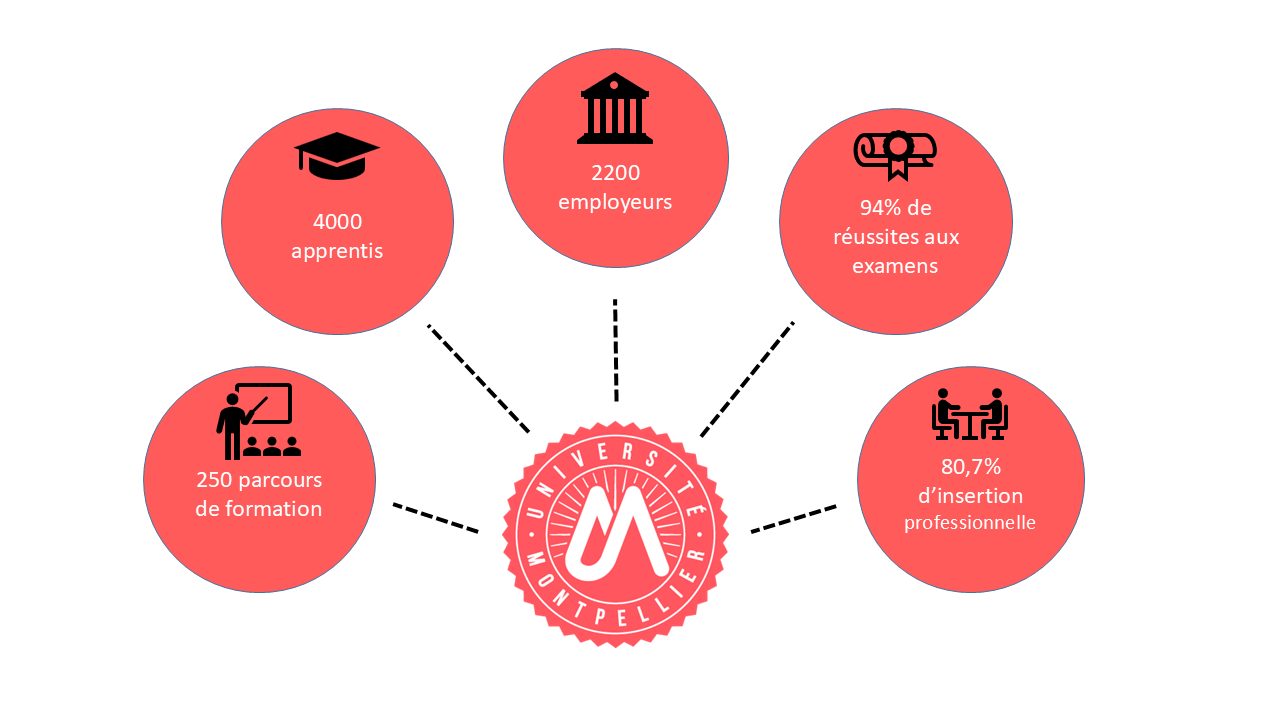
At the University of Montpellier, more than 250 apprenticeship programs are offered, and the selection grows every year. To find the program that fits your goals, check out our program catalog.
What is its status and what are its responsibilities?
The apprentice has dual status: as a university student and as an employee of the company. As such, he or she divides their time between classes at the university and assignments carried out at their host company.
The duration of the work-study program varies depending on the program and the needs of the companies: it can range from a few days to several weeks.
The assignments given by the company are approved by the teaching staff to ensure they align with the program’s objectives. This integration of theory and practice allows the apprentice to directly apply the knowledge gained in class to real-world professional situations.
What is the pay and what are the benefits?
An apprentice is bound to his or her employer by an apprenticeship contract and, as such, is entitled to all the rights applicable to employees: social security, paid leave, retirement benefits, etc.
His minimum compensation is set by regulation and depends on his age and the year the contract is performed.
An apprentice's salary based on age and year of training:
| Length of Service | Ages 18 to 20 | Ages 21 to 25 | Ages 26 to 29 |
|---|---|---|---|
| First year of study | 43% of the minimum wage – €802.82 | 53% of the minimum wage – €989.52 | 100% of the minimum wage – €1,867.02 |
| Second year of study | 51% of the minimum wage – €952.18 | 61% of the minimum wage – €1,138.88 | 100% of the minimum wage – €1,867.02 |
| 3rd year of study | 67% of the minimum wage – €1,250.90 | 78% of the minimum wage – €1,456.28 | 100% of the minimum wage – €1,867.02 |
In addition, years spent in an apprenticeship are counted as full years of work for the purpose of calculating retirement benefits.
Exemptions and Expenses to Anticipate
Apprenticeship students are exempt from:
- university tuition fees, covered by the CFA;
- from the student social security contribution, since he is enrolled in the general social security system as an employee.
On the other hand:
- The CVEC (Student and Campus Fee) is still due;
- Payments of need-based scholarships are suspended for the duration of the apprenticeship contract.
The Main Benefits of Apprenticeships
- Earn a recognized degree while getting paid
- Gain practical work experience
- Building Your Professional Network
- Facilitate entry into the job market
- Financing Part of Your Education
- Boosting Your Employability Right After Graduation
This program is now one of the best ways to combine academic success with professional experience.