Anne Mione: a Moma-certified director
Elected director of Montpellier Management in March 2026, Anne Mione is taking charge of her institution’s AACSB international accreditation process. This is a perfect fit for the University of Montpellier professor, who has devoted her research to the study of standards and certifications.
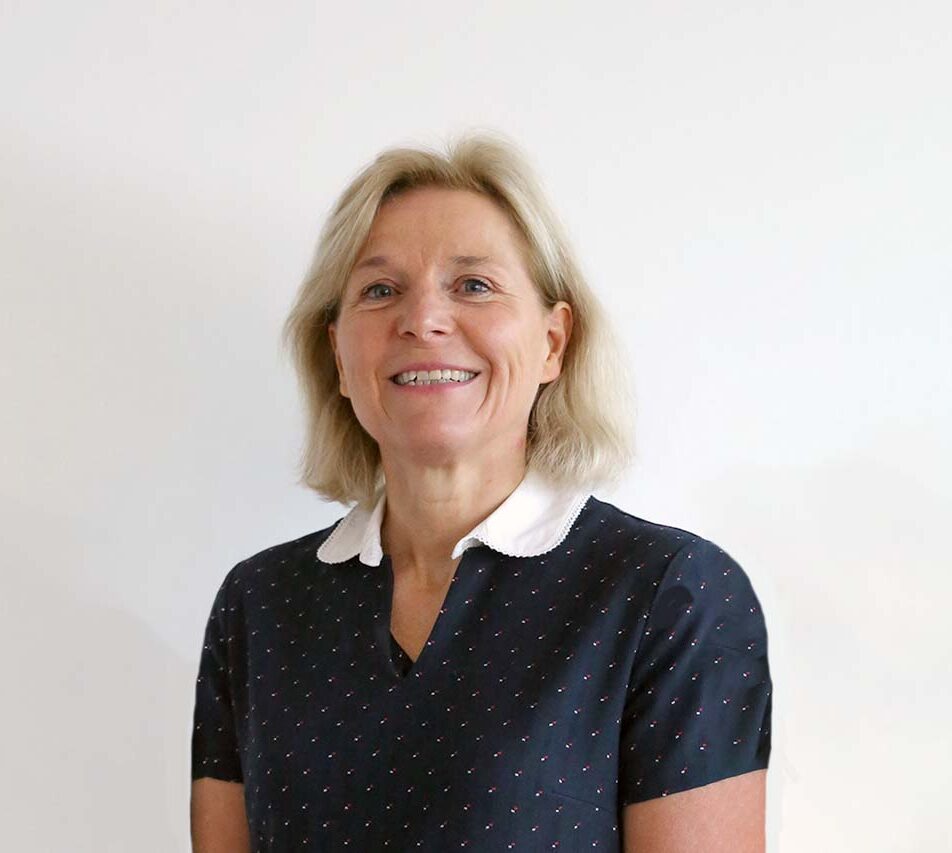
When Anne Mione was offered the directorship of Montpellier Management (MOMA), she couldn’t say no. It was an opportunity to give back to the institute “everything it has given[her],” shesays, both at the institutional level—through her international responsibilities—and in research and teaching, since she has established, among other things, a chair and a master’s program in apprenticeship.
AACSB Accreditation
Above all, the management professor sees this challenging assignment—particularly in light of questions surrounding the institution’sAACSB accreditation—as the culmination of her career.“Having devoted a large part of my research to standards and certifications, I felt I was well-positioned to reexamine the fundamentals, the strategic issues, and the need to fully embrace the accreditation process so that it can deliver its benefits,” explains the new director.
AACSB accreditation is an international mark of quality. “But it’s not just about winning a medal—accreditation is a process, ” explains the leader, who knows she must engage her team in a long-term effort. She is convinced that it will be an opportunity for everyone to reflect together on the institution’s mission.
A Critical Look
“What makes MOMA a good—or not so good—candidate for certification?” Anne Mione wants to take the time to figure that out, along with the rest of her team. She’ll also have to rely on her interpersonal skills.“Bringing the organization up to standard can be a difficult process if the standards aren’t shared. It’s complicated to incorporate metrics that both validate and invalidate practices.”
A project manager atAFNOR before choosing an academic career, she now takes a critical view of standardization, which she says “stifles creativity ”: “Standards aren’t always valued, especially in academic circles where uniqueness is sought after and everyone aspires to think for themselves.” ” She then objectively outlines the reasons for conforming to them: “We want certification to belong to the group of those who have it. Or to be different from those who don’t.”
International Recognition
In this case, to increase the international recognition that is so important to her. Having long been in charge of international relations, she is pleased to have significantly expanded academic mobility and the number of international students, which has grown from a handful to more than a hundred. This has been made possible through collaborations with institutions in Shanghai, Brazil, and Morocco. The professor also knows that an accreditation helps boost the university’s reputation, as it is not necessarily equipped to showcase its strengths in broader forums.
On the educational front, Anne Mione launched the Master’s in Retail Management in 2025, an apprenticeship program she is proud of. “I see the students thrive in the professional world, and I am convinced of the value of their academic background—they’ve been trained to think critically and take a step back to assess current realities. ” She is also pleased to be able to “instill a passion for research and critical thinking in students, particularly those coming from vocational bachelor’s programs for whom these are new approaches.” Especially since some may have been hurt by academic elitism, she confides .
The Rise of AI
Faced with the sudden emergence of AI in her classes, she makes room for discussion and direct questions during assessments. “ I’m concerned about the consequences of always having the answer at the ready—the loss of uncertainty in learning,” says the professor, who is attentive and equally mindful of young people’s commitment to their education in a society that constantly tempts them with distractions. Among her other initiatives is the creation of the Mareson Chair in Responsible Marketing and Well-Being, of which she is a co-founder.
"This offer of a leadership positioncame at an unexpected time, during a period in my professional life when I was actually thinking about slowing down a bit," says the 60-year-old. There’s no doubt that someone so passionate about the effects of standardization on organizations will see this as a wonderful way to wrap up her career.
News

Kōichi Tanaka, winner of the 2002 Nobel Prize in Chemistry, has been awarded an honorary doctorate from theUM
Published on: July 13 , 2026
Philippe Augé, President of the University of Montpellier, presented, on July 9, 2026, the…