Major programs
Investments for the Future
The "Investissements d’Avenir" program involves 35 billion euros, of which 22 billion euros are earmarked for higher education and research to strengthen France’s competitiveness on the global stage. Of these 22 billion euros, nearly 18 billion are allocated through competitive calls for proposals. The University of Montpellier is heavily involved in this program through numerous projects in which it serves as the lead institution or a partner. Learn more
ERC Grants
The European Research Council coordinates and funds scientific projects “at the frontiers of knowledge” within the European Union, offering grants that recognize scientific excellence. This program is open to all disciplines.
Current European Research Council projects:
ERC Starting Grant
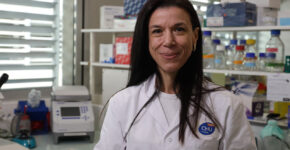
- Erika Burioli ( Host-Pathogen-Environment Interactions Laboratory) with the HYPERCAN project, which focuses on transmissible cancers in mussels.
Profile of Erika Burioli - Paul Antonio (Géosciences Montpellier) with the UBEICH project, which proposes a new experimental method to refine the dating of the Earth’s inner core.
Profile of Paul Antonio
ERC Advanced Grant
- David Mouillot (MARBEC), whose BLUE-AFRICA project will facilitate transdisciplinary research to assess the potential of coastal marine resources to reduce poverty and emigration in rural regions of East Africa affected by land desertification.
Read the press release
ERC Synergy Grant
- Daniele Di Pietro (Alexander Grothendieck Institute in Montpellier) with the NEMESIS project, which aims to understand how to overcome current technological barriers in numerical simulations of complex physical problems.
Portrait of Daniele Di Pietro
Past ERCs
- Sara Cavaliere (Charles Gerhardt Institute in Montpellier) and the SPINAM project, which focuses on electrochemical devices for hydrogen energy conversion and storage.
Video feature with Sara Cavaliere
Key Initiatives
As part of its ongoing strategy to support the scientific communities that define the site’s unique identity, the I-SITE Program of Excellence (PEI) designated five new key initiatives in April 2024. Three of these initiatives have an international focus and are funded by the UM2030 project under the France 2030 program – IDéES “Integration and Development of Idex and I-SITE,” while the other two, funded directly by the PEI, aim to bring together communities from various Montpellier research institutions around interdisciplinary themes to give them greater visibility.
Key international initiatives under UM 2030:
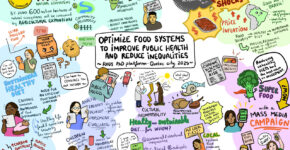
- Foods: Nutrition and Food Systems
- Vect-OH: Infectious Risks and Vectors in a One Health Approach
- Water: Water