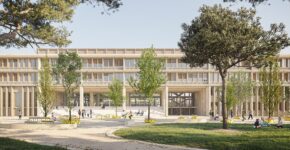
University Organization, Governance, and Governing Bodies
The University of Montpellier is an experimental public institution (EPE) with legal personality and autonomy in educational, scientific, administrative, and financial matters.
Led by a president elected by its Board of Directors, it consists of governance bodies, divisions, departments, and central services.
The University determines its educational and research policies in accordance with its regulations and contractual obligations.
President: Philippe Augé
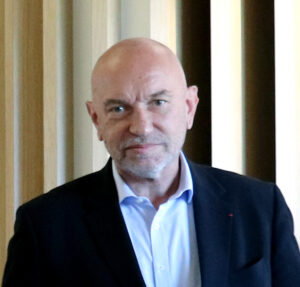
Philippe Augé, 58, is a professor of public law who specializes in tax law, tax procedures, and public finance.
After leading the merger of two Montpellier universities in 2015 to create the University of Montpellier, Philippe Augé worked to secure I-SITE accreditation through the “Montpellier University of Excellence” project, which involved 15 local partners. This momentum was reinforced by numerous successes in national programs such as the “Structuring of Education through Research s in Initiatives of Excellence (SFRI),” “Integration and Development of IdEx and I-SITE (IDéES),” and “ExcellenceS.”
Awarded the “University Innovation Hub” designation in 2021 and the “Science with and for Society (SAPS)” designation in 2024, the University of Montpellier has also been selected for projects under the “Skills and Careers of the Future (CMA)” program. Philippe Augé also led the university’s transformation into an experimental public institution effective January1, 2022.
Terms of Office:
- Re-elections for the presidency of the University of Montpellier (January 2019, January 2022, December 2025),
- Election for the presidency of the University of Montpellier (January 2015),
- Election as head of PRES Sud de France (January 2012–December 2014),
- Chair of the CPU's Legal Committee (2012–2014)
- Re-election as president of UM1 (March 2012),
- UM1 Presidential Election (March 2009),
- Vice Chair of the Board of Trustees of the University of Montpellier 1 (April 2004–March 2009),
- Director of the Joint University Service for Information, Academic Advising, and Career Placement (SCUIO-IP) (2002–April 2009),
- Chair of the National Conference of SCUIO-IP Directors (July 2007–June 2009),
- Director of the DESS program and later of the Professional Master’s program in Public Financial Law (2003–2006),
- Member of the National Council of Universities – Section 2: Public Law (October 2005 – December 2008),
- Director of Academic Affairs at IPAG (2002–2007),
- Associate Dean of the School of Law (2001–2003),
- Deputy Director of the Institute of Overseas Law (IDOM) (1999–2005),
- Member of the Montpellier Center for Administrative Research and Studies (CREAM) since
1990.
Career History:
- Master's Degree in Public Law (1990),
- Ph.D. in Public Law (1997),
- Qualification to Supervise Research (2007),
- Associate Professor of Public Law (1997),
- University Professor of Public Law (2009).
Honors and Awards:
- Knight of the Legion of Honor,
- Knight of the National Order of Merit,
- Commander of the Order of Academic Palms.
Vice Chair of the Board of Directors: Nicolas Marty
Vice Chair of the Board of Trustees of the University of Montpellier
(elected on December 17, 2025)

Nicolas Marty, 46, is an associate professor of public law at the Institut de Préparation à l’Administration générale (IPAG) in Montpellier, where he has also served as director since January 2020 (re-elected for a second term in January 2025).
Nicolas Marty specializes in administrative law and, in that capacity, has been a member of the Montpellier Center for Administrative Research and Studies (CREAM) since 2002. Through his affiliation with IPAG, he is involved in preparing students for the various civil service examinations across all three branches of the civil service, has contributed to the writing of several exam preparation books, and has served on various examination boards, particularly for local government civil service exams.
He has also served as vice president of the National Conference of Directors of Institutes and Centers for Civil Service Preparation (IPAG-CPAG), in charge of bylaws and research, since 2020.
Career and Positions Held:
- Since January 2025: Re-elected as director of IPAG in Montpellier
- Since 2020: Vice President of the National Conference of IPAG-CPAG Directors, responsible for bylaws and research
- 2020: Election for the leadership of IPAG in Montpellier
- 2018–2020: Director of Academic Affairs at IPAG in Montpellier
- 2017–2023: Co-director of the Master’s Program in Applied Public Law (Faculty of Law and Political Science, Montpellier)
- Since 2012: Member of the IPAG Management Board
- Since 2009: Associate Professor at the University of Montpellier
- 2007: Doctorate in Public Law
- 2005–2007: ATER (full-time)
- 2002–2005: Research Fellow – Teaching Assistant
- 2002: Master's Degree in General Public Law
Chief Operating Officer: Bruno Fabre
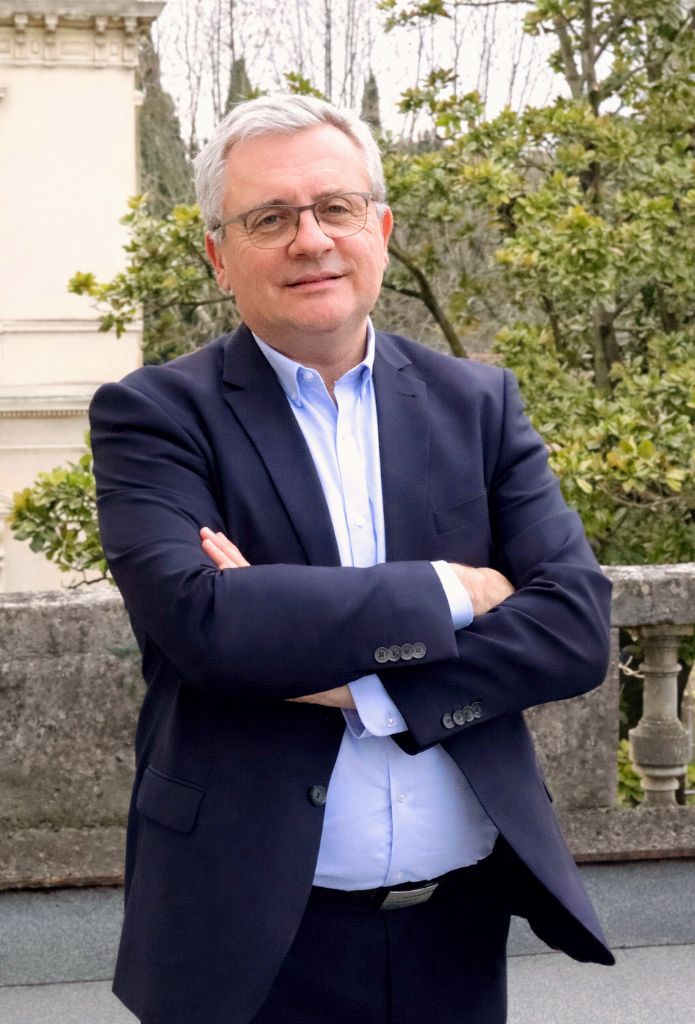
Bruno Fabre, 54, is a professor of management sciences and a specialist in finance.
Previously, he served as vice president of the Board of Trustees at the University of Montpellier in 2015; he was reelected on January 7, 2019; and he served as deputy vice president in charge of the budget, administrative and technical staff, and real estate at the University of Montpellier 2 (2012–2015).
mandates:
- 2022: Appointed Director General of Services at the University of Montpellier
- 2019: Re-elected as Vice Chair of the Board of Directors of theUM
- 2018: Appointed interim dean of the School of Law and Political Science
- 2016: Appointed interim director of the Montpellier Management Institute (MOMA), formed from the merger of ISEM and the Faculty of Economics and Management
- 2015: Elected vice chair of the Board of Directors of theUM
- 2012: Elected Deputy Vice President of UM2, responsible for the budget, administrative and technical staff, and real estate assets
- 2009: Elected to the board of the Montpellier Institute of Business Administration
- 2008: Elected to the Board of Trustees of the University of Montpellier 2
- 2007: Appointed interim director of the Béziers University Institute of Technology (IUT), which had become an independent institution
- 2002: Elected to the administration of the Department of Business and Public Administration (GEA) at the Montpellier-Sète University Institute of Technology (IUT)
Career History:
- 2009: University Teaching Certificate in Management Sciences
- 1999: Ph.D. in Management Science
- 1996: Agrégé in Economics and Management (high school teaching certification)
- 1995: Master's Degree in Management Sciences
Deputy Directors General
Sébastien PONS
Deputy Chief Administrative Officer in Charge of Resources and Oversight
Yves CORREC
Deputy Director General of Services in Charge of Real Estate, Logistics, and Health and Safety
Vice President and Statutory Vice Presidents
Agnès Mignot, Vice President for Research

University professor and member of the Montpellier Institute of Evolutionary Sciences (ISEM). Agnès MIGNOT served as Vice President for Research Streamlining and Monitoring of National Programs during the previous term.
Agnès Fichard-Carroll, Vice President for Academic Affairs and Student Life

Professor in the Faculty of Sciences and a member of the Montpellier Institute of Neuroscience (University of Montpellier, INSERM). A specialist in neuroscience, she has been teaching in Montpellier since 2001. Agnès Fichard-Carroll has served as Vice President for Education and University Life since 2022. She was Vice President for Social Responsibility at the University of Montpellier from 2015 to 2021. She has served as the institution’s Special Advisor for Gender Equality since 2015, a role she previously held while serving as Associate Vice President for Social and Cultural Affairs at the University of Montpellier 2 from 2013 to 2015.
Alexane Lequart, Student Vice President

Master's student in Public Management at Montpellier Management
François Pierrot, Vice President for International Relations

Director of Research CNRS,
Montpellier Laboratory of Computer Science, Robotics, and Microelectronics.
Philippe Combette, Vice President for Partnerships and Innovation
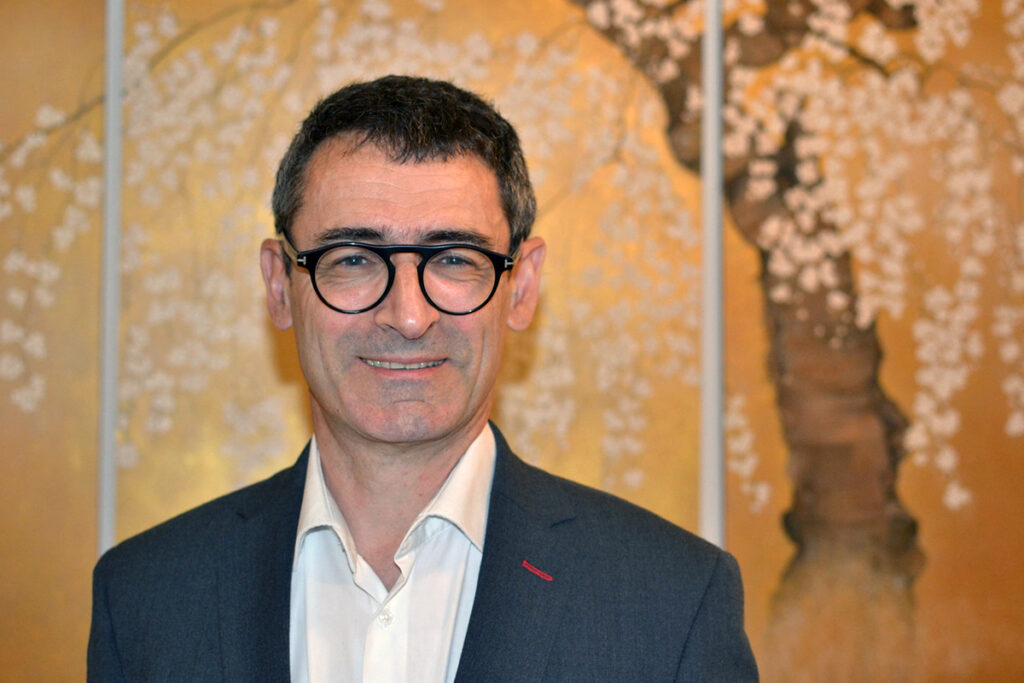
Professor at the Montpellier-Sète University Institute of Technology (IUT),
Institute of Electronics and Systems.
Séverine Boulon, Vice President for Social Responsibility and Campus Life

Assistant Professor at the Montpellier-Sète University Institute of Technology (IUT), Institute of Human Genetics (IGH)
Vice Presidents and Deputy Vice Presidents
Frédérique Carcaillet, Vice President for Environmental Issues

University Lecturer in the Faculty of Sciences, MARBEC (University of Montpellier, IRD, Ifremer, CNRS)
Bernard Maurin, Executive Vice President of Real Estate

University Professor, Nîmes University Institute of Technology; member of the Laboratory of Mechanics and Civil Engineering (University of Montpellier, CNRS)
Jacques Mercier, Vice President in charge of developing the research component of the 2027–2031 five-year contract

University Professor and Hospital Physician at the Faculty of Medicine,
Laboratory of Cardiac and Muscle Physiology and Experimental Medicine.
David Cassagne, Executive Vice President for Digital Technology and AI in Education

Professor in the School of Science, member of the Charles Coulomb Laboratory (University of Montpellier, CNRS)
Anne Laurent, Executive Vice President for Open Science and Research Data

Professor at Polytech, member of the Montpellier Laboratory of Computer Science, Robotics, and Microelectronics (University of Montpellier, CNRS)
Jean-Paul Cristol, Executive Vice President for Research Relations with Institutions and Organizations in the Health Sector

University Professor and Hospital Physician at the Faculty of Medicine, Laboratory of Cardiac and Muscle Physiology and Experimental Medicine – PhyMedExp
Isabelle Parrot, Executive Vice President for Science-Society Relations

Assistant Professor in the Faculty of Sciences, member of the Max Mousseron Institute of Biomolecules (University of Montpellier, CNRS, ENSCM)
Marie-Christine Sordino, Executive Vice President for Ethics and Professional Conduct
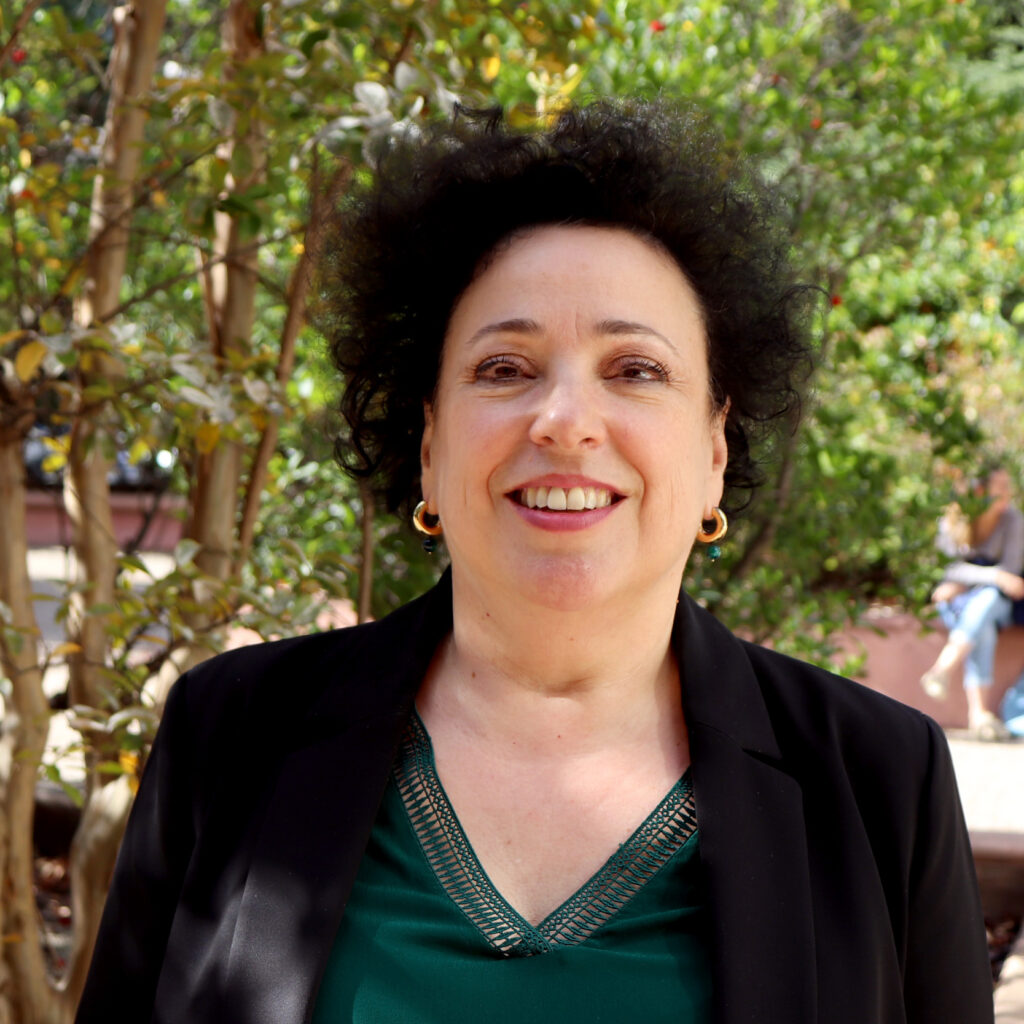
Professor in the School of Law and Political Science, member of the Dynamiques du droit research laboratory (University of Montpellier, CNRS)
Gérald Chanques, Vice President for Historic Heritage

University Professor and Hospital Physician, Associate Dean for General Affairs, Assets, and Asset Development, and Campus Life; Member of the Faculty of Medicine, Montpellier University Hospital; Laboratory of Cardiac and Muscle Physiology and Experimental Medicine (PhyMedExp / Inserm, CNRS, University of Montpellier)
Reference Materials
Activity Report
2024–2025 Annual Report
(2024 Review / 2025 Projects)
In 2024, the University of Montpellier once again distinguished itself through its dynamism, its capacity for innovation, and its commitment to addressing contemporary societal challenges. Through transformative projects led by a highly engaged academic community—despite a fragile political and budgetary climate—UM continues to assert its place among research-intensive universities, both nationally and internationally.
Our membership in the UDICE alliance, our successes in the European Research Council’s calls for proposals, and the inauguration of the IHU Immun4Cure, dedicated to autoimmune diseases, are all testament to this strong scientific ambition. The scope of our research also extends to major areas such as the exposome, artificial intelligence, and marine renewable energy, confirming our leading role in the ecological and technological transition.
In terms of education, theUM has taken a new step forward with the adoption of its first academic regulations (R3E) and the establishment of a framework for micro-certifications. The transformation of teaching practices—particularly through the integration of generative artificial intelligence—demonstrates our ability to anticipate and support changes in higher education. The past year also saw a strengthening of our efforts to promote student success and campus life. From JANE to community food drives, including the implementation of new study programs and the expansion of sports and cultural activities, we are making inclusion, solidarity, and well-being the cornerstones of our work.
International expansion remains a key focus of our strategy. Our involvement in the CHARM-EU alliance, our increased participation in major European events, and the development of bilateral partnerships are strengthening our presence in the global higher education and research community.
In 2025, we will resolutely continue the momentum we have built. The Hcéres evaluation of our research structures, academic programs, and the institution itself; the implementation of the new Long-Term Thematic Programs (PTL); the ramp-up of the University Innovation Hub; and the modernization of our infrastructure are all challenges that we will tackle collectively.
This report provides an overview of the key events of 2024, which we invite you to explore; it also outlines the initiatives currently being developed in 2025.
Previous editions:
Training Management
Training Management
The document presented here is intended to clarify how the training policy is implemented and managed at the central level in coordination with teaching and research structures and with our partners; to outline the responsibilities of the various bodies involved in its development; and to describe the administrative and technical resources that enable its implementation.
Master Plans
2025 MASTER PLAN FOR HISTORIC HERITAGE AND COLLECTIONS
On July 10, 2025, the Board of Trustees of the University of Montpellier approved its master plan for historical heritage and collections. As part of the 2021–2026 multi-year agreement signed with the government, this master plan addresses key challenges: making this exceptional heritage accessible to the entire university community, school groups, and the general public; optimizing the resources—particularly human resources—already allocated within the university; and developing a coherent, overarching vision for the management of historical heritage and collections.
Digital Master Plan 2024–2028
On June 10, 2024, the Board of Trustees of the University of Montpellier approved its digital master plan. Structured around nine strategic priorities, the plan aims to evolve digital tools to adapt to the institution’s new educational, administrative, and research needs and practices, and to take a significant step forward in the digitization of its activities. The result of several months of consultations and deliberations, this plan serves as a comprehensive roadmap for the 2024–2028 period.
2023–2026 Ecological Transition Master Plan
On November 20, 2023, the University of Montpellier’s Board of Trustees approved its master plan for ecological transition. The plan outlines four priority areas and 48 actions designed to strengthen the measures already implemented in recent years at theUM and to initiate and coordinate the implementation at each campus of an ecological transition policy that lives up to its ambitions.
2023–2025 Disability Master Plan
On November 20, 2023, the Board of Trustees of the University of Montpellier approved the new Disability Master Plan (SDH). While 43 of the 45 actions planned in the previous SDH have been implemented and the success of students with disabilities has been included in the 2023–2025 Contract of Objectives, Resources, and Performance (COMP), theUM e continues its commitment to greater inclusion of staff and students with disabilities.
Student Life Master Plan 2021–2026
On November 18, 2021, the University of Montpellier’s Board of Trustees adopted the new master plan for student life, the result of a broad consultation process led by the vice president for student affairs in collaboration with the Office of Student Life, focusing on key areas: sports, culture, campus life, health, social issues, and student engagement.
Charter & Principles
University of Montpellier Charter on Academic Freedom
On February 3, 2025, the members of the Board of Trustees approved the University of Montpellier’s charter on academic freedom.
Guidelines for the Use of AI in Education at the University of Montpellier
On January 28, 2025, the Committee on Education and University Life approved the guidelines for the use of Artificial Intelligence in education at the University of Montpellier. These guidelines were presented to the Board of Trustees on February 3, 2025.