And the CHARM alliance becomes a master…
It will be innovative, transdisciplinary, and firmly focused on major environmental and societal challenges. This master’s program—the only one of its kind in Europe—is the result of a collaboration between theUM , and its four partners in the CHARM-EU alliance, and will launch in the fall of 2021. A small educational revolution presented by Gilles Subra and Patricia Cucchi of the University of Montpellier.
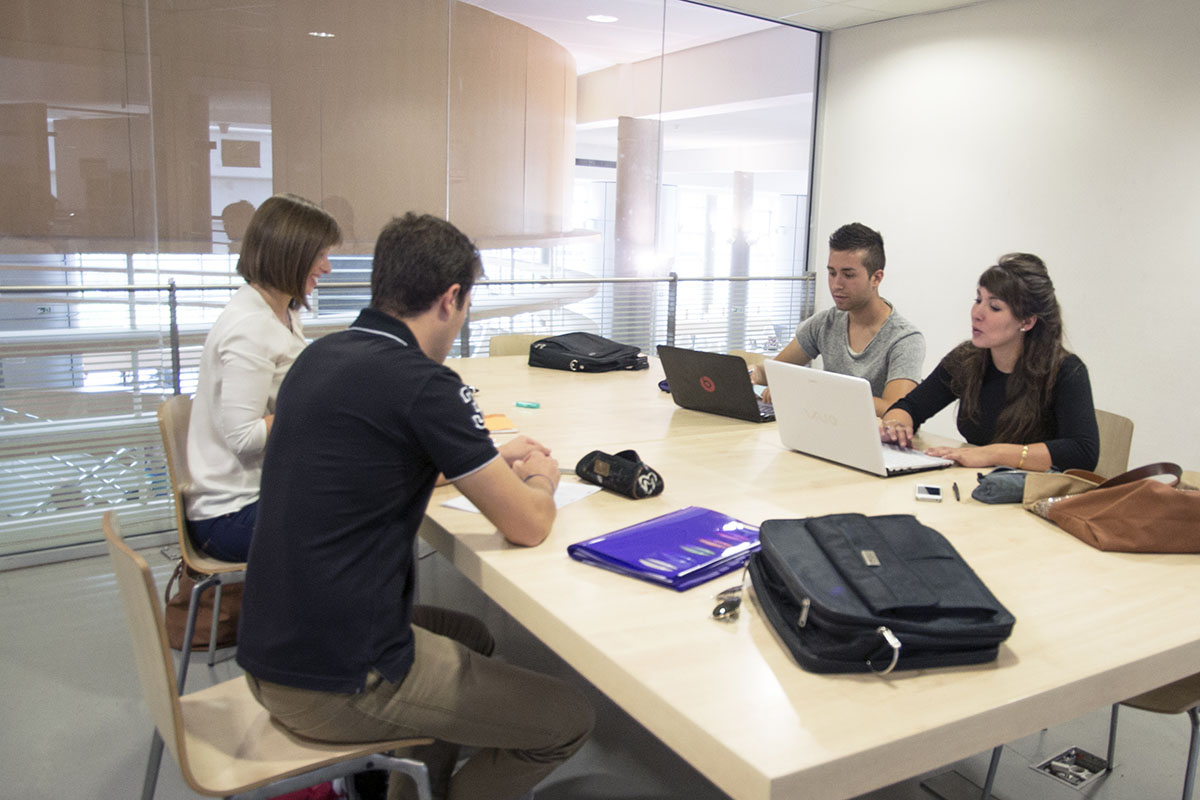
Imagine a master’s program bringing together students from all over the world and from fields as diverse as law, biology, the humanities and social sciences, sports, and management. Imagine that this master’s program is jointly run by several major European universities and that all these young minds pool their expertise to tackle concrete issues such as world hunger or water management. A dream? No, but “a very ambitious, unique, and completely new project,” emphasizes Gilles Subra, a chemistry Professor r at the University of Montpellier and project manager within the CHARM-EU alliance.
Meeting the Challenges of Today and Tomorrow
This master’s program, which will launch in Montpellier at the start of the 2021 academic year, is not the result of a magic wand but rather of a long-term effort, which began over a year ago within the CHARM-EU alliance—a partnership that brings together Trinity College Dublin and the universities of Barcelona,Utrecht,Eötvös Loránd in Budapest, and, of course, Montpellier. These five major European institutions have chosen to join forces to tackle, as a unified front, the environmental and social challenges facing our societies.
Three major themes, aligned with the Sustainable Development Goals (SDGs) set by the United Nations, emerged from this initial phase of collaborative work: water management (SDG 6), global health—encompassing human health (SDG 3) and environmental health (SDGs 14 and 15)—and, finally, food (SDGs 2 and 12). “We don’t want to compete with existing master’s programs,” explains Gilles Subra. “We won’t be training economists or hydrologists, but rather new transdisciplinary professionals geared toward European careers—managers of cross-cutting projects.”
Developing European profiles
A total of about 100 students will be recruited by the five universities—about 20 at each campus. They will benefit from an innovative curriculum based on active learning. “It can be summed up in two words: ‘challenge-based.’” “Our goal is for students to acquire skills that will help them tackle challenges related to the major themes covered,” explains Patricia Cucchi, a professor and researcher in organismal biology at the University of Montpellier and a member of the CHARM-EU working group on teaching and learning strategies.
Students will therefore be called upon to tackle challenges originating from civil society, the business world, or the research community, always with a scientific approach and rigor as the cornerstone. “They may come with their own project or choose to develop one—individually or as a group—but always in close collaboration with laboratories, companies, or organizations,” adds Patricia Cucchi. Exam procedures will also be revised. There will be no traditional midterms here, but rather “a student-centered, ongoing assessment tailored to each student’s pace, utilizing a wide range of methods from simple quizzes to portfolios.”
While mobility will, of course, be the norm in this program, a digital learning environment shared by all five universities will also be made available to students, and distance learning programs will be developed. This means that a student enrolled in Dublin will be able to take courses offered in Montpellier or Barcelona. “This is a wonderful opportunity for faculty and researchers to showcase their laboratories and their work to international students,” emphasizes Gilles Subra. Upon completion of this program, which can be completed in 12 or 16 months, students—initially recruited after completing their first year of master’s studies—will receive degrees from all five partner universities.
The "Knowledge Creation Team"
In preparation for the start of the 2021 academic year, the focus is now on forming teams known as KCTs, or “Knowledge Creation Teams.” Approximately 50 faculty members andProfessors in Montpellier and 175 across the alliance’s five universities participated in an orientation seminar on June 15 regarding this upcoming CHARM-EU master’s program. “To develop the content for these transdisciplinary courses, we need to form international, multidisciplinary knowledge creation teams composed of researchers and faculty members who are also researchers,” explains Gilles Subra.
These international KCTs will meet regularly and will be responsible for developing educational content aligned with the three main themes selected, as well as identifying relevant guest speakers—again, from the worlds of research, business, and civil society. Finally, providing guidance to students during their final-year projects will be a key focus. “This marks the start of a truly different approach to education,” continues the CHARM-EU coordinator. “But we’re only at the beginning, and the teams are meant to evolve. Anyone who wishes to do so is welcome to join us along the way.”
Tools have also been developed to support and advise teachers in choosing innovative teaching methods and using new technologies. Moreover, teaching approaches themselves must be part of a responsible and sustainable framework. Issues such as the environment, gender equality, multiculturalism, and accessibility “must not merely be principles but must be integrated and applied across all teaching practices,” emphasizes Patricia Cucchi.
A “synergy that benefits everyone”
Researchers are particularly encouraged to participate in this project, since—beyond the master’s program—the CHARM-EU alliance aims to forge strong ties not only between universities but also between research laboratories, as Gilles Subra points out: “The master’s program’s themes align with the MUSE themes, and we hope this will help foster new research projects and expand everyone’s networks within this multidisciplinary framework.” Start-ups and companies partnering with universities will also have an important role to play in this endeavor, as will associations and local governments . “We want to create a synergy that benefits everyone,” concludes Patricia Cucchi.