[LUM#23] “In Paris, who lives near the ring road?”
In 2025, the American Thoracic Society published an article calling for greater equity in respiratory health. At stake? Increased exposure of vulnerable populations to pollution caused or exacerbated by climate change. Among the authors is Isabella Annesi-Maesano, a researcher at the IHU Immun4Cure in Montpellier. Interview.
This article (“Climate Change and Respiratory Health: Opportunities to Contribute to Environmental Justice: Report from an Official Workshop of the American Thoracic Society, 2 025”) is the result of work conducted by the American Thoracic Society, of which you are a member. What is it about?
They are pulmonologists, nurses, nutritionists, physical therapists—
, or “caregivers,” as they say in English—respiratory health professionals. It’s a large organization, but not as large as the European Respiratory Society, of which I am also a member.
What are the most common respiratory diseases?
There is asthma, of course—or rather, various forms of asthma, as there are several types that affect 340 million people worldwide. But the most common is COPD, or chronic obstructive pulmonary disease, which is the third leading cause of death globally and affects 400 million people. It is a disease that is often diagnosed late because it is characterized by a gradual decline in lung function, which is often attributed to aging. Then there is lung cancer, pulmonary fibrosis, etc. Respiratory diseases are often conditions that cannot be cured, but whose progression can be halted or slowed.
What role does the environment play in the development of these diseases?
It’s a direct one. For cancer, the primary cause is obviously tobacco, but pollution is also a factor. In all cases, these are multifactorial diseases, but epidemiological studies clearly demonstrate the significant role of pollution, and this makes sense: as their names suggest, these are respiratory diseases, so what we inhale plays a crucial role.
I learned from your article that global warming increases exposure to natural pollution. What are these forms of pollution?
These are air pollutants generated by natural disasters:
such as the massive wildfires we’ve seen in Canada or Australia (Cold forests are burning! Siberia is burning, Canada is burning! 2021). There are also volcanic eruptions, earthquakes, and sandstorms. This affects Europe less, of course, even if sand sometimes reaches Paris. Furthermore, inhaled biocontaminants—pollen, mold, and infectious agents—are also influenced by climate change.
You claim that one of the primary causes of environmental injustice is linked to urbanization—don’t we all breathe the same air?
Indeed, urbanization, with all that it entails—traffic, air conditioning,
housing, industry—is a major source of pollution (AtUM , Living with Industrial Pollution, 2023). By 2050, 70% of the world’s population will live in cities, yet we do not all live in the same cities. Our countries have been deindustrialized, but this is not the case in Eastern Europe, let alone Asia.
You mention that rising temperatures due to global warming will exacerbate these respiratory risks. Why is that?
Yes, air temperature increases the risk of inflammation and also boosts levels of certain pollutants that cause respiratory problems, such as nitrogen dioxide, fine particulate matter from vehicle traffic, and ozone—a secondary pollutant that increases the risk of cardiopulmonary diseases. Rising temperatures also lead to an increase in certain types of pollen.
Which groups are most at risk?
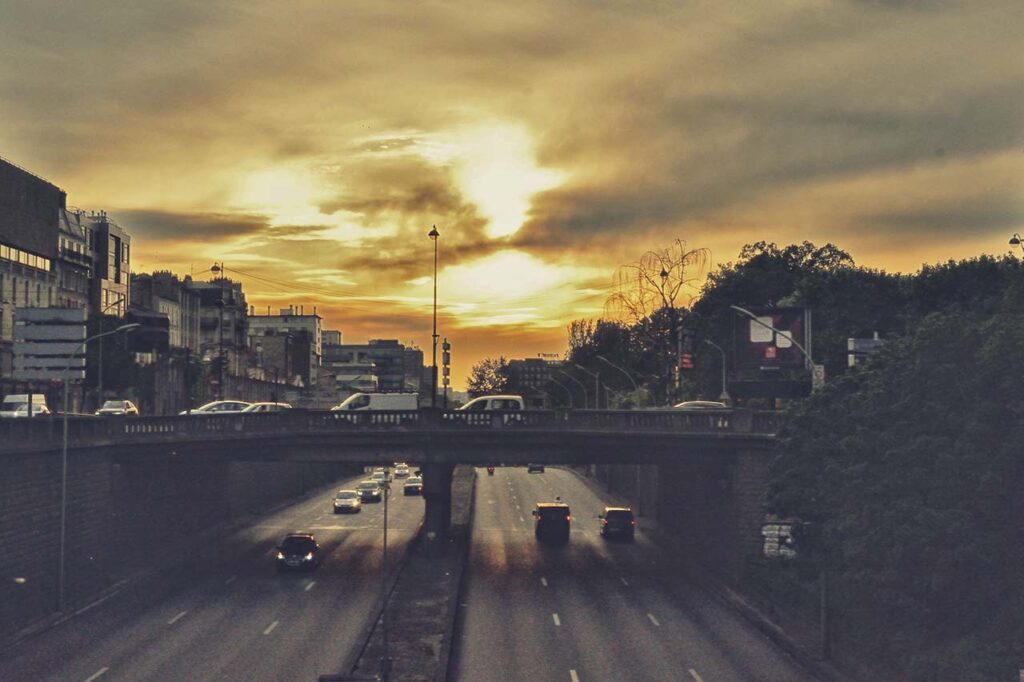
Obviously, it is first and foremost those who are most economically vulnerable. In Paris, who lives near the ring road? Disadvantaged social classes and ethnic minorities are more exposed to this outdoor pollution, but also to indoor pollution. Poorly insulated homes increase the risk of being exposed to excessive heat during heat waves, but also, when the weather is humid, to biological contaminants, particularly mold. Mold is bad for the lungs—it’s actually very unhealthy. But it’s not just the air; water and soil pollution also play a role.
In respiratory diseases?
Yes, nutrition, for example, which depends on contamination of water, soil, etc.
is a risk factor. We know that lower-income social classes are forced to buy low-quality products that are often contaminated. Every day, we see that there are terrible things in what we eat.
Is exposure the only factor contributing to inequality?
It is the primary factor, but not the only one; there are also inequalities in access to healthcare. The poorer you are, the less access you have to healthcare and screenings, which means that the disease is diagnosed later, at more advanced stages. There is also inequality in access to rights.
In what way?
Disadvantaged communities often have less political clout and fewer resources to challenge certain projects, such as the construction of a polluting factory, a landfill, etc.
In the article you co-authored, there is a call to rethink environmental and healthcare systems.
Yes, and this can be done on four levels. The individual level: if we are informed, we can avoid exposing ourselves to certain risk factors. The family level, in terms of diet or exposure to certain pollutants such as cigarette smoke. Then there is the community level. In the face of global warming, Paris does not implement the same policies as other cities… Finally, the last level is societal. Pollution is the result of collective choices (urban planning, transportation, energy, housing). Obviously, the smaller the scale, the easier it is to take action.
How can the medical community contribute to greater equity in respiratory health?
There is a lack of knowledge about the links between the environment and health, including inequalities in exposure and access to care. Medical societies must get the message across by emphasizing the need for prevention, but let’s be honest: if you organize a session on the latest COPD treatment, the room will be packed to the brim. That won’t be the case if you organize a session on climate change. Doctors’ primary interest is, above all, providing care.
UM podcasts areUM available on your favorite platform (Spotify, Deezer, Apple Podcasts, Amazon Music, etc.).