Terratis is making waves in the fight against the tiger mosquito
Following an evaluation and a proposal from the University Innovation Cluster led by the University of Montpellier, BPI France announced during the “4th Anniversary of the DeepTech Plan” on March 28 the first BFT Lab shortlist, which included Terratis, a future Montpellier-based startup. Implemented by the French government, this grant is intended for pre-launch projects within the PUI that are undergoing technical pre-development or maturation, with the aim of accelerating their entry into the market. For Terratis, the BFT Lab grant will facilitate the implementation and industrialization of the Sterile Insect Technique (SIT) in France. Developed in Réunion by the French National Research Institute for Sustainable Development (IRD), this method for controlling the tiger mosquito can also be applied to agricultural pest insects of interest to the Occitanie region.
Behind the Scenes of a Preliminary Selection Process
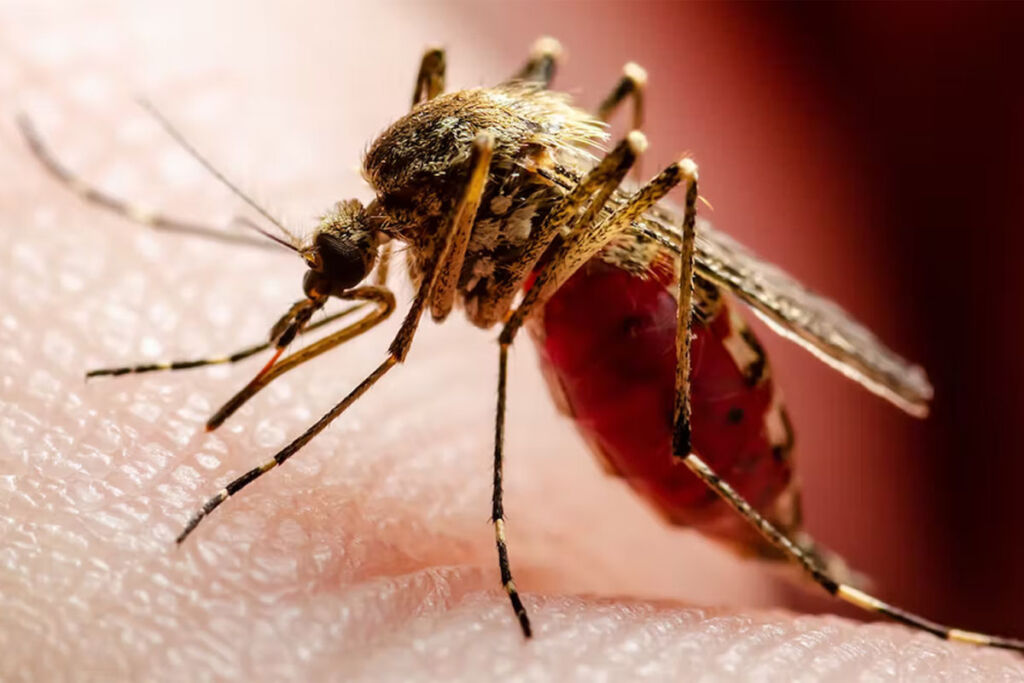
Reducing the mosquito population… by releasing mosquitoes. That’s the principle behind TIS, which aims to combat Aedes albopictus in particular by releasing previously sterilized males. This technology is generating interest nationwide, with the initial shortlisting of the future Montpellier-based startup Terratis for a grant that complements the technology maturation initiative led and funded by SATT AxLR in the amount of 850k€. The BFT Lab supports project leaders mentored by member institutions of the Montpellier PUI, in collaboration with the University of Montpellier, ranked third worldwide in the field of ecology.
This national first exemplifies theUM ’s ability to bring together, within the Montpellier PUI, all stakeholders in innovation to support and guide our laboratories in commercializing their research. Terratis, co-founded and led by Clelia Oliva, has thus been able to benefit from the full range of expertise developed and expanded within the PUI and now complemented by this BFT Lab.
This outstanding recognition from BPI France strongly motivates the University of Montpellier to continue this work and its commitment to presenting to the government a vision of the regional innovation ecosystem developed in Montpellier.
“Montpellier is a major research hub from which a large number of innovative startups are emerging. It’s a real springboard for a young company like ours, which is part of the Med Vallée ecosystem. We benefit from technology transfer through the IRD and our strong ties with the teams based in Montpellier, which are key to the solid implementation of the TIS and the company’s success,” says Clelia Oliva, co-founder and director of Terratis.
TIS Serving Communities and Large Private Properties
Terratis is working on the industrial-scale implementation of the Sterile Insect Technique (SIT) for its future deployment in France. This technique makes it possible to gradually reduce tiger mosquito populations in a given area by interfering with their reproductive cycle. Since male mosquitoes do not bite, the process simply involves releasing sterilized males so that they mate with wild females, thereby preventing their reproduction.
“Since the insects do all the work naturally and without designated treatment zones, this approach benefits all citizens. Its effectiveness has already been proven in several regions. On the island of Réunion, the proof-of-concept study conducted by the IRD in 2022 reduced fertility by 60% at the neighborhood level. “We are working with local stakeholders to use this eco-friendly and more targeted solution as a complement to traditional methods of controlling the tiger mosquito, once our large-scale breeding farm project becomes operational by 2028,” adds Clelia Oliva.
For a community, for large private areas such as campgrounds or recreational parks, or even for airports, the positive impacts will be significant in terms of reducing costs associated with nuisances and health risks, as well as improving quality of life.
“This ambitious business venture, the only one of its kind in France, is coming to life thanks to the support and guidance of Montpellier’s innovation and research ecosystem—in particular the University of Montpellier and its INITIUM incubator, the Montpellier BIC, the SATT AxLR, IRD, and INRAE—as well as the Occitanie Region,” explains Clelia Oliva.
More information:
About the University of Montpellier: With its 17 faculties, schools, and institutes, as well as its 74 research centers, the University of Montpellier brings together a vast community of knowledge spanning science, technology, physical education and sports, medicine, pharmacy, law, political science, economics, and business administration. With more than 52,000 students and 4,800 staff members, the University of Montpellier is now one of France’s largest universities. The “UM ” is internationally recognized for the excellence of its education and research (ranked in the top 200 in the Shanghai General Ranking and in the top 3 in ecology in its thematic ranking). The University of Montpellier, which also ranks among Europe’s most innovative universities (Reuters ranking), has been home to a “University Innovation Hub” (PUI) since 2022. Driven by the collective momentum generated by the I-SITE excellence program, it brings together 10 research organizations, 3 healthcare institutions, and 2 schools, and involves key players in the innovation ecosystem such as the SATT AxLR, the Montpellier Metropolitan Area Business Incubator (BIC), the Occitanie Regional Economic Development Agency, and BPI France. From training to business creation, the Montpellier PUI promotes early detection and support—particularly through the “PEPITE DeepTech” initiative—and fosters synergy among innovation initiatives at the local level. Since 2020, startups building on the research work of the Montpellier PUI’s partners have raised more than €300 million.
About Terratis: This young research-based startup from Montpellier, currently being founded by Clelia Oliva and Allan Debelle, is committed to responsible pest management. Terratis is working on the industrialization and deployment of the Sterile Insect Technique (SIT). The establishment of a pilot production line and a market validation phase is expected to result in the hiring of 7 employees in 2024, with more than 15 additional jobs created by 2028 for the operational launch of the mass breeding farm. Studies regarding the breeding farm project and its location will begin in 2024 in collaboration with local stakeholders.
About the IRD : The French National Research Institute for Sustainable Development (IRD) is a multidisciplinary French public research organization that, for nearly 80 years, has been engaged in equitable partnerships with countries in the Global South and France’s overseas territories. As a key player in the international development agenda, its priorities are aligned with the implementation of the Sustainable Development Goals (SDGs). Together, the Institute’s scientists and partners propose concrete solutions to address the global challenges facing societies and the planet. This win-win relationship makes science and innovation major drivers of development.
About SATT AxLR: SATT AxLR is a technology transfer acceleration company specializing in the development and commercialization of innovative projects stemming from public research. It works with most of the public research laboratories located in Occitanie, one of the most dynamic regions in France and Europe, with nearly 200 laboratories and nearly 11,000 researchers and research staff. Since its creation, SATT AxLR has funded 192 innovation programs, invested 67M€, signed 173 technology transfer agreements with companies, and supported 119 startups.