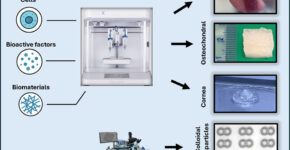
What is 3D bioprinting used for?
Content Type: Calendar

CERN's Future Large Hadron Collider and Scientific Prospects
Content Type: Calendar
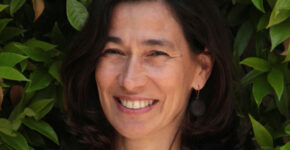
Laura Michel – MAK’IT Great Again
Content Type: Profile
A political scientist at theUM, Laura Michel has been coordinating a research group focused entirely on the social sciences and humanities and dedicated to public transition policies since 2024. This role led to her appointment as director of the Mak’it program, the Montpellier Institute for Advanced Studies, which specializes in transition.
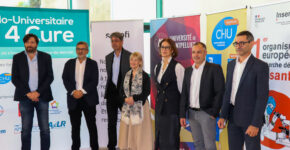
World First: Creation in Montpellier of a Translational Center of Excellence Dedicated to Innovation in the Fight Against Inflammatory and Autoimmune Diseases
Content Type: Press Release
Published on: October 15 , 2025
This Thursday, October 15, 2025, in Montpellier, the IHU Immun4Cure, the University Hospital, the University of…
Offshore Energy Platforms: The New Challenge for Inspection Robotics
Content Type: Calendar
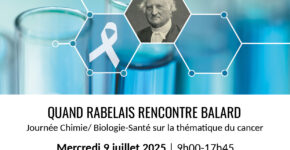
When Rabelais Meets Balard
Content Type: Calendar
The AAP – “NEXT” and “CHEM-IA” Master’s Internship Scholarships from the Chemistry Cluster
Content Type: Call for Proposals
Published on: May 16 , 2025
The Chemistry Research Cluster is issuing calls for proposals for NEXT 2026 and CHEM-IA 2026 for the…
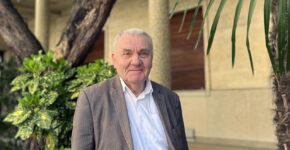
ERC Horizons: Pushing the Boundaries of Research
Content Type: Article
Published on: April 30 , 2025
Between 2014 and 2021, mathematician Jean-Pierre Bourguignon served as head for seven…
MIPS Hub Week
Content Type: Calendar
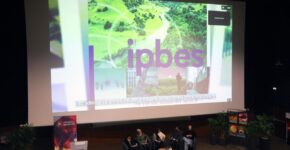
How can we transform our societies to live in harmony with nature?
Content Type: News Brief
Published on: April 24 , 2025
On Monday, April 7, 2025, a half-day session was held to present the findings of the IPBES assessment…
MIPS Lecture No. 5 – Entropy at Infinity in Chaotic Dynamics
Content Type: Calendar

Balard Chemistry Analysis and Characterization Platform (PAC Chimie Balard)
Content Type: Page
The UAR PAC Chimie Balard Montpellier offers a unique suite of equipment for the analysis and physicochemical characterization of materials and biomolecules (analysis of solutions, solids, and surfaces; determination of structural, textural, and thermodynamic properties). The PAC Montpellier aims to address multidisciplinary analytical challenges, primarily in the fields of chemistry and at the interfaces between biology and health, agronomy and ecology, and materials and the environment. The Analysis and Characterization Platform offers exceptional capabilities for measurements in X-ray diffraction, electron microscopy, NMR spectroscopy, IR–Raman spectroscopy, Mössbauer spectroscopy, SQUID magnetometry, RPE spectroscopy, XPS, mass spectrometry, textural and particle size analyses, chemical analyses (elemental analysis, AAS, ICP-MS, X-ray fluorescence), calorimetric and thermal analyses, and dielectric spectroscopy. The various services are organized around centers of expertise staffed by technical personnel dedicated to these instruments, who maintain constant contact with researchers and Professors s specializing in the field. The Balard Chemistry Cluster’s Analysis and Characterization Platform is open to the entire academic scientific community and the industrial sector (major corporations, SMEs, and startups). Access to services is provided through service contracts, collaborations, or partnerships, including: analytical services performed by PAC staff, research and development projects, methodological and instrumental developments, and theoretical and practical training. Designation: Support and Research s Unit (UAR)Primary sponsoring organizations: UM - CNRS - ENSCMResearch cluster: Chemistry Cluster
Host-Vector-Parasite-Environment Interactions in Neglected Tropical Diseases Caused by Trypanosomatids (INTERTRYP)
Content Type: Page
The InterTryp UMR is developing a “One Health” approach within the broader context of eliminating these neglected tropical diseases. It conducts research at various scales (gene, molecule, individual, locality, country, region) to better understand the pathogen system and assess the associated risks. In the longer term, it studies the mechanisms of co-evolution between parasites, vectors, and symbionts, and their mammalian hosts (animals and humans) in relation to environmental changes. It proposes prevention and control methods tailored to the constraints of developing countries: context-specific surveillance tools, new therapeutic molecules, vector control, and vaccine research. Notably, it developed the first vaccine against canine leishmaniasis. Affiliation: Joint Research Unit ( Research , UMR)Primary sponsoring institutions: CIRAD - IRDSecondary sponsoring institution: UMResearch cluster: Biology-Health Cluster (BS)Doctoral schools: CBS2: Chemical and Biological Sciences for Health - GAIA: Biodiversity, Agriculture, Food, Environment, Earth, Water Website