Content Type: Page
L’initiative clé internationale Nutrition – Systèmes alimentaires (FOODS) est développée à l’Université dans le cadre du projet UM2030, lauréat de l’Appel à Projets "Intégration et Développement des IdEx et des ISITE" (IDéES). L’initiative est le résultat d’une collaboration bilatérale entre l’UM et l’Université de Pretoria (UP) et permet le passage vers des collaborations multilatérales en réunissant les partenaires stratégiques des deux institutions. FOODS prend la forme d’une plateforme collaborative mondiale de formation doctorale et constitue une infrastructure virtuelle pour la coopération internationale.
https://www.youtube.com/watch?v=7qPREwO7ws4
Objectifs
La plateforme vise à :
Construire une communauté mondiale de futurs leaders de la science du développement durable grâce à l’émergence de projets
Accroître l’impact de la science du développement durable grâce à une recherche inter- et transdisciplinaires et au développement d’une expertise à l’interface science-politique-société
Faciliter les opportunités de recherche à plus long terme, ainsi que les perspectives de développement de carrière des jeunes chercheurs
Faire progresser les pratiques de science et d’éducation ouvertes grâce au développement de nouveaux partenariats mondiaux équitables
Favoriser la mise en place d’un réseau international de scientifiques sur les thématiques abordées
Programme
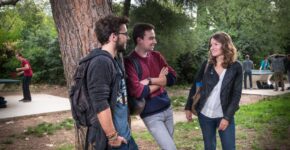
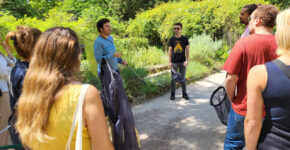
La plateforme doctorale Nutrition – Systèmes alimentaires ambitionne de réunir au moins une fois par an une cohorte de doctorants pour des écoles de terrain et/ou des formations sur des thématiques choisies par le Comité de Pilotage International (CPI). Elle vise à favoriser l’interdisciplinarité et l’interculturalité à travers la diversité des doctorants qu’elle réunit.
Chaque cohorte est constituée de 2 doctorants par établissement partenaire. Ces jeunes chercheurs, issus de domaines et de disciplines de recherche variés, sont censés suivre au moins 2 formations de la Plateforme.
Les doctorants travaillent en groupe et échangent afin de renforcer leurs liens et former un réseau international de futurs leaders de la science du développement durable dans les domaines de la nutrition et des systèmes alimentaires.
La plateforme offre :
Des opportunités de publication de documents, création de supports de communication par les doctorants
Une plateforme d’échange mondiale pour faciliter la discussion et le partage de documents
Une visibilité de la thématique de recherche à l’international
La possibilité de participer à des événements internationaux
Une opportunité de réseautage pour les jeunes chercheurs
LES COHORTES
La Plateforme doctorale Nutrition – Systèmes alimentaires ambitionne de réunir au moins une fois par an une cohorte de doctorants pour des écoles de terrain et/ou des formations sur des thématiques choisies. A terme, elle vise à construire une communauté mondiale de futurs leaders de la science du développement durable grâce à l’émergence de projets collaboratifs internationaux.
COHORTE 2024-2025
Portaits de la cohorte 2024-2025Télécharger
Ariane B. Barrette, Université Laval, Québec, Canada. Expertise : Biologie marine, Océanographie, Écotoxicologie, Alimentation locale
Clara Colonna, Université d'Utrecht, Pays-Bas. Expertise : Droit et politique agricole et alimentaire, Théories post-croissance, Lobbying
Alemu Bezie Debay, Wageningen University & Research, Pays-Bas. Expertise : Classification de l'utilisation et de la couverture des sols et analyse des changements (télédétection et SIG), Recherche sur les systèmes socio-écologiques, Jeux sérieux et méthodes participatives pour la co-conception de scénarios d'utilisation des sols.
Marie Madeleine Adjigueleu Dieme, Université Cheikh Anta Diop de Dakar, Sénégal. Expertise : Alimentation et nutrition humaine, Analyses biologiques, Collecte et gestion des données sur le terrain, Utilisation des isotopes stables en nutrition, Malnutrition carentielle
Julia Finestone, Université de Californie Davis, États-Unis. Expertise : Nutrition infantile, Santé intestinale, Microbiologie
Bereket Tsehaye Haile, Université de Pretoria, Afrique du Sud. Expertise : Gestion de projet; Évaluation de l'impact environnemental (EIE), Télédétection, Facilitation, Suivi et évaluation
Housna HASSANI, France et Comores. Expertise : Santé mondiale, Environnement alimentaire scolaire
Saliou Diombo KEBE, Université Cheikh Anta Diop de Dakar, Sénégal. Expertise : Santé publique, Nutrition, Évaluation alimentaire, Maladies liées à la nutrition, Activité physique, Évaluation de la qualité de l'alimentation, Prévention et prise en charge de la malnutrition aiguë, Éducation et promotion nutritionnelles, Approches communautaires en matière de nutrition et de santé
S’celo Ezra Madondo, Université du Cap-Occidental, Afrique du Sud. Expertise : Développement social, Sécurité alimentaire : réduire les pertes et gaspillages alimentaires (PGA) et tirer parti des opportunités offertes par les PGA, Développement des petits agriculteurs et des jeunes, Développement des petites et moyennes entreprises (PME) et des coopératives.
Ankitha Manohar, Université de Leeds, Angleterre. Expertise : Sciences marines et conservation, Recherche par méthodes mixtes, Aménagement du territoire, Télédétection, Apprentissage automatique, Mariculture et aquaculture marines, Développement des moyens de subsistance, Souveraineté alimentaire, Gouvernance marine
Talitha Neesham-McTiernan, Université d'Arizona, États-Unis. Expertise : Nexus eau-énergie-alimentation, Agrivoltaïque, Stress thermique, Systèmes d'information géospatiale, Agriculture en milieu aride
Tchiyiwe Thandiwe Moyo, Université de York, Angleterre. Expertise : Nutrition humaine, Agriculture sensible à la nutrition (NSA), Agriculture intelligente face au climat (CSA), École pratique d'agriculture (FFS), Modèles de vulgarisation, Engagement politique et coordination multisectorielle, Programmes de sécurité alimentaire et de résilience, Analyse et modélisation des données, Action participative, Recherche et communauté, Facilitation
Greici Joana Parisoto, Université de Sao Paolo, Brésil. Expertise : Économie agricole et agroalimentaire, Analyse climatique et systèmes agricoles, Sécurité alimentaire et systèmes de marché, Développement rural durable, Méthodes quantitatives et mixtes en agriculture, Analyse géospatiale et analyse de données (Python, GEE), Gestion de projets et de recherche, Innovation et durabilité agricoles
Bruna Paviani, Université de Sao Paolo, Brésil. Expertise : Chimie alimentaire, Transformation alimentaire, Composés bioactifs, Ingrédients fonctionnels, LC-MS
Fadhila Bacha, Institut Agro Montpellier, France . Expertise : Certification collective, Gouvernance de la chaîne de valeur, Développement territorial, Systèmes alimentaires locaux, Science des données, Durabilité, Économie agricole
Thais Gabriela Veras Gama, Universié de Sao Paulo, Brésil. Expertise : Économie agricole, Changement climatique, Analyse de la productivité et de l'efficacité, Adaptation au changement climatique et migration
Ana María Quiroga Arcila, Université Laval, Québec, Canada. Expertise : Apiculture, Abeilles sans dard, Bourdons, Diversité, Analyses paysagères, Pollinisation des bleuets, Conservation, Santé des sols, Plantations de café, Production de champignons, Agroécologie
cOHORTE 2025-2026
Portraits de la cohorte 2025-2026Télécharger
Disha Bansal, Université Laval, Québec, Canada. Expertise : Rénovation urbaine et contestation, Réaménagement des marchés traditionnels de détail, Accès aux espaces publics et justice sociale, Pratiques de recherche décoloniales.
Jamie Bride, Université de Montpellier, France. Expertise : Oméga-3, Chimie clic, Imagerie confocale, Cytométrie, Inflammation, Arythmies
Minghao (Marco) Ning, Université des sciences et technologies de Dalian, Chine. Expertise : Comportement des consommateurs en économie agricole, Préférences comportementales en matière d'alimentation et d'agriculture, Pratiques agricoles durables
Caroline N’Gomange Maro, Université d’Arizona, États-Unis. Expertise : Horticulture, Sélection végétale, Microbiologie végétale, Microbiologie
Virginie Drolet-Labelle, Université Laval, Québec, Canada. Expertise : Nutrition, Santé publique, Durabilité, Boissons sucrées
Julieth Uriza, Université d’Utrecht, Pays-Bas. Expertise : Nutrition, Sciences alimentaires, Politiques publiques, Épidémiologie, Affaires réglementaires
Meike Siemonsma, Université de Wageningen, Pays-Bas. Expertise : Nutrition, Santé publique, Épidémiologie, Recherche sur les systèmes alimentaires, Analyse avancée des données
Guilherme Portugal, Université de Sao Paulo, Brésil. Expertise : Économie appliquée, Externalités alimentaires, Modélisation microéconomique, Marchés alimentaires durables, Théories de la mobilité, Politiques publiques
Byambabayar Ganbold (Bibby), Université de Wageningen, Pays-Bas. Expertise : Télédétection, Sol, Géographie physique, Changement climatique
Housna Hassani. Expertise : Alimentation scolaire, Environnement
Agung Jauhari, Université d’Utrecht, Pays-Bas. Expertise : SIG, Cartographie, Spatial, Analyses
Noxolo Kabane, Université du Cap-Occidental, Afrique du Sud. Expertise : Recherche et élaboration de politiques en matière de développement urbain, Politiques et programmes, Planification en réponse à la malnutrition infantile dans la province du Cap-Oriental, Gestion de projet, Élaboration de stratégies
Sikhumbule Kagiso Joni, Université du Cap-Occidental, Afrique du Sud. Expertise : Environnement alimentaire, Aliments autochtones
Arshpreet Kaur Khattra, Université d'État du Michigan, États-Unis. Expertise : Microbiologie alimentaire et sécurité alimentaire, Modélisation microbienne prédictive et évaluation des risques, IA et apprentissage automatique pour l'analyse des données environnementales, Aliments à faible teneur en humidité (LMF) et technologies d'assainissement à sec
Jing Li, Académie chinoise des sciences agricoles, Chine. Expertise : Protection des végétaux, Écologie des insectes, Chimie écologique, Lutte intégrée contre les ravageurs (IPM)
Fiorella Loli, Université de Californie Davis, États-Unis. Expertise : Systèmes alimentaires, Moyens de subsistance, Agriculture andine
Kamilia Mahloul, Sorbonne Université, France. Expertise : Biologie moléculaire et cellulaire, Nanobiotechnologie, Histologie, Bio-informatique et analyse des données, Communication scientifique et pensée critique
Mamphasha Expertise Phina Mdaka, Université de Pretoria, Afrique du Sud. Expertise : Pratiques d'élevage durable des poules pondeuses en Afrique du Sud, Intégration de l'élevage avicole aux objectifs de développement durable (ODD)Rôle de la production d'œufs dans la santé publique, la sécurité alimentaire et la prévention des maladies chroniques
Zheng Miao, Université de Californie, Davis, États-Unis. Aquaculture, Agriculture, Apprentissage automatique, Vision par ordinateur
Leon Noble, Université de Leeks, Angleterre. Expertise : Aquaculture, Aquaculture, Agriculture, Apprentissage automatique, Vision par ordinateur
Vincent Ogweno, Université d’État du Michigan, États-Unis. Expertise : Géo-IA, télédétection, climatologie agricole, écologie politique, Cartographie des terres agricoles, détection des risques de gel, gouvernance environnementale, études démographiques
Laura Parro Lorente, Université autonome de Madrid, Espagne. Expertise : Nutrition, Sciences alimentaires, Chimie analytique, Techniques chromatographiques, Cultures cellulaires, Approche nutritionnelle chez les patients, Gestion des données et des questionnaires
Krishna Poudel, Université Laval, Québec, Canada. Expertise : Santé et qualité des sols, Cycle du carbone et de l'azote, Qualité alimentaire et nutritionnelle, Organique et minéral, Fertilisation, Réduction des gaz à effet de serre, Résistance des cultures à la sécheresse, Stress
Ms Mpho Ratshilnindela, Université de Pretoria, Afrique du Sud. Expertise : Parasitologie vétérinaire et maladies infectieuses, Techniques moléculaires : extraction d'ADN, PCR, séquençage (NGS et séquençage Sanger), Analyse de séquences, Enquête épidémiologique et analyse statistique des données, Évaluation des facteurs de risque à l'aide de questionnaires structurés
Andrea Rizo Barroso, Université de Barcelone, Espagne. Expertise : Environnements alimentaires urbains, Sécurité alimentaire, Inégalités entre les sexes, Droit à l'alimentation
Noah Schlager, École de géographie de l’Université d’Arizona, Etats-Unis. Expertise : Alimentation autochtone, Souveraineté, Agroécologie et Agrobiodiversité, Histoire de la science de la conservation, Réseaux d'entraide entre agriculteurs, Semences autochtones, Conservation
Bruno Lopes Silva, Université de Sao Paulo, Brésil. Expertise : Économie appliquée, Affaires, Développement économique, Politiques, Sécurité alimentaire et nutritionnelle, Systèmes alimentaires.
Sarah E Veale, Université de York, Angleterre. Expertise : Inégalités sociales, Nutrition maternelle et infantile, Systèmes alimentaires durables, Régimes alimentaires à base de plantes, Recherche qualitative et co-conception, Insécurité alimentaire et aliments ultra-transformés, Climat et santé, Engagement public et science, Communication
Laura Wilmot, Université Laval, Québec, Canada. Expeertise : Droit alimentaire (souveraineté alimentaire, sécurité alimentaire et autosuffisance alimentaire), Droit autochtone (autodétermination), Droit international (mise en œuvre de la Déclaration des Nations Unies sur les droits des peuples autochtones)
Témoignages
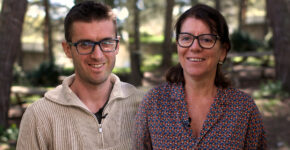
Écoutez comment la plateforme a fait une différence dans le parcours d’Ana Maria Quiroga-Arcila, étudiante au doctorat en biologie végétale à ULaval, Québec, et participante aux activités de la première cohorte.
https://www.youtube.com/watch?v=zuUp2sMyy_Y
Les acteurs
L’initiative Nutrition – Systèmes alimentaires a été co-construite avec l’Université de Pretoria dès mai 2022. Côté UM, l’initiative est portée scientifiquement par Karen Lambert-Cordillac, Professeure des Universités à la Faculté de Pharmacie de l’Université de Montpellier. Côté Université de Pretoria, le référent est Frans Swanepoel du Centre Future Africa. L’initiative prend la forme d’une plateforme collaborative mondiale de formation doctorale réunissant des doctorants des partenaires stratégiques des deux institutions.
17 Partenaires
Europe
University of Montpellier (UM)
University of Barcelona (UB)
University of Leeds
University of York (UY)
Utrecht University (UU)
Wageningen University and Research (WUR)
Asie
Graduate School of China Academy of Agriculture Sciences (GSCAAS)
China Agriculture University (CAU)
Amérique du Nord
Michigan State University (MSU)
University Laval of Quebec
University of Arizona
University of California Davis (UC Davis)
Amérique du Sud
University of Sao Paulo (USP)
Afrique
University Cheikh Anta Diop of Dakar (UCAD)
University of Nairobi (UONBI)
University of Pretoria (UP)
University of the Western Cape (UWC)
Gouvernance
La Plateforme est dirigée par le Comité de Pilotage International (CPI) qui compte un représentant de chacune des institutions membres.
Le CPI est co-présidé par un représentant du Sud et un représentant du Nord. Actuellement, Frans Swanepoel (UP) et Margreet de Lange (Université d’Utrecht) assurent ces responsabilités.
Le CPI décide et supervise la mise en œuvre des orientations stratégiques et des activités globales de la Plateforme.
Il se réunit virtuellement au moins une fois par an et en personne au moins une fois tous les 18 mois.
La Plateforme est gérée à l’UM par Nathalie Modjeska, avec l’aide d’Elsa Denis, au sein du Service d’appui à l’international et à l’attractivité des programmes structurants de la Direction des Programmes Structurants
Retour en image
Cohorte 2 novembre 2025 - première formation doctorale à l'Université Laval, Canada
Cohorte 1 septembre 2025 - 3ème école doctorale à Cape Town, Afrique du Sud (UP)
Cohorte 1 novembre 2024 - 2ème école doctorale à Piracicaba, Brésil (USP)
Cohorte 1 mars 2024 - 1ère école doctorale à l'Université de Montpellier, France
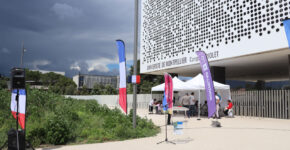
Montpellier Global days 2024