Go to content Go to the menu
University of Montpellier

Main Menu

  • University
  • Training
  • Research
  • Innovation
  • Campus
  • International
  • French

Quick access

Quick access

  • ENT
  • Websites
  • Colleges, Schools, and Institutes
  • Research organizations
  • Libraries
  • Emergencies
Research

Search results

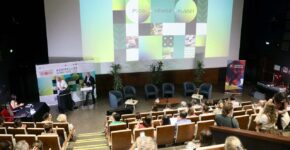
Water4Future Hackathon: Water in the Future

Content type: Article

Published on: March 25 , 2026

On February 27 and 28, the UNESCO-Icireward International Center and the University of…

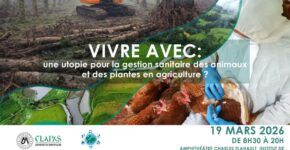
Living with: A Utopia for Animal and Plant Health Management in Agriculture?

Content type: Calendar
Date: 19 Tue 2026
Location: Institute of Botany - Charles Flahault Lecture Hall - 163 Auguste Broussonnet Street, Montpellier

The Nutrition and Food Systems Platform Takes Center Stage at the BÉNÉFIQ 2025 International Conference

Content type: Brief

Published on: November 17 , 2025

The first interdisciplinary doctoral program for the second cohort of the platform…

Call for Research Proposals 2026 – Exposum Institute: Exposome and Behavior

Content type: Call for proposals

Published on: October 15 , 2025

ExposUM is an initiative of the University of Montpellier and its partners aimed at…

Digital Health School of the University of Montpellier and its partners: ESNbyUM

Content type: Page
L’École de Santé Numérique de l’Université de Montpellier et de ses partenaires est un projet labellisé France 2030 dans le cadre de l’A.M.I. « Compétences et Métiers d’Avenir », le seul retenu au niveau national pour former tous les professionnels concernés par la Santé Numérique. C’est une initiative originale et innovante qui propose des formations initiales, professionnalisantes et en alternance dans le domaine de la santé numérique. Elle propose une approche multidisciplinaire et interdisciplinaire de la formation pour répondre aux enjeux de la Santé Numérique, autrefois appelée e-Santé. https://www.youtube.com/watch?v=5JE7BV7Z0DI Domaine en pleine expansion, la Santé Numérique peut se définir comme la rencontre entre le monde de la santé et le monde du numérique, rendue possible grâce à l’usage et au développement des nouvelles technologies de l’information et de la communication, pour accompagner les professionnels de santé dans leur pratique et la personne dans son parcours de soin. Elle permet de répondre à des enjeux sociétaux importants, comme la hausse des pathologies chroniques ou les déserts médicaux, et touche différentes compétences telles que les données de santé, la cybersécurité, l’IA, les outils numériques en santé, ou encore la télésanté. Sa pédagogie personnalisée, interdisciplinaire, et son campus numérique pensé comme un environnement d’apprentissage immersif, collaboratif et accessible à tous et à tout moment, incarnent l’engagement de l’École de Santé Numérique à former les professionnels de demain voués à évoluer dans un monde de plus en plus connecté. Objectifs de l’ESNbyUM Former massivement à la Santé Numérique les futurs professionnels du secteur sanitaire et médico-social, développer des expertises spécifiques pour les autres professionnels impliqués dans la santé numérique. L’ESNbyUM va former à la Santé Numérique : Les professionnels de santé et du médico-social Les spécialistes du numérique possédant une culture en santé Les directions et cadre-dirigeants de structures sanitaires et médico-sociales Les juristes possédant une culture en santé numérique Les spécialistes en charge des affaires réglementaires des Dispositifs Médicaux-Numériques Renforcer la cohérence disciplinaire en santé numérique La Santé Numérique est un domaine complexe qui touche de nombreux professionnels aux expertises diverses et qui traite de thèmes aussi variés que les données de santé, les parcours de soin, la télésanté, les applications de santé mobiles, l’aide à la décision médicale ou la robotique d’assistance du patient. Cette diversité est au cœur de l’École de Santé Numérique qui relève le pari de former tous les professionnels touchés par la Santé Numérique en proposant notamment de mutualiser les ressources pédagogiques et ses formations dans un même espace.  L’ESNbyUM propose même une UE « Projet Interdisciplinaire en Santé Numérique » qui permet aux étudiants de différents Master (Médecine, STAPS, Pharmacie, Sciences, IAE et Droit) de co-construire un dispositif médical numérique, de l’étape de réflexion à sa construction, chaque étudiant utilisant ses compétences pour mener le projet à terme. Proposer un accompagnement personnalisé La santé numérique est un domaine qui requiert de former les futurs professionnels à de nouvelles compétences interdisciplinaires et à les préparer aux métiers émergents pour répondre aux enjeux d’aujourd’hui et de demain. Pour pallier ces besoins, l’ESNbyUM propose à ses apprenants une pédagogie, nommée « pédagogie de précision 6 P » qui est : Personnalisée pour une formation adaptée à chaque apprenant Préventive pour une formation réussie sans échec Prédictive, applicable dans la pratique future du métier Participative pour permettre à l’apprenant d’être acteur de son apprentissage Basée sur les Preuves en suivant une démarche scientifique Et centrée sur les Pratiques Animer l’écosystème de la Santé Numérique en Occitanie En rassemblant des professionnels de différents horizons, des enseignants, des experts, des étudiants et des citoyens intéressés par la santé numérique, l’ESNbyUM, une école « hors les murs, renommée et incontournable dans tous les projets structurants visant la santé numérique, oeuvre, en synergie avec tous ses partenaires et acteurs du domaine du territoire, qu’ils soient académiques, établissements de soin et du médico-social, entreprises ou collectivités. Innover en pédagogie à travers son Campus Numérique Afin de proposer à ses apprenants une expérience d’apprentissage unique, l’ESNbyUM a conçu son campus numérique, un projet ambitieux, véritable vitrine de l’École de Santé Numérique de l’Université de Montpellier et de ses partenaires. Cette plateforme numérique est constituée de cinq espaces : Un espace « Formation », sous forme d’un LMS Moodle, où sont mutualisées les ressources pédagogiques en Santé Numérique. Un espace « Orientation », agrémenté d’un chatbot IA, pour permettre à chacun de trouver sa formation en Santé Numérique Des espaces « Actualités » et « Ressources » pour se tenir informés des évolutions de la santé numérique Un espace « Alumni » pour interagir avec les anciens diplômés Un espace 3D immersif permettant de visiter les lieux emblématiques de la ville de Montpellier Cette plateforme, passerelle entre un univers immersif original et le monde bien réel de la formation, incarne la volonté de l’ESNbyUM de former nos étudiants, nos formateurs et les citoyens-patients à la Santé Numérique. Accéder au campus numérique Partenaires et soutiens de l’ESNbyUM Gouvernance Pr Maurice Hayot Le Comité des investissements stratégiques et structurants (COMIS), présidé par le Président de l’Université de Montpellier est l’organe de coordination stratégique du site qui s'intéresse au déploiement des dispositifs financés notamment par France 2030, dont le programme ESNbyUM. La Direction des programmes structurants de l’université de Montpellier (DPS), coordonne, sur le plan opérationnel et administratif, les actions de ces projets. Au sein du projet ESNbyUM, la responsabilité du projet a été confiée au Pr Maurice Hayot, PU-PH CHU de Montpellier et la coordination du projet au Dr Brigitte Couette, Chercheur Inserm. La gouvernance de l’ESNbyUM est constituée de plusieurs comités : un Comité d’Orientation Stratégique (COS), un Comité de Pilotage (CoPil), des Comités Pédagogie et Innovation (CPIs). Le COS participe à la définition des grandes orientations stratégiques, à la répartition des moyens et se prononce sur le plan d’actions proposé par le Directeur de l’ESNbyUM. Il est présidé par le Président de l’Université et inclut la Vice-Présidente « Formation et Vie Universitaire » et les membres du consortium. Le CoPil propose au COS les décisions stratégiques pour atteindre les objectifs du projet et veille à son bon déroulement : avancée, réalisation des objectifs, respect des délais, qualité et coûts financiers. Les missions des CPIs sont de proposer une stratégie de pédagogie et d’innovation pour permettre la mise en place et l’amélioration continue de la qualité des enseignements et de l’offre de formation de l’ESNbyUM.

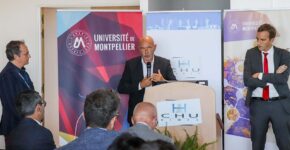
The University of Montpellier and the Nîmes University Hospital have strengthened their collaboration

Content type: Article

Published on: September 17 , 2025

On September 2, the Nîmes university hospital community gathered for a…

Data Science for All Sciences

Content type: Page
The Montpellier Institute of Data Science (ISDM) works to bring about lasting change in scientific practices by guiding all stakeholders toward data science and building an effective, sustainable environment. Unite, Innovate, Support The ISDM supports scientific projects in their entirety through an integrated and collaborative approach by offering: Training tailored to all levels, Hands-on scientific and technical support, Facilitation of networks and events that promote the exchange of knowledge. Our Initiatives Project Support We develop support mechanisms tailored to the needs of scientific communities: Data Clinic: an innovative support mechanism for researchers, doctoral students, engineers, and students. A scientific help desk is available to provide concrete support for community projects: personalized advice, assistance with resolving technical issues, and overcoming specific roadblocks. The clinic can also actively collaborate with researchers to co-develop solutions tailored to their needs. Targeted Expertise: Our engineers provide expertise in (bio)informatics, (bio)statistics, artificial intelligence, FAIR data management, and more. Learn More Skills Development Training The short training courses offered by ISDM aim to support the evolution of practices in the management, analysis, and utilization of research data. They are designed for all professionals—researchers, engineers, doctoral students, or undergraduates—who wish to acquire or strengthen key skills in data science. Each session combines a practical approach, accessibility, and scientific expertise, centered on three main themes: Artificial Intelligence: Explore the fundamentals and practical applications of AI through introductory and targeted training. Computing and Reproducibility: Hands-on workshops to master the fundamental tools of collaborative development and ensure the reproducibility of scientific analyses. Statistics, Data Management, and Analysis: Training courses to learn or improve skills in statistical methods applied to data science. Learn More Data Services ISDM facilitates access to high-performance technical environments: Digital Services: shared computing platforms, secure cloud, data anonymization tools, data sharing tools, data analysis tools (notebooks), etc. Best Practices: support for the use of standards, metadata schemas, and data structuring. Coordination and Events MBI (Montpellier Bioinformatics): a network of local bioinformatics stakeholders, promoting exchanges, training, and shared resources. Les Halles de l’IA: a space for innovation and science outreach dedicated to artificial intelligence, at the intersection of science, society, and interdisciplinarity. A venue for experimentation, training, and public debate bringing together experts, expert and novice users, decision-makers, students and teachers, and the general public.

Research Support: I-SITE 2026 Excellence Program

Content type: Call for proposals

Published on: July 9 , 2025

As part of the I-SITE Excellence Program, the University is implementing its program to…

EcoDoR: A Day Dedicated to Structuring the Research Data Ecosystem in Montpellier

Content type: Press release

Published on: May 19 , 2025

On May 27, 2025, the EcoDoR Data Workshop is hosting a day of discussions on…

ERC Horizons: Pushing the Boundaries of Research

Content type: Article

Published on: April 30 , 2025

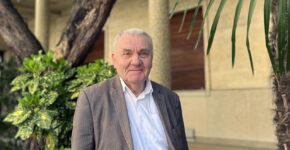
Between 2014 and 2021, mathematician Jean-Pierre Bourguignon served as head for seven…

The IPBES Assessment on Transformative Changes: How Can We Transform Our Societies to Live in Harmony with Nature?

Content type: Calendar
Date: 07 Apr 2025
Location: Charles Flahault Amphitheater , Institute of Botany, 163 Auguste Broussonnet Street, Montpellier

Key Collaborative Initiative for Local Research on Plant Health and AgroSystems: CLAPAS

Content type: Call for proposals

Published on: December 6 , 2024

Call for Proposals for AI-3 2024 Exploratory Research Key Initiatives of the program…

Moment-UM: Advancing Research, Education, and Innovation

Content type: Page
Winner of the ASDESR1 call for proposals With substantial funding of over 3.6 million euros, the Moment-UM project is part of the fourth France 2030 Future Investment Plan, launched by the National Research Agency Research ANR). This project aims to strengthen UM’s position as a key player in European research, continuing education, and innovation through various initiatives. Europe Moment-UM aims to boost the participation of UM researchers in the Horizon Europe program (European Framework Program for Research and Innovation). ERC (European Research Council) grants, Marie Sklodowska-Curie Actions, and the EIC (European Innovation Council) are key instruments. The objective is twofold: to increase the number of projects submitted and to improve the success rate.  In close collaboration with three national research organizations based in the Montpellier area (CNRS, INSERM, and IRD), Moment-UM is committed to increasing the visibility and support for research teams at the Montpellier site through: Strengthening support staff by hiring new experts. Individualized support for project proposal writing. Training and coordination of experts. Increased communication and visibility regarding funding and projects. Training Moment'UM aims to strengthen the University of Montpellier’s position in the professional training market to enhance the professional development of students, researchers, and professionals.  This component focuses on developing short-term training programs and institutional degrees to meet the specific needs of businesses, through: The creation of new training programs and degrees. The promotion of a competency-based approach. The implementation of collective Validation of Acquired Experience (VAE) pathways. Communication and promotion of the training offerings.  For further information, please contact the MOMENT’UM project coordination team by email. The "Moment'UM" project (ANR-22-ASDR-0029) receives state funding administered by the ANR under the France 2030 initiative. 

ExposUM 2025 Call for Research Proposals: Anticipating Exposomic Health Risks

Content type: Call for proposals

Published on: October 16 , 2024

ExposUM is an initiative of the University of Montpellier and its partners aimed at…

BIO’OCC: Biotherapies and Bioproduction in Occitanie

Content type: Page
Bio’Occ is a government-funded project under the France 2030 plan. This regional initiative aims to attract, train, and retain the talent and key players of tomorrow by developing specialized training programs in the fields of biotherapies and bioproduction. In a context where this sector is experiencing growing development in Occitanie, as well as nationwide, Bio’Occ addresses a specific need among manufacturers facing recruitment challenges. By creating a dynamic and innovative ecosystem, this project promises to transform the region’s biotechnology landscape, while supporting business growth and preparing tomorrow’s professionals to meet future challenges. This project has received government funding administered by the National Research Agency Research the France 2030 program, reference ANR-23-CMAS-0004. https://www.youtube.com/watch?v=Vlrrsc56bCA A project structured around four pillars to meet the objectives of the CMA Call for Proposals. Adapt existing training programs: Improve their alignment with needs by strengthening partnerships with industry and establishing educational platforms. Expand the existing training offerings: Address specific skill needs in both initial and continuing education. Develop foresight tools: Better identify evolving needs and continuously adapt training programs. Implement communication initiatives: Enhance the appeal of these professions and the social acceptance of biotherapies. Relevant programs at the University of Montpellier. Bachelor’s Degree (3 years) BUT in Biological Engineering: Medical Biology and Biotechnology BUT in Biological Engineering: Food Sciences and Biotechnology Bachelor’s Degree (3 years) in Life Sciences: Bioproduction and Biotechnology for Health Track (L3 BIO²S) - Launching in September 2025 Master’s Degree Master’s in Biology and Health: Therapeutic Engineering and Bioproduction in Biotechnology and Health Track (IBIS) Master’s in Biology and Health: Management and Evaluation of Therapeutic Trials Track (GET) Master’s in Biology and Health: BIOTIN Track Master’s in Biology and Health: Cancer Biology Track Master’s in Biology and Health: Experimental and Regenerative Medicine Track Master’s in Health Engineering: Design and Production of Health Products - Drug Track (CPPS) Master’s in Bioinformatics Master’s in Computer Science: Artificial Intelligence and Data Science Track (IASD) Bio’Occ: a broad network of partners UM Operational Team Laila Gannoun, Thérèse Commes, Estelle Grousseau, Anne-Dominique Lajoix, John de Vos, Pierre Morange, Camélia Sennaoui Official website

Immune4cure: a new standard of care for treating autoimmune diseases

Content type: Article

Published on: October 2 , 2024

Launched on September 17 by Inserm, the University Hospital, and the University of Montpellier, the Institute…

Page navigation

Page1 Page2 Page3 … Page6 Next

FollowUM's "
" news

Subscribe to the newsletter
University
  • Organization, Governance, and Governing Bodies
  • Colleges, Schools, and Institutes
  • Research organizations
  • Flagship Projects
  • Heritage
  • Environmental Issues and Social Responsibility
  • Working at the university
Training
  • Admissions & Registration
  • Career Guidance, Internships, and Jobs
  • Succeeding in School
  • Enhance your education
  • Graduate school
  • Educational innovation
Research
  • Research Centers
  • Doctoral and HDR programs
  • Science and Society
  • Scientific appeal
  • Major programs
Innovation
  • University Innovation Hub (PUI)
  • University-Industry Partnerships
  • Valuation
  • Entrepreneurship
Campus
  • Art & Culture
  • Student Life
  • Health, Social Services & Disabilities
  • Sports
  • Community Life
International
  • International Partnerships
  • Mobility
  • Erasmus+ Training Projects
  • Classes in English
  • CHARM-EU European University
  • Scientific appeal


UNIVERSITYOF MONTPELLIER
163 Auguste Broussonnet Street
34090 Montpellier

04.67.41.74.00

  • News
  • Calendar
  • Press Room
  • Facebook University of Montpellier
  • Twitter: University of Montpellier
  • Pinterest University of Montpellier
  • Instagram: University of Montpellier
  • YouTube University of Montpellier
  • LinkedIn University of Montpellier
  • Legal Notice
  • Accessibility: partially compliant
  • Privacy Policy
  • Site Map
  • Public Procurement