Skip to content Go to the menu
University of Montpellier

Main Menu

  • University
  • Training
  • Research
  • Innovation
  • Campus
  • International
  • French

Quick Access

Quick Access

  • ENT
  • Websites
  • Digital Site
  • Colleges, Schools, and Institutes
  • Research Centers
  • Libraries
  • Gender-Based and Sexual Violence
  • Emergencies
Research

Search Results

Digital Technology for Education

Content Type: Page
To diversify teaching practices in support of student success and career readiness, the University of Montpellier leverages digital technology to address educational challenges. The University supports and facilitates educational transformation by integrating digital tools into the development of educational resources, equipping academic departments, schools, and institutes, redesigning learning spaces, and upgrading its IT infrastructure. To this end, it regularly responds to national and European calls for proposals and initiates projects on topics such as hybrid learning, the assessment of knowledge and skills using digital tools, and digital exam rooms. CNUMF The University of Montpellier supports the Digital Committee for Education (CNUMF), which has issued an annual call for proposals since 2016 to support projects in digital pedagogy. The supported projects fall into various categories: the production of new digital educational resources, the use of digital technology for assessment, the creation of MOOCs, and, since 2022/2023, the bimodal hybridization of instruction. Website AgilHybrid Since 2021, the University of Montpellier and its three partners—as part of the I-Site MUSE consortium—have been strengthening distance learning capabilities and expanding digital services for students. AgilHybrid receives government funding administered by the MESR under the Recovery Plan, as well as funding from the i-Site MUSE. EquipHybrid website Complementary to AgilHybrid, this project aims to develop equipment and infrastructure for hybrid teaching in Montpellier and at the Institut Agro Florac. It receives financial support from the 2014–2020 ERDF-ESF Operational Program for the “NextGenerationEU” European Recovery Plan, as part of the “REACT-EU” initiative. Website Digital Assessments and Exams Since 2019, the University of Montpellier has been rolling out several projects to develop an ecosystem for assessing knowledge and skills as part of efforts to make teaching more flexible. FlexiEval, funded by the Ministry of Higher Education and Research ( Research ) as part of the 2019 Call for Proposals “Pedagogical and Digital Transformation” PairsEval, funded by the MESR as part of the 2021 Call for Proposals “Emergence”

Energy Conservation Plan: “Moving Toward the Best Possible Balance”

Content Type: Article

Published on: January 31 , 2023

Investments and energy-efficiency renovation projects, adjustments to the operation of…
Launch of the “ESNbyUM” Digital Health School

Content Type: Calendar
Date: 02 Feb 2023
Location: Montpellier-Nîmes School of Medicine, Rondelet Lecture Hall—641 Av. du Doyen Gaston Giraud, 34090 Montpellier

Exposum

Content Type: Page
The ExposUM Institute is an initiative of the University of Montpellier and its partners aimed at establishing a leading, off-campus, interdisciplinary institute dedicated to the study, education, and science-society interaction regarding the environmental determinants of human health. A recipient of the ExcellenceS (PIA4) call for proposals and supported by the Occitanie Region, ExposUM is funded to the tune of 46.4 M€ for the period 2022–2030. The exposome refers to the totality of lifelong exposures to environmental and social factors whose specific effects, combined with individuals’ intrinsic characteristics, underpin health as well as the onset, progression, and severity of infectious and noncommunicable human diseases. In this sense, it is the environmental counterpart to the genome, with which it interacts throughout an individual’s lifetime. Visit the ExposUM Institute website Calls for Proposals Objective To provide an innovative conceptual framework for studying multiple environmental risks and their combined effects GATe: Gather people to Generate, Apply, Transmit knowledge Priority Area 1: Generate knowledge: accelerate the acquisition of basic knowledge in a coordinated, interdisciplinary, and non-segmented manner Priority Area 2: Apply knowledge: define comprehensive mitigation strategies tailored to the local context and encourage innovation. Learn More Axis 3: Transmit Knowledge: Promote the education of the next generation of scientists Organization Steering Committee (CoDir): Pascal Demoly (Chair), Aurélie Binot, Charlotte Boullé, Mircea Sofonea. Project Manager: Elodie Suttling. Scientific and Strategic Advisory Board (COSS): Agnès Mignot (Chair), Amaria Baghdadli, Bernadette Bensaude-Vincent, Jean-Paul Cristol, Eric Delaporte, Delphine Destoumieux-Garzon, Hélène Fenet, Sylvain Gandon, Alain Lacampagne, Laurence Lachaud, Nadine Laguette, Brice Laurent, Delphine Muriaux, Denis Pesche, Coumba Toure Kane, Andrei Turtoi, Nathalie Vachiery, Muriel Vayssier-Tarissat, Laurent Visier. Research ’s Guidance and Evaluation Council (COER): Mircea Sofonea (Chair), Anne-Muriel Arigon, Aurélie Binot, Christophe Boete, Charlotte Boullé, Antoine Claessens, Sylvie Claeysen, Constance Delaby, Gauthier Dobigny, François Favier, Olivier Gimenez, Antoine Gross, Rodolphe Hamel, Luciana Kase-Tanno, Antonio Maraver, Jérôme Poli, Gwenn Pulliat, Anatja Samouelian, Annelise Tran, Aurore Vicet. Program Guidance and Evaluation Committee (COEF): Charlotte Boullé (Chair), Sylvaine Artero, Anne Blanc-Potard, Sandra Bringay, Robin Candau, Fabrice Caudron, Joseph Chamieh, Nathalie Charbonnel, David Cornu, Philippe Courtet, Marc Cretin, Ramses Djidjou Demasse, Catherine Faur, Olivier Gimenez, Bernard Godelle, Fares Gouzi, Claire Immediato Daien, Andrey Kajava, Sofia Kossida, Jean Philippe Lavigne, François-Xavier Lesage, Marie Christine Lichtlé, Gladys Massiera, Sandrine Michel, Mai Nguyen Chi, Émilie Olie, Marie-Laure Parmentier, Christophe Paupy, Chrysta Pelissier, Marie Pequignot, Eric Perera, Olivier Torres, Rémi Servien, Mircéa Sofonea, Annette Vergunst, Laurent Visier, Valérie Zimmermann. Get project updates directly: Subscribe to the mailing list Partners

Key Challenges Facing the Occitanie Region

Content Type: Page
Advancing regional research to better preserve biodiversity, more effectively combat vector-borne diseases, envision the future of viticulture and oenology, and address the collective challenges of the water cycle…  These are all scientific challenges that the University of Montpellier and its regional partners intend to address by leading four of the 15 “key challenges” identified and supported by the Occitanie Region. The “key challenges” are initiatives launched by the Occitanie Region to support the collective efforts of research stakeholders in Occitanie. Centered on strategic issues for our region, they aim to encourage the formation of scientific communities, thereby making regional research even more collaborative, visible, and attractive, and to produce research of the highest quality in line with the Region’s policy priorities, particularly the Transformation Plan—Green New Deal adopted at the Plenary Assembly on November 19, 2020. Each key challenge receives €2 million in regional funding to implement its action plan over a four-year period. Among the 15 challenges supported by the Region, the University of Montpellier is the lead partner for the “key challenges” on the themes of biodiversity, water, infectious risks, and viticulture and wine, in collaboration with numerous partners spread throughout the region. Key Challenge BIODIVOC Officially launched on April 1, 2021, the goal of the BIODIVOC project is to advance fundamental research in ecology and evolution focused on the theme “Dynamics, resilience, and management of biodiversity and ecosystems subjected to human-induced environmental pressures.” Biodivoc Website Key Challenge: RIVOC Officially launched on March 18, 2021, the goal of the RIVOC project (“Infectious Risks and Vectors”) is to develop innovative and sustainable approaches to improve the understanding, surveillance, and control of these diseases and their vectors. RIVOC website VINIDOCC Challenge The “Innovation for the Viticulture and Oenology of the Future in Occitanie” project was launched on September 16, 2022, to conduct multidisciplinary, fundamental, and applied research and to develop new practices for the viticulture and oenology of tomorrow. Learn more BIO’OCC Challenge Bio’Occ is a project funded by the government as part of the France 2030 plan. This regionally focused initiative aims to attract, train, and retain the talent and key players of tomorrow by developing specialized training programs in the fields of biotherapies and bioproduction. Learn more Key Challenge “Water Occitanie”:  The Water Occitanie project aims to develop expertise in wastewater reuse, design and analyze infrastructure, equipment, and governance structures to address stakeholders’ challenges at the local level, assess the impacts across major watersheds, and analyze the collective capacity to address the shared challenges of the water cycle. Learn more MarinOc Key Challenge Launched on July 9, 2026, the MarinOc Key Challenge aims to strengthen cooperation among laboratories, institutions, local governments, and socio-economic stakeholders to generate knowledge useful for understanding, anticipating, and supporting conservation and adaptation processes in coastal and marine socio-ecosystems in the face of increasingly frequent extreme events of climatic or anthropogenic origin. Learn more

ExposUM 2023 Calls for Research Proposals: The Emerging Exposome

Content Type: Call for Proposals

Published on: December 9 , 2022

ExposUM is an initiative of the University of Montpellier and its partners aimed at…
Call for Proposals: “Support for CONNECT #4 Student Initiatives” – I-Site Excellence Program

Content Type: Call for Proposals

Published on: October 17 , 2022

As part of the I-SITE Excellence Program, the University of Montpellier is issuing a call for…

Flagship Projects
Content Type: Page
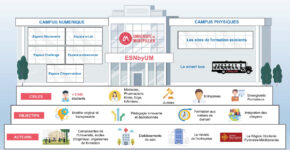
Programme d’excellence I-SITE Labélisé en 2017 et pérennisé en 2022, le programme d’excellence I-SITE mobilise les forces de 16 institutions vers une ambition commune : le rayonnement à Montpellier d’une université thématique de recherche intensive, internationalement reconnue pour son impact sur les enjeux de société que sont la sécurité alimentaire, la protection de l'environnement, et la santé humaine. En 5 ans de période probatoire, des transformations importantes ont été enclenchées dans chacun des grands champs de la vie académique. Ces actions, jusqu’ici portées dans la cadre de la Fondation Montpellier Université d’excellence , sont désormais pleinement intégrées aux activités des directions et services de l’Université de Montpellier. En savoir + IDIL Avec son programme gradué Inter-disciplinary & In-lab Graduate Program, l’Université de Montpellier accueille des étudiantes et étudiants français et internationaux à travers huit nouveaux parcours de master et un parcours d’ingénieur, tous dispensés en anglais. L’objectif est d’accroître l’ouverture internationale de l’Université de Montpellier, de renforcer la formation par et pour la recherche et de favoriser l’interdisciplinarité. Une véritable innovation académique pour ce programme qui s’inscrit dans le cadre du programme France 2030 « Structuration de la formation par la recherche » ouvert aux établissements porteurs d’un Idex ou d’un I-Site. En savoir + Numérique pour la pédagogie Pour diversifier les pratiques pédagogiques au service de la réussite étudiante et de l'insertion professionnelle, l'Université de Montpellier s'appuie sur le numérique afin de répondre aux enjeux de formation. En savoir + École de Santé Numérique de l’Université de Montpellier L’École de Santé Numérique de l’Université de Montpellier et de ses partenaires est un projet labellisé France 2030 dans le cadre de l’A.M.I. « Compétences et Métiers d’Avenir », le seul retenu au niveau national pour former tous les professionnels concernés par la Santé Numérique. C’est une initiative originale et innovante qui propose des formations initiales, professionnalisantes et en alternance dans le domaine de la santé numérique. Elle propose une approche multidisciplinaire et interdisciplinaire de la formation pour répondre aux enjeux de la Santé Numérique, autrefois appelée e-Santé. En savoir + Charm-eu L’Université de Montpellier est membre de l’alliance d’Université européenne CHARM-EU depuis 2019, aux côtés de huit autres universités prestigieuses en Europe. Ensemble, nous travaillons à concevoir et créer un nouveau modèle universitaire unique en son genre visant à améliorer la qualité, la compétitivité internationale et l’attractivité de l’enseignement supérieur européen. En savoir + Exposum L’Institut ExposUM est une initiative de l’Université de Montpellier et de ses partenaires visant à établir un institut hors-les-murs et décloisonné de référence pour l’étude, la formation et l’interaction science-société, des déterminants environnementaux de la santé humaine. Lauréat de l’appel à projet ExcellenceS (PIA4) et soutenu par la Région Occitanie, ExposUM est financé à hauteur de 46,4 M€ sur la période 2022-2030. En savoir + MOMENT-um Accroître la recherche, la formation et l’innovation. Doté d’un financement substantiel de plus de 3,6 millions d’euros, le projet Moment-UM s’inscrit dans le cadre du quatrième plan d’investissement d’avenir France 2030, lancé par l’Agence Nationale de la Recherche (ANR). Ce projet vise à renforcer la position de l’UM en tant qu’acteur clé de la recherche européenne, de la formation continue et de l’innovation à travers différents volets d’actions.   En savoir + Défis clés de la Région Occitanie Faire avancer la recherche régionale pour mieux préserver la biodiversité, mieux lutter contre les maladies vectorielles, imaginer la viticulture et l’œnologie de demain ou encore répondre aux enjeux collectifs du grand cycle de l’eau…  Autant de défis scientifiques auxquels l’Université de Montpellier et ses partenaires en région entendent répondre en portant 4 des 15 « défis clés » identifiés et soutenus par la Région Occitanie. En savoir + UM2030 - IDEES : intégration et développement des IDEX et ISITE Le programme France 2030 UM2030- IDéES pour "Intégration et développement des IdEx et ISITE", vise à renforcer le rôle central que l’Université de Montpellier joue en intégrant tous les partenaires du consortium I-SITE dans une démarche partagée. Financé par l’Agence nationale de la recherche, IDéES, porté par François Pierrot, Vice-Président des Relations Internationales, propose de développer des actions de grande ampleur répondant aux trois défis majeurs que sont "Nourrir-Soigner-Protéger" dans trois volets : Partenariats internationaux stratégiques Science des données pour toutes les sciences Campus de l’innovation En savoir + Fondations Porteuses de projets forts de l’Université, les fondations répondent aux besoins des entreprises et des industriels. Elles donnent aux étudiants et aux doctorants de nouvelles possibilités pour réaliser leurs projets professionnels. En savoir +

Digital Health: The “UM ” Is Setting a Trend with ESNbyUM

Content Type: Article

Published on: September 20 , 2022

A pioneer in medicine for eight centuries, the University intends to remain so in the era of…

I-SITE Excellence Program

Content Type: Page
Labélisé en 2017 et pérennisé en 2022, le programme d’excellence I-SITE mobilise les forces de 16 institutions vers une ambition commune : le rayonnement à Montpellier d’une université thématique de recherche intensive, internationalement reconnue pour son impact sur les enjeux de société que sont la sécurité alimentaire, la protection de l'environnement, et la santé humaine. En 5 ans de période probatoire, des transformations importantes ont été enclenchées dans chacun des grands champs de la vie académique. Ces actions, jusqu’ici portées dans le cadre de la Fondation Montpellier Université d’excellence, sont désormais pleinement intégrées aux activités des directions et services de l’Université de Montpellier. https://www.youtube.com/watch?v=nytx95dsbtw Ambition scientifique et soutien à la recherche L’objectif du programme est de répondre à trois défis interdépendants : promouvoir une agriculture écologiquement innovante, contribuant à la sécurité alimentaire et à la qualité environnementale ; encourager la transition vers une société gérant durablement ses ressources et son milieu ; améliorer la santé humaine dans les environnements changeants. Si les sciences traitant des objets relatifs à l’agriculture, à l’environnement, à la biodiversité, à la biologie et à la santé sont donc au cœur du programme, l’ambition est de poursuivre la transformation de la manière dont nous travaillons et nous amener à construire de nouveaux ponts entre elles et avec les autres disciplines qui font la force du site montpelliérain. Le programme d’excellence I-SITE finance les quatre Labex prolongés de l’Université de Montpellier (Cemeb, Agro, Entreprendre, NUMEV) et les deux lab’UM, en chimie et épigénétique, qui poursuivent leurs activités jusqu’à leur terme.Il accompagne la structuration de la recherche à l'échelle du consortium en contribuant au fonctionnement des 5 Pôles de Recherche et de leurs actions d’animation scientifique pour les communautés correspondantes.Il vise à promouvoir la soumission d'un plus grand nombre de propositions auprès de l'ERC en finançant des actions de sensibilisation, de formation, de soutien à l'écriture de projets ERC. Le programme d’excellence porte un ambitieux programme de soutien à la recherche et une volonté affirmée d’attractivité scientifique. Transformation pédagogique et soutien aux innovations Le volet Formation du Programme d’excellence se déploie sur plusieurs axes.Première action déployée dès 2017, le collège doctoral de l’Université de Montpellier poursuit ses actions en accord avec la stratégie globale de formation à/par la recherche de l’établissement, au bénéfice de l'ensemble des étudiants des écoles doctorales concernées. Le programme accompagne la structuration de la formation à l'échelle du consortium qui s’appuiera notamment sur les collégiums nouvellement créés, afin qu'ils promeuvent des actions communes entre les UFR, Écoles et Instituts du consortium, et renforcent la visibilité et la lisibilité de l’offre de formation de l'UM et de ses partenaires. Le programme soutient également la transformation pédagogique dans tous les établissements d'enseignement supérieur du consortium, par le biais d’actions de sensibilisation et de formation des étudiants aux enjeux de la transition écologique, d’enrichissement des cursus et des pratiques pédagogiques et grâce à l’accompagnement des enseignants-chercheurs par le service commun de soutien aux Innovations pédagogiques. Le programme d’excellence I-SITE porte le programme de soutien à la transformation pédagogique. Partenariats stratégiques à l’international et soutien aux activités internationales Le rayonnement à l’international est un des marqueurs forts de ce programme d’investissement d’avenir. L’Université de Montpellier et ses partenaires du programme d’excellence I-SITE ont choisi de faire vivre des dispositifs thématiques, institutionnels et programmatiques, par des liens privilégiés avec des universités au Nord comme au Sud dans les domaines relevant de leur ambition scientifique. De nombreux partenariats stratégiques tissés permettent d’explorer l’opportunité d’initiatives d’envergure mondiale à l’instar de l’organisation des Montpellier Global Days dans le cadre du Nouveau Sommet Afrique France, de l’Institut des connaissance avancées MAK’IT ou encore des Key World Initiatives autour de thèmes forts du consortium (virus et vecteurs, systèmes alimentaires, eau). Le programme d’excellence I-SITE porte le programme de mobilités internationales EXPLORE, le programme des Key World Initiatives et l’Institut MAK’IT. Recherche collaborative et marketing de l’innovation L'ambition générale est de créer de plus nombreuses connexions, pérennes et de qualité, entre le monde de l’enseignement supérieur et de la recherche et le monde socio-économique.Le programme d’excellence I-SITE fait converger les partenaires du consortium sur une stratégie commune de partenariats avec les acteurs économiques afin d’encourager les innovations technologiques ou sociétales. Tous les efforts sont mises en œuvre pour que les acteurs de l'écosystème de l’innovation travaillent en synergie et en complémentarité en matière de développement des compétences, de marketing de l’innovation, de rapprochement des processus… Le programme d’excellence I-SITE soutient le programme Companies and campus et le booster de l’innovation. Initiatives étudiantes Afin de proposer des actions venant en complémentarité des dispositifs existants, la programmation du programme d’excellence I-SITE pour la vie étudiante a pour objectif de favoriser l'interculturalité chez les étudiants. Cet objectif participe à l’atteinte d’un des engagements post période probatoire du projet MUSE qui vise à favoriser l’internationalisation des formations. Dans ce contexte, il s’agit d’offrir aux étudiants la possibilité de mettre en pratique leurs connaissances en anglais ou de l’améliorer en dehors de leur formation, tout en leur permettant de développer une ouverture interculturelle. Le programme d’excellence I-ISITE porte le programme de soutien aux initiatives étudiantes. Culture scientifique Cette action concerne le renforcement des initiatives de partage des savoirs et dialogues, mais aussi de partage des méthodes, résultats, enjeux et questionnement scientifiques, destinés spécifiquement à un public jeune ou scolaire. Les actions de diffusion de la culture scientifique seront déployées en lien avec "la recherche en train de se faire" au sein du consortium. Le programme d’excellence I-ISITE porte le programme de soutien aux actions de culture scientifique. Le dispositif IDEX/ISITE, imaginé en 2010 dans le cadre du Programme d'Investissements d'Avenir, vise à faire émerger en France un nombre limité d'Universités de recherche sur des sites riches d'un potentiel scientifique remarquable et capables de créer une synergie entre universités, écoles, organismes de recherche et, le cas échéant, établissements de santé et entreprises. Le comité des investissements stratégiques et structurants est présidé par le président de l’Université de Montpellier et comprend des représentants des établissements : Université de Montpellier, l’établissement-composante ENSCM, l’Institut Agro, le CIRAD, le CHU de Montpellier, le CHU de Nîmes, le CNRS, le CEA, l’ICM, l’INRAE, l’INSERM, l’IRD, et un représentant désigné conjointement par le BRGM, le CIHEAM IAM, l’IFREMER et l’INRIA.

Foundations

Content Type: Page
As drivers of the University’s major initiatives, the foundations meet the needs of businesses and industry. They provide students and doctoral candidates with new opportunities to pursue their professional goals. University of Montpellier Foundation The University of Montpellier Foundation reaffirms the University of Montpellier’s commitment to openness toward the business world. To build bridges between the professional and academic worlds, it implements initiatives supported by donations from its public and private partners, aimed particularly at students and researchers. Many chairs established under the Foundation’s auspices have become forums for collaboration and knowledge-sharing between researchers and businesses in key sectors of our region: the wine industry, healthcare, crafts, and sports. Through their research activities and the conferences they organize, these chairs help ensure that business challenges are addressed within the University. They also contribute to disseminating the work of theUM within the local economic community. Fostering an entrepreneurial spirit among students, supporting research, listening to the needs of businesses, and meeting society’s expectations—these are the primary objectives of the University of Montpellier Foundation. University of Montpellier Foundation Van Allen Foundation The Van Allen Foundation is entirely dedicated to space, and in particular to nanosatellites, a field in which it supports the training of tomorrow’s leaders. As the driving force behind the projects of the University Space Center (CSU), it serves as a bridge between the space industry—which is seeking skilled professionals—and students trained in cutting-edge technologies. The Van Allen Foundation supports the development of nanosatellites from start to finish by students at the CSU. This hands-on project serves as a real career springboard, enabling students to develop the skills that meet the expectations of companies in the space and high-tech sectors. By establishing France’s first CSU, the Van Allen Foundation and the University of Montpellier are the first in France to invest in the promising future sector of university-based nanosatellites. The Van Allen Foundation is partnered with the French Space Agency (CNES) and the European Space Agency (ESA), and supported by leading figures in the field. Van Allen Foundation The Corporate Foundation for the Restoration of the Jardin des Plantes in Montpellier Aware of its historical identity and committed to protecting what makes it strong, the University of Montpellier, under the leadership of its president Philippe Augé, decided to call on businesses to help preserve this priceless heritage and complete the second phase of renovation work. Twenty-three companies immediately joined the project. The foundation will finance a large portion of the restoration of the Orangery and its surroundings. How the Foundation Operates The Corporate Foundation for the Restoration of the Montpellier Jardin des Plantes received approval from the Hérault Prefecture on September 21, 2016. Its objectives: to enhance the Jardin des Plantes, to promote this historic site to the public, and to organize or participate in scientific, cultural, or artistic events related to the site and, more broadly, to the University of Montpellier. Upcoming Projects: The Orangerie restoration project involves restoring the building to its original function from the early 19th century (an unheated glass shelter designed to keep plants in containers and pots above freezing during the winter), as well as redeveloping the site of the former Planchon greenhouses, including the relocation of Chapel No. 5. The project is planned in two phases: The first phase concerns the area surrounding the Orangerie The second phase focuses on the Orangerie itself

The I-Site “Montpellier University of Excellence” designation confirmed by the Prime Minister

Content Type: Article

Published on: March 11 , 2022

It's official! The I-SITE Montpellier University of Excellence program has been made permanent. A major…

Engaging Engineers in the Environmental Transition Through Research-Based Training

Content Type: Article

Published on: January 19 , 2022

The three engineering schools participating in the I-SITE “Montpellier University of Excellence” project…
A university “that supports research careers”

Content Type: Article

Published on: January 8 , 2022

The University of Montpellier has had its European HR certification renewed for three years…
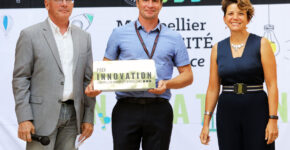
Five researchers receive the 2021 “Montpellier University of Excellence” Innovation Awards

Content Type: Article

Published on: December 16 , 2021

The jury for the 3rd edition of the “Montpellier University of Excellence” Innovation Awards…

Science in Stock with Meso@LR

Content Type: Article

Published on: December 6 , 2021

In a world where science increasingly requires working with data,…

Page Navigation

Previous Page1 Page2 Page3 Page4 Page5 Page6 Next

Follow the latest newson
from theUM

Subscribe to the newsletter
University
  • Organization, Governance, and Governing Bodies
  • Colleges, Schools, and Institutes
  • Research Organizations
  • Flagship Projects
  • Heritage
  • Environmental Issues and Social Responsibility
  • Working at the University
Training
  • Admissions & Registration
  • Information, Career Guidance, and Job Placement
  • Succeeding in School
  • Enhance Your Education
  • Graduated School
  • Educational Innovation
Research
  • Research Centers
  • Doctoral and HDR Training
  • Science and Society
  • Scientific Appeal
  • Major Programs
Innovation
  • University Innovation Hub (PUI)
  • University-Industry Partnerships
  • Valuation
  • Entrepreneurship
Campus
  • Art & Culture
  • Student Life
  • Health, Social Services, and Disabilities
  • Sports
  • Community Life
International
  • International Partnerships
  • Mobility
  • Erasmus+ Training Projects
  • Classes Taught in English
  • CHARM-EU European University
  • Scientific Appeal


UNIVERSITYOF MONTPELLIER
163 Auguste Broussonnet Street
34090 Montpellier

04.67.41.74.00

  • News
  • Calendar
  • Press Room
  • Facebook
  • Twitter
  • Pinterest
  • Instagram
  • YouTube
  • LinkedIn
  • Legal Notice
  • Accessibility: Partially compliant
  • Privacy Policy
  • Site Map
  • Public Procurement