Eric Servat: Sharing Water
As director, in turn, of the Hydrosciences Montpellierlaboratory, the UNESCO-ICIREWARD International Center, and the Montpellier Environmental Research Observatory, Eric Servat has reshaped the role of water research in Montpellier. By securing UNESCO certification in 2021, the hydrologist has, in particular, established the city as an international water capital.
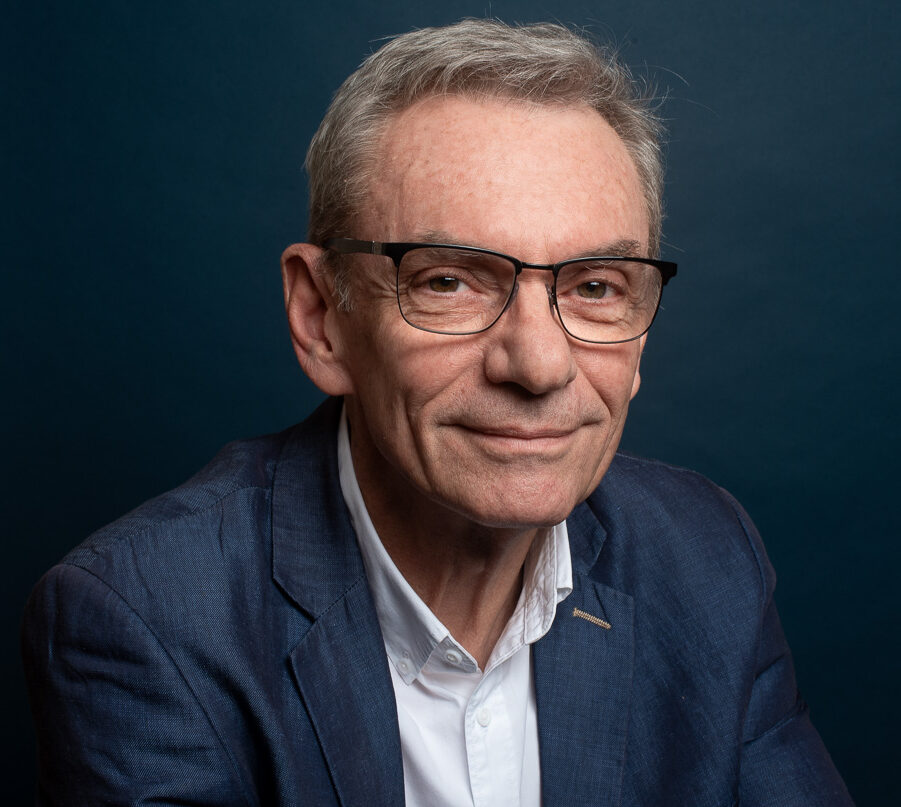
If Montpellier has become an international capital of water, it owes this in large part to Eric Servat. In his office at Hydropolis —the water sciences campus that opened in 2022—the research director in hydrology can feel a sense of accomplishment. This site, which he played a major role in creating, is home to the Hydrosciences Laboratory, the UNESCO-ICIREWARD International Center, and the Montpellier Environmental Research Observatory (OREME). These are three organizations that Éric Servat has led.“Montpellier was known for agronomy, health, and ecology. Today, it’s also known for water, since theUM has become the leading university in France in this field. I’m proud to have played a major role in that,” he says, with no more pretension than a simple recognition of the value of his work.
The UNESCO designation it received in 2019 (The Montpellier Institute for Water and the Environment Becomes a UNESCO International Center, November 21, 2019) is the culmination of a long partnership with the UN organization, with which it has worked closely for 30 years. It dates back to the first overseas assignment of the young hydrologist from the IRD—then known as ORSTOM—in 1987. Looking back on that time in Côte d’Ivoire, where he spent 11 years, Eric Servat now describes it as“the most productive part of his research career.” There, he led a project on water resource availability in West Africa and demonstrated the impact of a climatic event—a prolonged drought in the early 1970s that rendered major hydrological infrastructure obsolete, in some cases even before it had been put into service.
"The Joy of the Return of the Rains ”
For the hydrologist, this African way of life also fuels his commitment to water. He likes to say that it stems from his childhood in the Sahel, spent moving from place to place with his father, a military doctor—“from the smell of rain on parched laterite soil and the joy of the rains’ return.”
A second project is adding to his already busy schedule in Côte d’Ivoire: a WHO program to combat onchocerciasis, a disease that causes blindness and is transmitted by the blackfly. He is working on models to predict river flow rates in order to optimize the dosage of larvicides released into rivers to break the insect’s life cycle. The visible decline of the disease—made possible in part by the development of new medications—is“one of the greatest satisfactions of his career,” he says, adding unlikely anecdotes such as a helicopter ride with former U.S. military pilots who had returned from Vietnam and transitioned to humanitarian aid work.
His passion for collaboration and international networks also led him to become vice president of the International Association of Hydrological Sciences (IAHS). Learning about the UNESCO Friend Water program in Southern Africa through British colleagues inspired him to create a similar initiative for Francophone Africa. As he worked to bring together hydrologists from across the region, he discovered a talent for organization. His dedication proved so compelling that he went on to lead the entire global Friend Water program from 2002 to 2006.
"A Builder"
After returning to France at the turn of the millennium, the researcher held a series of leadership positions. The man who describes himself as“a builder”was entrusted with missions that, taken together, reshaped the role of water research in Montpellier. The first, in 2001, was to“rebuild Hydrosciences.” When he handed over the reins fourteen years later, he left behind a laboratory that had tripled its staff.“I feel like I was the director of a small business—an expression that makes some colleagues cringe—but that’s exactly what it’s all about: recruiting, seeking funding, and acting as a sales rep in various forums to advocate for your lab!” ” This approach allowed him to get the team on board with the momentum: “ I managed to create a collective momentum by highlighting the lab’s work and delegating responsibilities to those who had the drive and skills—rather than just degrees and titles.”
His work capacity was put to the test when his CEO asked him to run for chair of the IRD’s scientific council. Elected from 2008 to 2012, he admits it took him six months to get back on his feet. But he has no regrets about his commitment, aware that he is “a good soldier” who enjoys being entrusted with difficult tasks and is always ready to explore new aspects of the research world—in this case, the political dimension of the decisions made by a scientific council.
International Hackathon
That’s just as well, because his superiors haven’t finished calling on him yet. He, who hopes to devote himself to bringing together all water-related research in Montpellier after stepping down as director of Hydrosciences, has been entrusted with a new mission: to take the helm of the Observatory of Universe Sciences (Osu Oreme), established a few years earlier. Once again, amid the university merger, he worked to reorganize departments, raise the Observatory’s profile, and revise its bylaws… But he never lost sight of his goal of making Montpellier a “water capital” and rallied his team to submit an application to UNESCO for an international water center. Thanks to Muse and funding from a Kim (Key Initiative Muse) Waters grant, he succeeded in bringing this project to fruition and convincing the French government and UNESCO of the project’s merit. The UNESCO center became operational in 2021, and he took over as its director.
Today, he makes no secret of his pride in the center’s growing influence, which includes, among other things, its international partnerships, its numerous activities for the general public, and its support for cultural events, etc. Not to mention the now iconic international Water4Future Hackathon, which brought together, for the 2026 edition (Water4Future Hackathon: Water for the Future, March 25, 2026), 800 students from 23 countries across 3 continents.
Although he stepped down in June 2026—and was subsequently named honorary director of the UNESCO Center by its board of directors—and has just been elected to the Academy of Technologies, he has not yet had his final say: this time, he intends to restructure the French committee of UNESCO’s Intergovernmental Hydrological Program, of which he is the chair. And since good directors are also recognized by their ability to take joy in the successes of those who follow in their footsteps, he praises the “remarkable” work of his successors at Hydrosciences and at OREME (Agnès Lèbre, the observer at the observatory) and at the UNESCO Center.
News
Science at theUM [S06-ep02]: Upcoming Grape Harvests
Published on: September 24 , 2026
This week on *A l’UM * Science, Fabienne Remize, a researcher at Science pour l’œnologie,…