Flavie Coquel, for Women and Science
At 28, Flavie Coquel is a biology researcher atthe Institute of Human Genetics (IGH) and the 2018 winner of the L’Oréal-UNESCO “For Women in Science” Award. An interview.
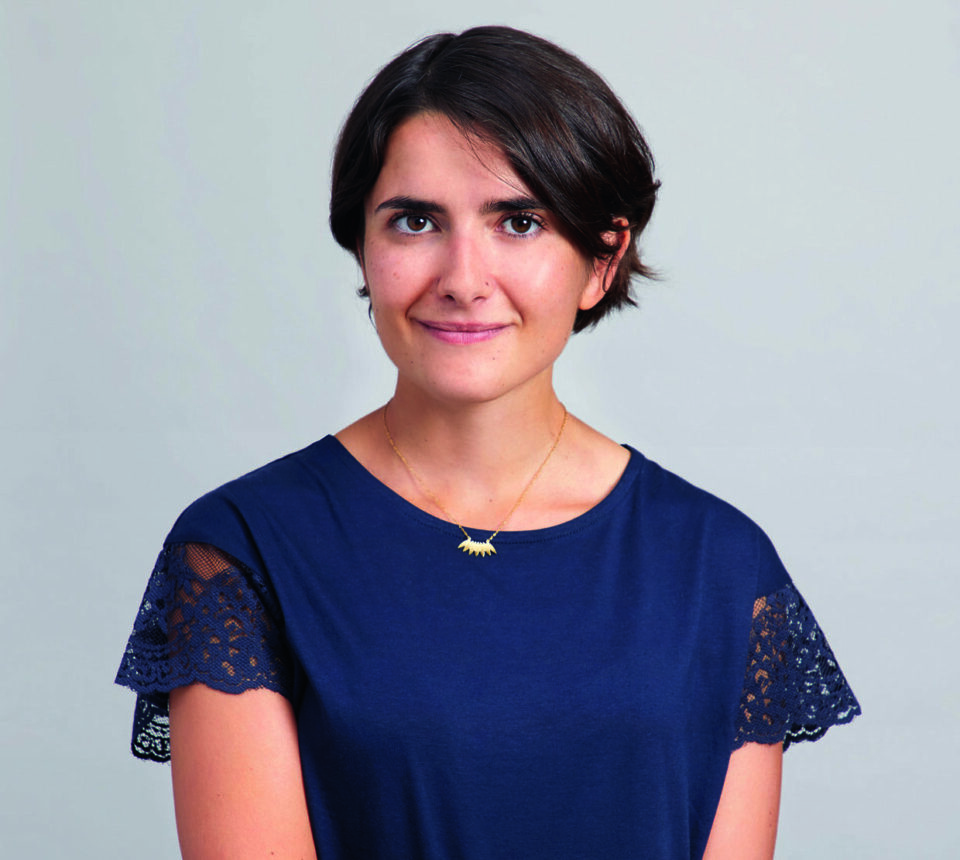
Beating cancer. That, in a nutshell, is the new goal Flavie Coquel set for herself a few months ago. At the time, the doctoral student from Artois was working atthe IGH on DNA replication—the process by which two identical DNA molecules are produced from a single cell. Under the supervision of Philippe Pasero and Yea-Lih Lin, Flavie discovered that DNA has the ability to exit a cell’s nucleus and—most importantly—that this process triggers an automatic immune response. “As the 2018 Nobel Prize in Medicine laureates demonstrated, the immune system can play a role in the treatment of cancerous tumors,” explains the young woman, whose discovery—quickly hailed by the scientific community precisely for its therapeutic potential—was the subject of a highly acclaimed paper published in the journal *Nature* in April.
L'Oréal-UNESCO Scholarship
In early October, Flavie Coquel was awarded the prestigious 2018 L’Oréal-UNESCO “For Women in Science” Fellowship (see box) alongside Camille Scalliet, a doctoral student from Montpellier at the Charles Coulomb Laboratory, and 18 other French female researchers. With the 15,000 euros in funding, Flavie hopes to use her future research to help improve immunotherapy techniques—specifically, the treatment of cancer and other autoimmune diseases through the forced activation of the immune system.
Born in Metz-en-Couture (62), the daughter of a medical secretary and a farmer, Flavie Coquel was admitted to a prestigious engineering school after earning a science baccalaureate with highest honors. “It wasn’t until later, around age 17 or 18, that I began to feel a strong attraction to the sciences and a desire to pursue a career with significant practical applications,” explains the young woman, who is currently finishing her biology dissertation atthe IGH, where the scarcity of women—as in other areas of scientific research—strikes a chord with her. With a happy event expected in the spring and a “postdoc” in Switzerland starting in September on the horizon for this bubbly young woman, Flavie Coquel says she is very proud of the award she received from the L’Oréal Foundation. An award that, far more than a sum of money, has above all given her self-confidence.
The L'Oréal-UNESCO Prize
The L’Oréal-UNESCO “For Women in Science” Prize promotes the role of women in scientific research. Established in 1998, it is awarded annually by the L’Oréal Foundation to young female researchers whose outstanding research has contributed to the advancement of science.
In 2018, 30 French women recipients were awarded research grants ranging from 15 to 20,000 euros by a jury composed of members ofthe Academy of Sciences and high-ranking scientific experts.
[1] James Allison and Tasuku Hon
News
TheUM s is strengthening its commitment to the AFM-Téléthon
Published on: July 22 , 2026
The University of Montpellier, the Montpellier University Hospital, the School of Medicine…