Isabelle Olivieri: The Montpellier-based ecologist joins the scholars at the Eiffel Tower
Isabelle Olivieri, a researcher at theISEM, is a leading figure in evolutionary ecology in Montpellier. Her team’s pioneering work is being carried on by the younger generations she inspired by defending—sometimes fiercely—her convictions. She will be among the 72 women scientists whose names will join those of the scholars on the Eiffel Tower engraved 65 meters above the ground.
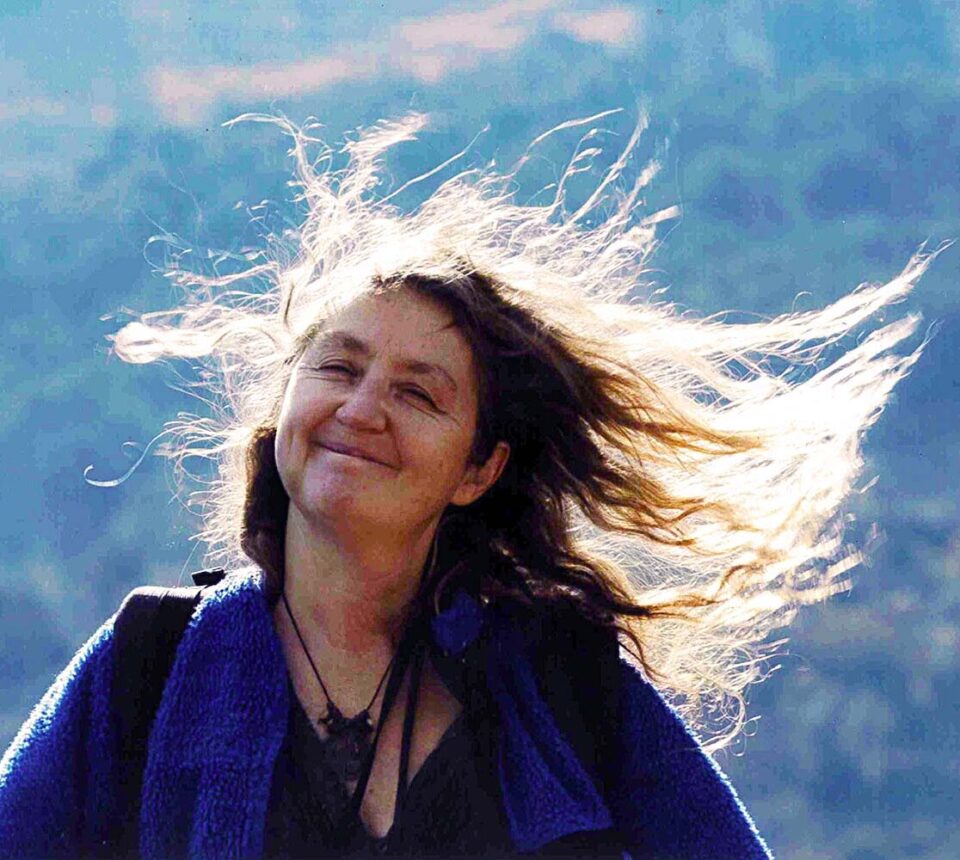
If Montpellier is now recognized in the field of ecology by the international scientific community, it owes this in part to Isabelle Olivieri. She passed away in 2016 and was a leading figure in evolutionary ecology at a time when integrating genetics and ecology was not yet commonplace.“By focusing on extinction, colonization, and, more broadly, the population dynamics of plant species, she was one of the first to propose mathematical models of the demographic and evolutionary processesof plants ,” says Agnès Mignot, vice president for research atUM a professor atthe Institute of Evolutionary Sciences (ISEM), who began her career working alongside her.
Isabelle Olivieri’s colleagues describe her as open-minded and possessing a broad perspective on biological phenomena, qualities that have enabled her to identify new avenues of research. In particular, she has applied the concept of a metapopulation—which refers to a group of distinct populations of the same species, interconnected through dispersal—to numerous questions shedding light on species evolution. As the first holder of the professorship in population genetics established in Montpellier in 1993, she was honored with the CNRS Silver Medal in 2007.
Conservation Issues
“With great freedom, she was able to bridge the gap between theoretical concepts and conservation issues. She didn’t rank topics in order of importance,”says Ophélie Ronce, who was first her doctoral student and later her colleague at ISEM. Isabelle Olivieri studied the “evolutionary suicide” of the Clape Centaury, a species endemic to the Narbonne region whose range is so limited that it is threatened with extinction. The scientist launched a landmark study on the conservation of this species, which continues today through plant translocations aimed at rescuing it from this evolutionary trap (Restoration Demography: A 10-Year Demographic Comparison Between Introduced and Native Populations of Centaurea corymbosa, an Endemic Species, 2008 in the Journal of Applied Ecology).
The ecologist also studied the interactions between plants and insects, particularly the specialization of the pest to its host plant (Genetic, Ecological, Behavioral, and Geographic Differentiation of Thistle Weevil Populations: Implications for Speciation and Biological Control, 2008, *Evolutionary Applications*). This research began during her doctoral thesis on Mediterranean thistles, in which she worked to identify pests capable of controlling these invasive plants in Australia. This work earned her her first position as a research fellow at INRA in 1984.
Her colleagues also praise her sense of community and her ability to bring people and ideas together, both nationally and internationally. Having completed a postdoctoral fellowship at Stanford University (California) in 1983, she maintained an openness to other countries that contributed to the international scope of research in Montpellier. She served as president of the European Society for Evolutionary Biology and vice president of the American Society for the Study of Evolution, and sat on the editorial boards of numerous scientific journals.
“What I admire most about you are your students!”
Her sense of community also extends to her students, whom she gives a prominent role in her team. Ilkka Hanski, a Finnish ecologist at the University of Helsinki, is even said to have told her,“What I admire most about you are your students!” Agnès Mignot and Ophélie Ronce recall her dedication to training students.“She trusted young people, while also being a demanding teacher who gave them material that wasn’t always easy to work with. But that was her way of taking them seriously and training them in research,” says Ophélie Ronce.
Today, her research on centaury and plant-pest interactions continues within the team.“With her personality, her independence, her humanity, and her intelligence, she was an inspiring scientist for young women,” say her two colleagues today, noting the large number of women on the team—a sign of trust in what was then a very male-dominated field. They also describe her as“outspoken”—a trait that, while not universally appreciated, left no one indifferent.“But that didn’t mean she was authoritarian or all-powerful. She didn’t have an individualistic view of research, ”notes Agnès Mignot—a notable quality in the face of prevailing trends toward performance-driven and personalized scientific success.
Her refusal of the Legion of Honor in 2009, at a time when she was opposing reforms to research policy, underscores her independent spirit. What would she have said about having her name engraved on the Eiffel Tower? Let’s hope she would have appreciated the view from up there.
Photo credit: Eric Vindimian
News

Innovation After-Work 2026: Seven Winners Honored with PUI Awards
Published on: July 17 , 2026
On Wednesday, July 1, the Montpellier University Innovation Hub (PUI) celebrated its…