Delmas-Orfila-Rouvière Former Museums Hall
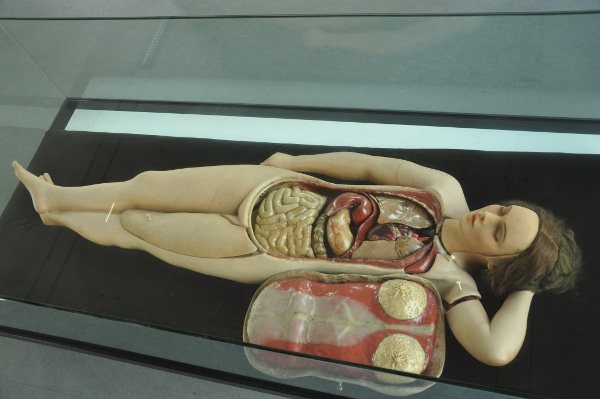
They sat in storage for ten years in the closets of the former Delmas-Orfila-Rouvière Museum. Acquired in 2015, the Amador collections are now on display on the second floor of the University of Montpellier’s anatomy conservatory. As valuable artifacts of the history of anatomy, some of these pieces were used to teach medical students in the late 19th and early 20th centuries. While they hold historical and scientific significance, they also offer artistic appeal, as seen in the “Sleeping Venus,” Dr. Auzoux’s educational wax models, and a dissected monkey sculpture by Fragonard.
The arrival of this collection in Montpellier marks a major milestone in the history of anatomy: it comprises more than 13,000 real and artificial specimens, designated as historic monuments, from the former Delmas-Orfila-Rouvière anatomical museums, which were once located on the premises of the Paris Faculty of Medicine.
These museums are named after Mathieu-Joseph-Bonaventure Orfila (1787–1853), the founder of the original collection in the 1840s, as well as Henri Rouvière (1876–1952) and André Delmas (1910–1999), both professors of anatomy at the Paris Faculty of Medicine, who contributed to its study and expansion.
A new room has been set up in the historic building of the Faculty of Medicine to house these new collections. The current exhibition highlights the former Delmas, Orfila, and Rouvière university museums, while also showcasing a unique anatomical collection: that of Dr. Spitzner’s former traveling museum.