Skip to content Go to the menu
University of Montpellier

Main Menu

  • University
  • Training
  • Research
  • Innovation
  • Campus
  • International
  • French

Quick Access

Quick Access

  • ENT
  • Websites
  • Digital Site
  • Colleges, Schools, and Institutes
  • Research Centers
  • Libraries
  • Gender-Based and Sexual Violence
  • Emergencies
Research

Search Results

"UM : Science" [S04-ep09]: Ensuring Safe Pain Management

Content type: Podcast

Published on: November 21 , 2024

This week on *A l’UM * Science, Cyril Rivat, a researcher at the Institute of Neurosciences at…
[LUM#22] Animal Intelligence

Content type: LUM Magazine , Podcast

Published on: November 20 , 2024

The mechanisms of animal perception remain a mystery, and research into them is sometimes conducted at…

CLAPAS Key Initiative
Content Type: Page
A Key Initiative for Innovative Interdisciplinary Research s in Plant Health and Agrosystems. Faced with the many biotic and abiotic risks affecting plants—such as diseases, pests, climate change, and intensive agricultural practices—plant health research has emerged as a major challenge. These challenges affect not only agricultural productivity but also food security, biodiversity, and ecological balance. In this context, the CLAPAS1 initiative proposes to explore plant health through a broad-based approach, drawing inspiration from the concept of the exposome, which encompasses all interactions between plants and their environment (soils, microbiomes, pests, beneficial organisms, etc.). This approach is fully aligned with the One Health perspective, linking plant, environmental, animal, and human health. Objectives of the Key Initiative CLAPAS aims to organize the Montpellier scientific community around three priority research areas: Mechanisms and ecology of biotic interactions in agrosystems. The role of microbiotes in plant adaptation to their environment. Epidemiological surveillance and adaptive dynamics of pests. This research pursues three main goals: To prevent risks, using tools such as ecological modeling, genomics, and epidemiological surveillance. To treat by developing innovative solutions such as the use of microbiota, metabolites, or natural enemies, as well as methods such as chemical confusion and the sterile insect technique. To strengthen resilience by assessing the environmental, social, and economic impacts of the proposed solutions. A Collaborative Approach This project brings together numerous laboratories from the “Agronomy, Environment, Biodiversity” (AEB) research cluster at I-Site, which unites several national research institutions (INRAE, IRD, CIRAD, Institut Agro Montpellier, University of Montpellier), and draws on international collaborations, particularly with countries in the Global South, which are severely affected by climate change. CLAPAS is also part of national and European initiatives and collaborates with non-academic stakeholders (FREDON, the Chamber of Agriculture, and specialized companies). By strengthening interdisciplinary synergies and promoting sustainable agricultural practices, CLAPAS aims to position Montpellier as a center of excellence in plant health research, firmly focused on the challenges of the future. Key Actions of the CLAPAS Key Initiative: Plant Health and an Integrated Approach CLAPAS implements interdisciplinary and collaborative actions to strengthen research and raise awareness regarding plant health, integrating the concepts of the exposome and One Health. These actions are directed at local research units and center on four main initiatives: Organization of scientific events: Conferences, workshops, and regular meetings will be organized to foster exchanges among researchers, disseminate findings, and build a dynamic scientific network focused on plant health. Support for interdisciplinary research projects: Funding will be allocated to collaborative projects involving multiple research units, with an emphasis on training Master’s students. These projects will encourage synergies with the social sciences, human health, and animal health, fostering innovative and integrative research. Research academies and specialized training: Training programs will be offered to researchers and doctoral students, particularly on key topics such as plant and environmental health, microbial communities, biodiversity, epidemiological modeling, and bioinformatics analysis. These training programs aim to strengthen the skills of young scientists and research teams. Science-Society Interactions: Surveys will be conducted to better understand how local stakeholders perceive plant health (e.g., community gardens in Montpellier). At the same time, awareness-raising workshops for the general public will be organized during events such as the Fête de la Science or the project’s closing conference. These ambitious initiatives aim to build a research community focused on plant health, encourage innovative and sustainable approaches, and raise public awareness of issues related to plant health from a global perspective.

[Takeoff #9] Being a winner of the Montpellier Innovation Booster (BIM)

Content type: Article , Video

Published on: November 18 , 2024

Hamza El Jjouaoui is a research engineer at the Laboratory of Computer Science, Robotics, and…

A conference organized by the University of Montpellier on the mystery of the disappearing beaches in the Mediterranean

Content Type: Press Release

Published on: November 15 , 2024

On Tuesday, December 3, Frédéric Bouchette, a beach physicist and professor at…

Science at theUM [S04-ep08]: The Mpox Outbreak

Content type: Podcast

Published on: November 14 , 2024

This week on *A l’UM *: Martine Peeters from the Transvihmi laboratory and Eddy Lusamaki…

[LUM#22] Natural Creativity

Content type: LUM Magazine , Podcast

Published on: November 12 , 2024

Can artificial intelligence be creative? According to researcher Charles…

"UM : Science" [S04-ep07]: Artificial Intelligence in the Service of Debate

Content type: Podcast

Published on: November 7 , 2024

This week on *A l’UM * science, Mathieu Lafourcade, a researcher at the laboratory…
Nexus Doctoral Project Call for Proposals – 2025 Cycle

Content Type: Call for Proposals

Published on: November 7 , 2024

ExposUM is an initiative of the University of Montpellier and its partners aimed at…

[LUM#22] Toward Better Data Protection

Content type: LUM Magazine , Podcast

Published on: November 5 , 2024

While data is the raw material of artificial intelligence, it is sometimes…
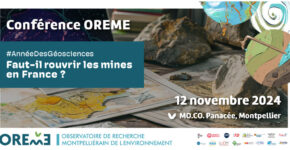
A roundtable discussion with experts at theUM on the issue of reopening mines in France

Content Type: Press Release

Published on: November 4 , 2024

On Tuesday, November 12, experts will gather for a roundtable discussion on…

Silence in the Classroom: A Quiet Classroom, a Studious Classroom?

Content Type: The Conversation

Published on: November 4 , 2024

Do students need to be quiet to learn effectively? While silence has long…

Catherine Alix-Panabières: A Highly Mobile Researcher (CTC)

Content Type: Profile
Catherine Alix-Panabières is one of the world’s leading experts on circulating tumor cells (CTCs) and liquid biopsy. As the originator of the term, the professor of oncology at the University of Montpellier and director of the Laboratory for Rare Human Circulating Cells and Liquid Biopsy (LCCRH) has pioneered numerous research projects on cancer biomarkers present in the blood, with therapeutic applications on the horizon.

[LUM#22] Symbolic AI, on the other hand, is based on human reasoning

Content type: LUM Magazine , Podcast

Published on: October 29 , 2024

Logical and efficient, symbolic AI has not yet had its final say in the face of machine learning, which…

"Will you buy fewer plastic bottles?" A simple question can change our behavior

Content Type: The Conversation

Published on: October 27 , 2024

Are you planning to buy fewer plastic water bottles in the future? Maybe…

“Sud de sciences” Science Film Festival

Content Type: Calendar
Date: Dec. 2 - Dec. 7, 2025
Location: Public libraries in Castelnau-le-Lez, Castries, Clapiers, and Montpellier, and the Nestor Burma movie theater

Page Navigation

Previous Page1 … Page24 Page25 Page26 Page27 Page28 … Page92 Next

Follow the latest newson
from theUM

Subscribe to the newsletter
University
  • Organization, Governance, and Governing Bodies
  • Colleges, Schools, and Institutes
  • Research Organizations
  • Flagship Projects
  • Heritage
  • Environmental Issues and Social Responsibility
  • Working at the University
Training
  • Admissions & Registration
  • Information, Career Guidance, and Job Placement
  • Succeeding in School
  • Enhance Your Education
  • Graduated School
  • Educational Innovation
Research
  • Research Centers
  • Doctoral and HDR Training
  • Science and Society
  • Scientific Appeal
  • Major Programs
Innovation
  • University Innovation Hub (PUI)
  • University-Industry Partnerships
  • Valuation
  • Entrepreneurship
Campus
  • Art & Culture
  • Student Life
  • Health, Social Services, and Disabilities
  • Sports
  • Community Life
International
  • International Partnerships
  • Mobility
  • Erasmus+ Training Projects
  • Classes Taught in English
  • CHARM-EU European University
  • Scientific Appeal


UNIVERSITYOF MONTPELLIER
163 Auguste Broussonnet Street
34090 Montpellier

04.67.41.74.00

  • News
  • Calendar
  • Press Room
  • Facebook
  • Twitter
  • Pinterest
  • Instagram
  • YouTube
  • LinkedIn
  • Legal Notice
  • Accessibility: Partially compliant
  • Privacy Policy
  • Site Map
  • Public Procurement